A self-service refunds and returns platform for the UK's largest grocery retailer — giving 27 million weekly customers real-time transparency and eliminating the uncertainty that drove avoidable CS contacts.
Tesco is the UK's largest grocery retailer — serving over 27 million customer transactions per week through more than 3,800 stores and one of the world's largest grocery ecommerce operations.
Beyond food retail, Tesco has diversified into banking, mobile, and digital services, cementing its position as one of the world's most recognised consumer brands. In recent years, the company has invested heavily in digital transformation — with a strong focus on its ecommerce platforms and the experience customers have managing their orders, deliveries, and post-purchase journeys online. The refunds and returns experience sat at the heart of that: a high-volume, high-stakes touchpoint where poor transparency was generating avoidable service contacts and eroding customer trust at the moment it mattered most.
My Role
Embedded Product Designer within Tesco's ecommerce team — owning the end-to-end design of the refunds and returns experience from discovery through to post-launch measurement.
01
Customer Research & Journey Mapping
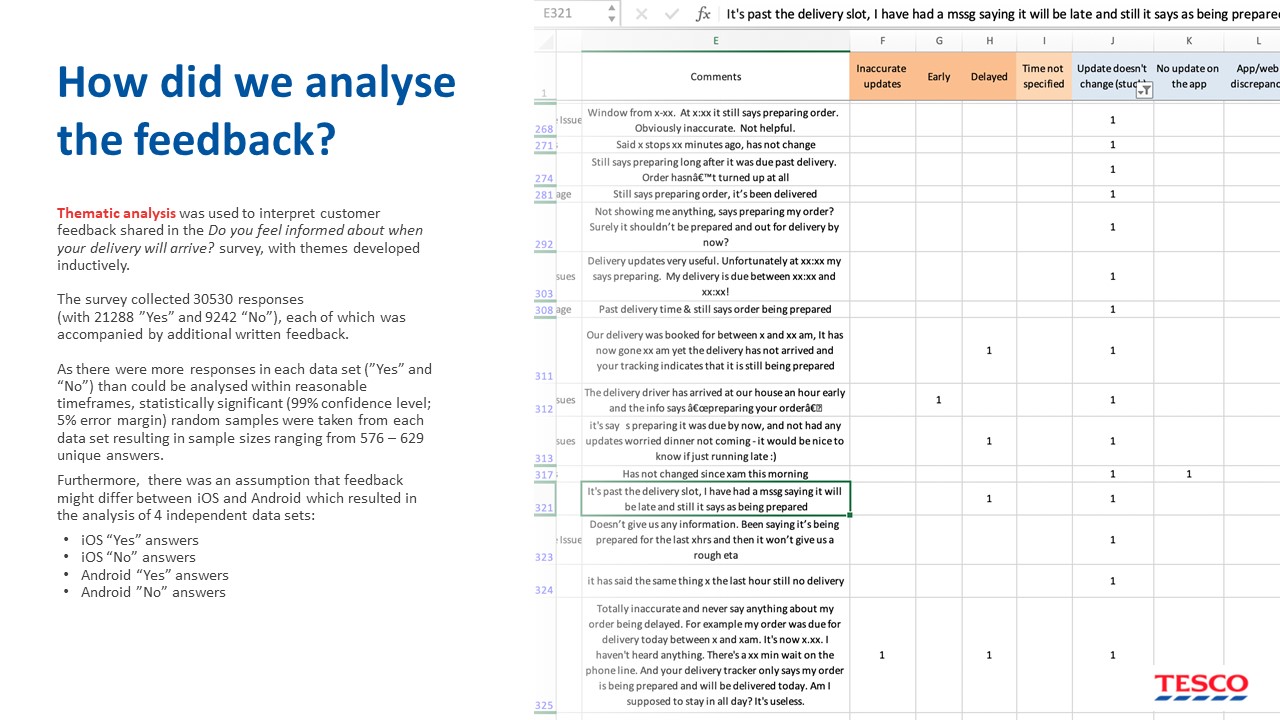
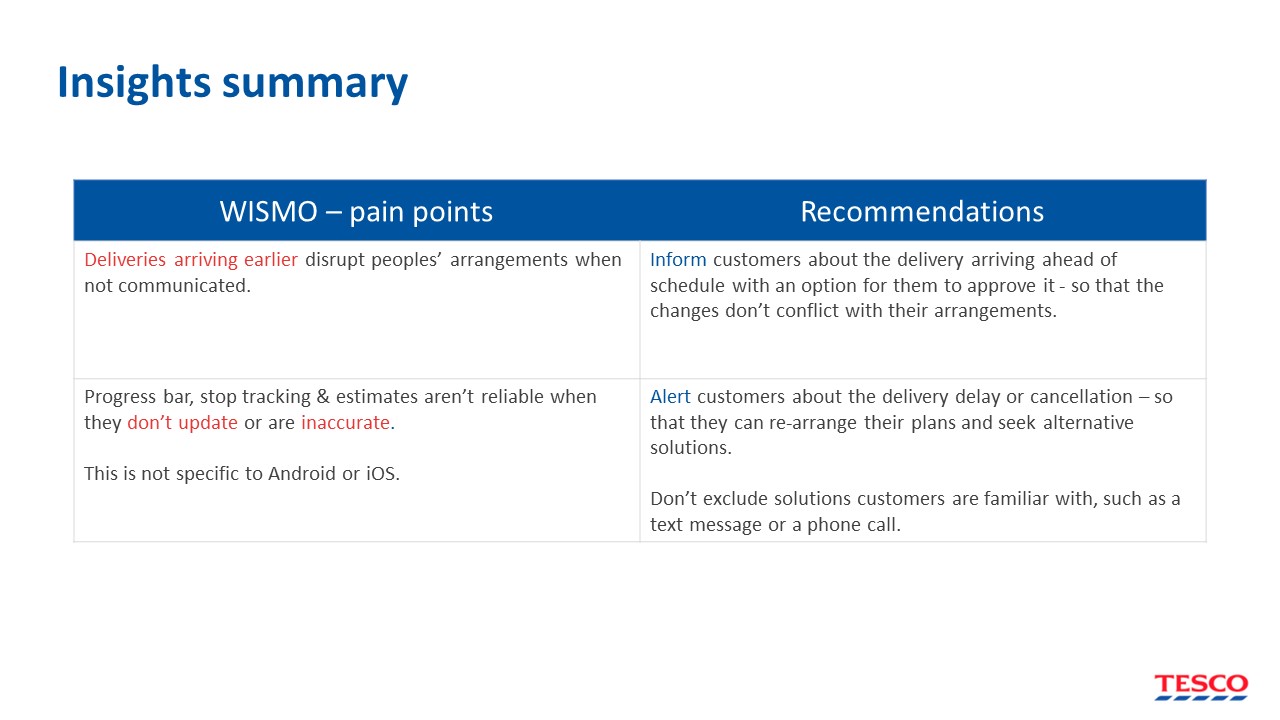
Mapped the existing refunds and returns journey end-to-end — running surveys and analysing customer feedback to pinpoint where uncertainty was driving unnecessary CS contact.
02
UX Design & Prototyping
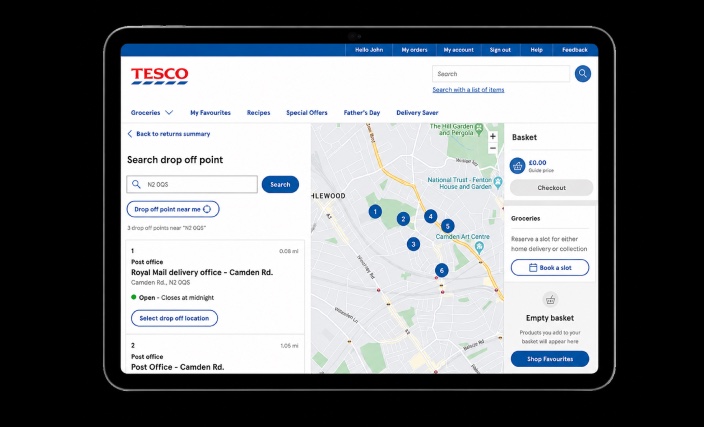
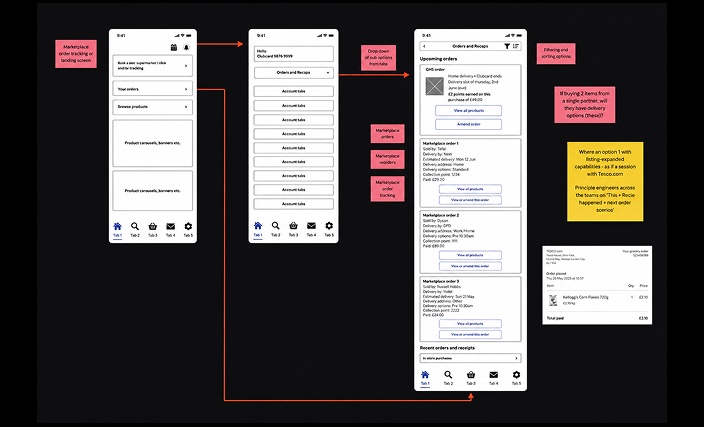
Designed responsive web flows — from wireframes and journey flows through to high-fidelity prototypes — for initiating, tracking, and completing refund and return requests within Tesco's design system.
03
Usability Testing & Iteration
Ran unmoderated usability studies via UserTesting to validate key interactions — iterating on flows for edge cases including payment failures and delivery delays before handoff.
04
Cross-functional Delivery
Collaborated with product, engineering, and customer service to align on operational requirements — then worked with analysts post-launch to link design changes to CS reduction and satisfaction outcomes.
The challenge
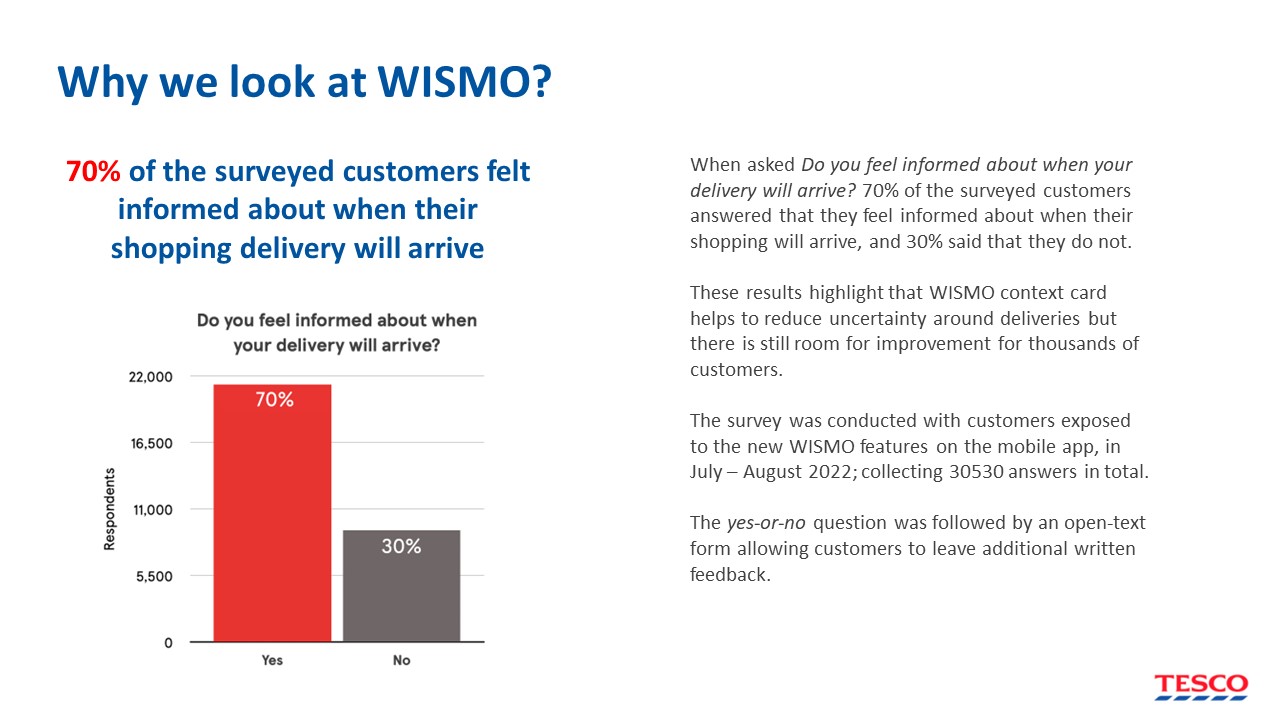
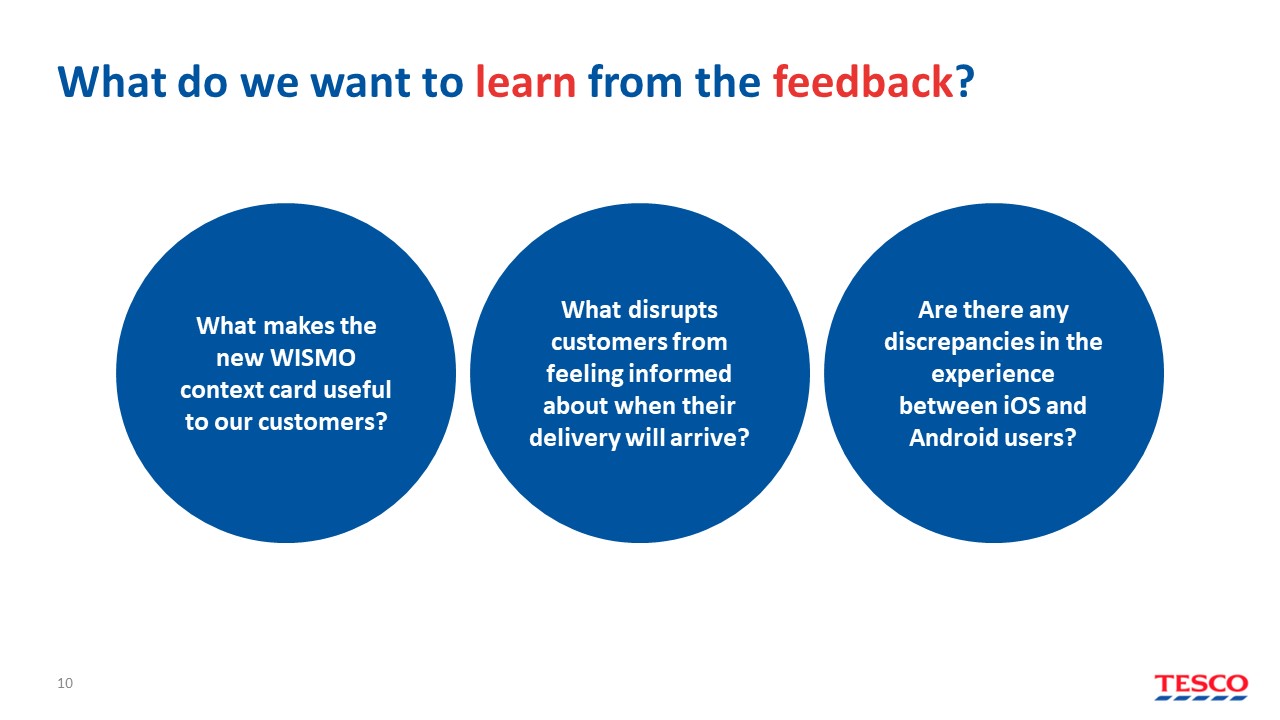
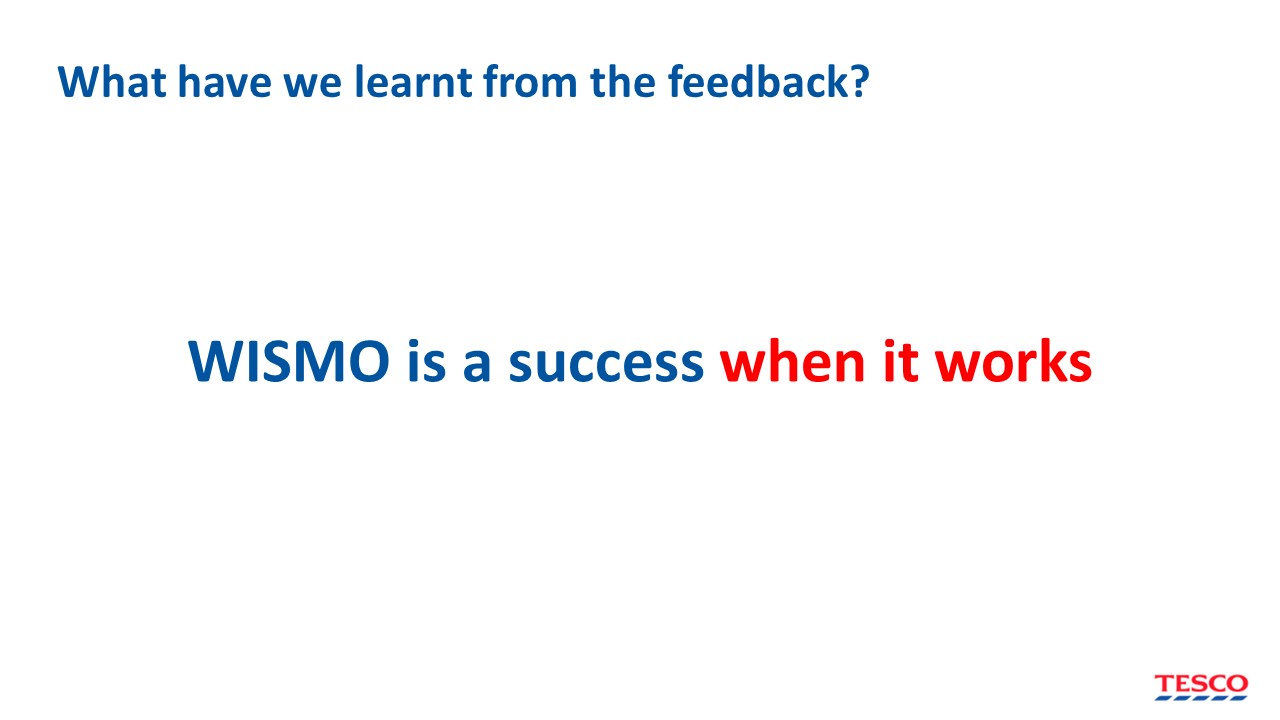
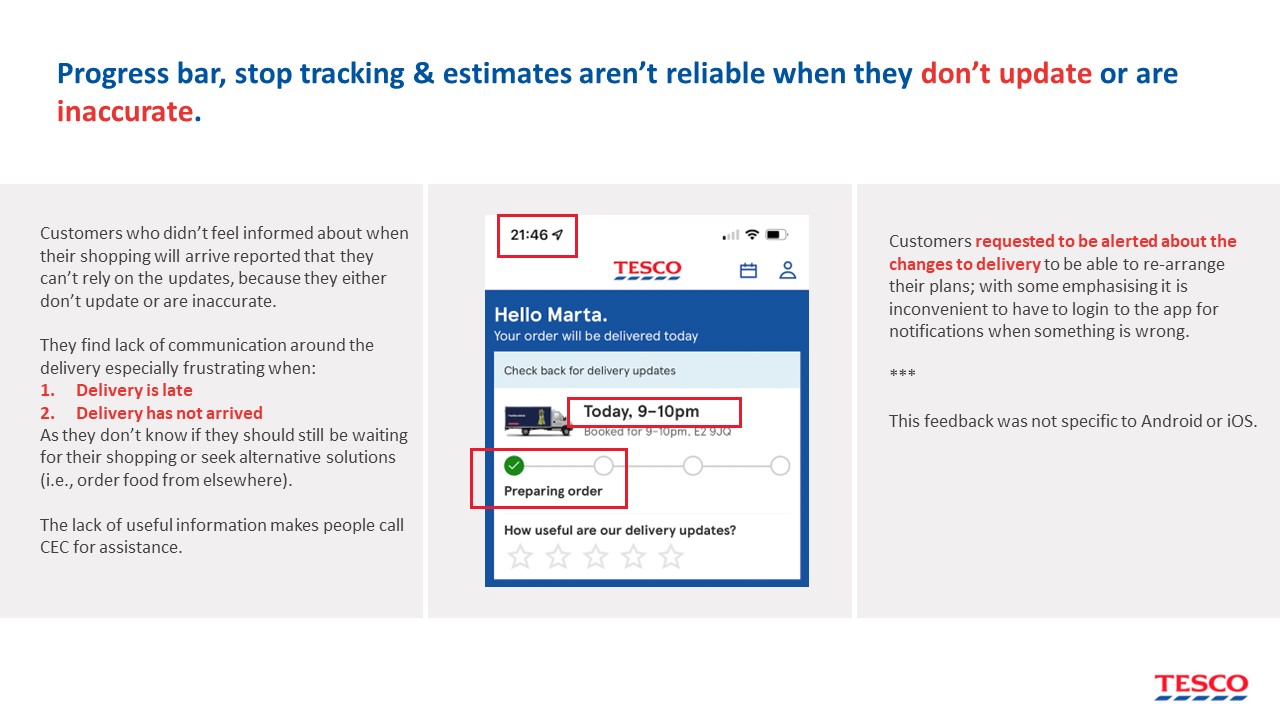
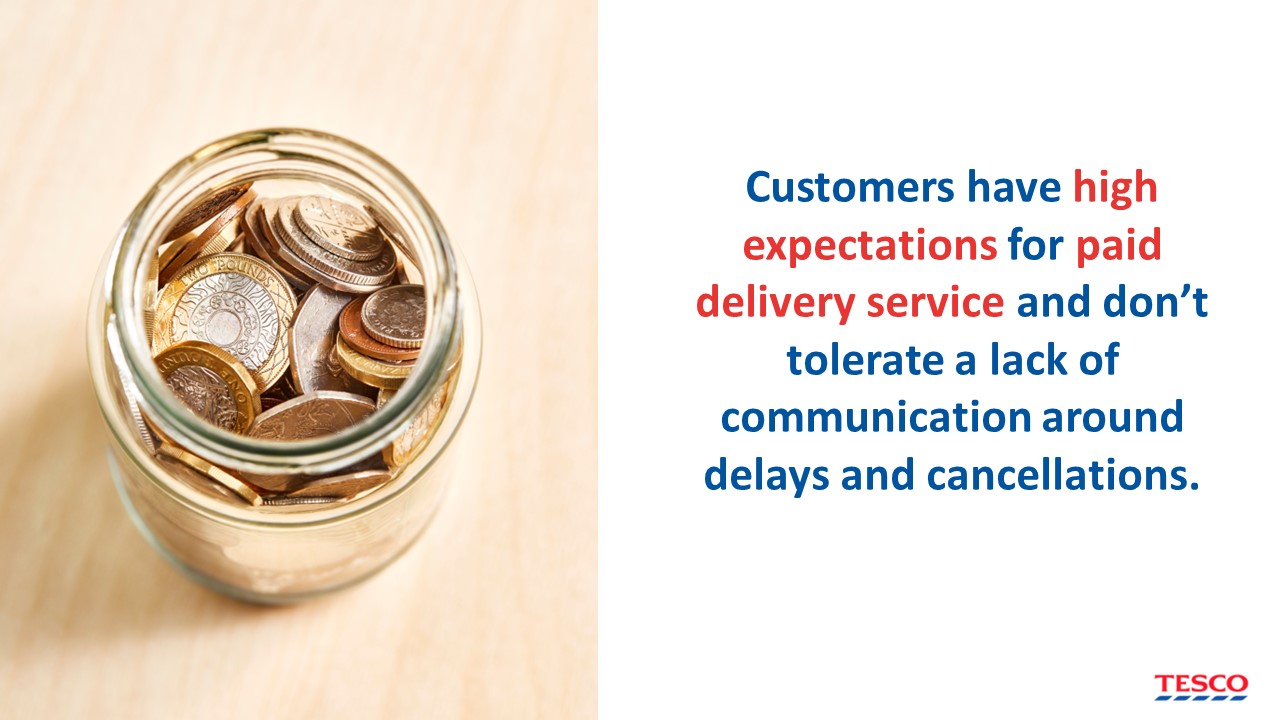
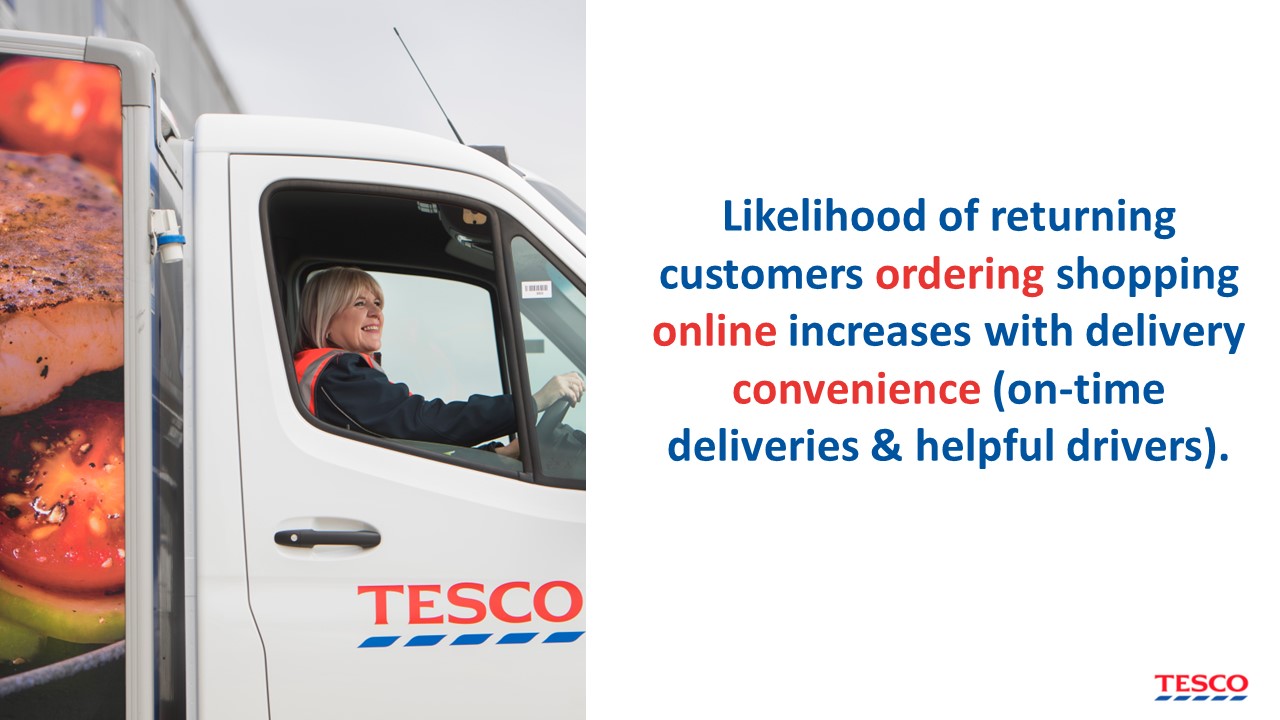
At Tesco's scale, WISMO — "Where Is My Order" — was a significant operational cost driver. Customers couldn't track delivery or refund status, so they called. Surveys and feedback confirmed that uncertainty around order and refund progress was the primary trigger for avoidable CS contact, not product or policy issues.
The opportunity was clear: give customers real-time visibility into their refund and return status — removing the uncertainty that sent them to the phone — and let them manage the whole journey themselves, on any device, inside their account.
My approach
Embedded within Tesco's ecommerce team, I mapped the existing journeys to find the pain points in tracking and status visibility, then designed responsive web flows for initiating, monitoring, and completing requests.
Working across product, engineering, and customer service, I validated the designs through usability testing and iterative prototyping — then measured outcomes against business metrics.
WISMO Discovery — Background, Findings & Insights
1 / 38
Design Process
A structured Discover → Define → Design → Deliver process — with feedback loops at every stage to keep user insight, business goals, and engineering feasibility aligned.
Discover
Journey mapping & customer research
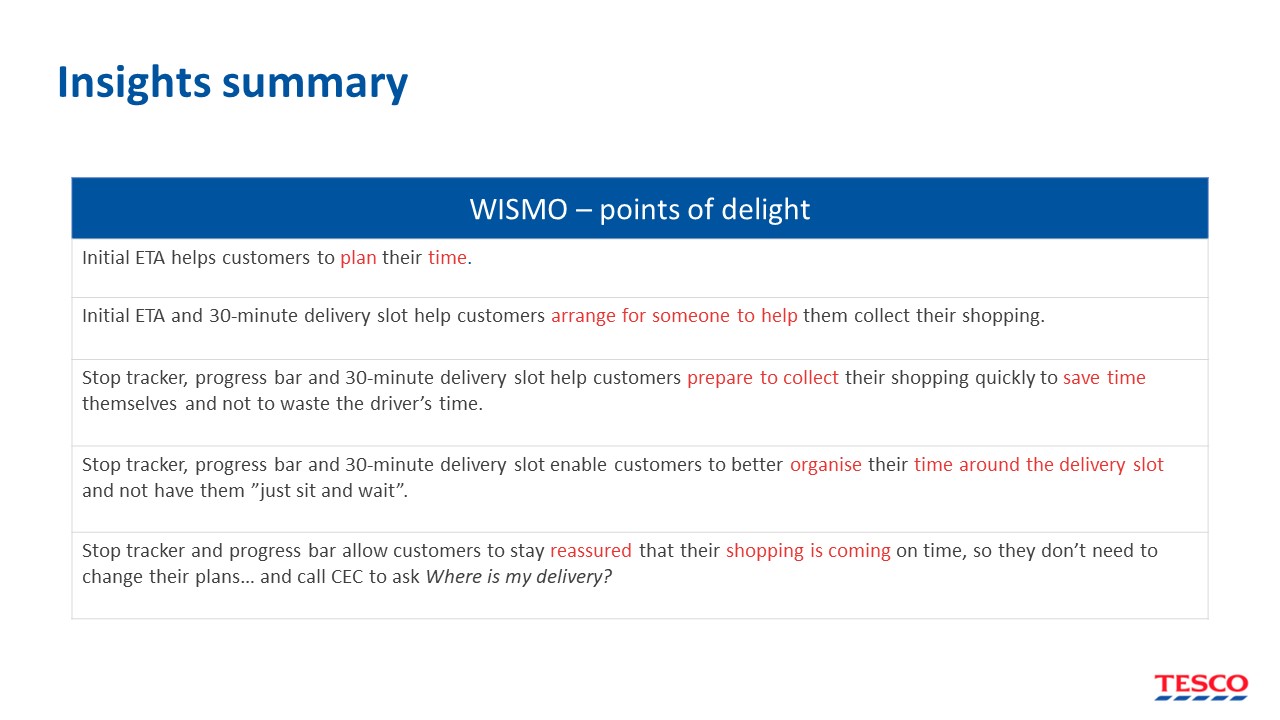
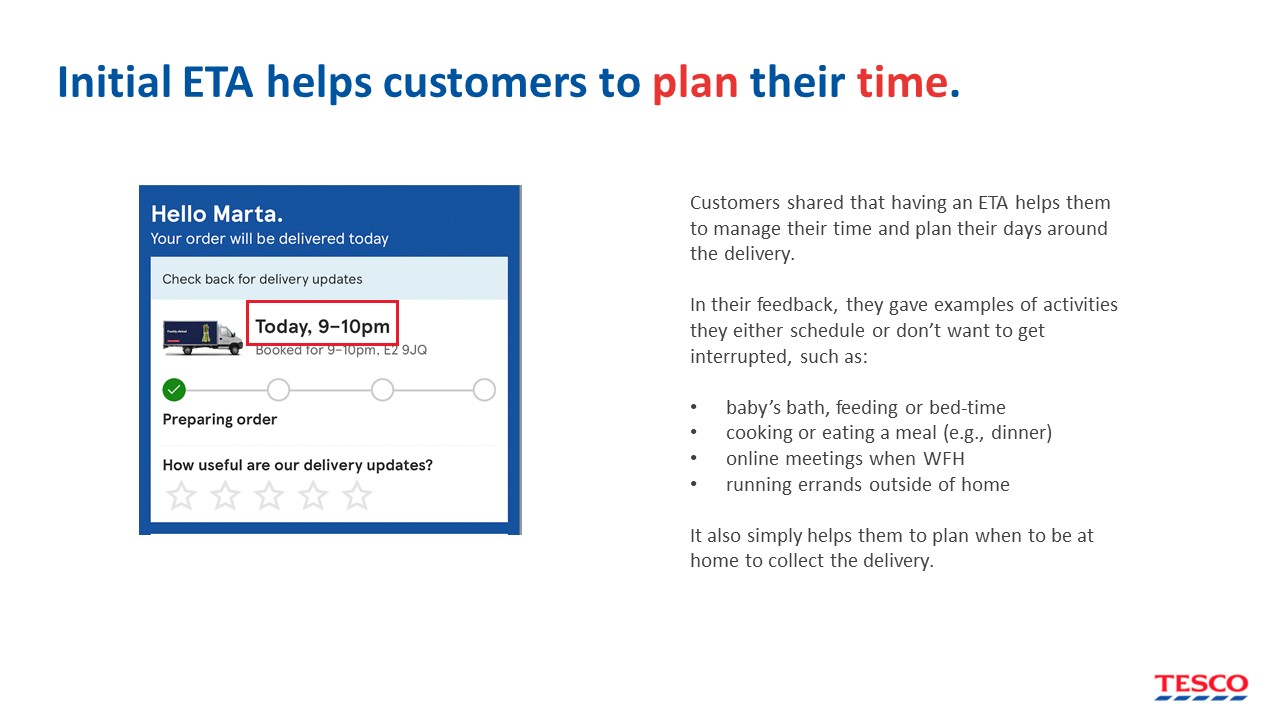
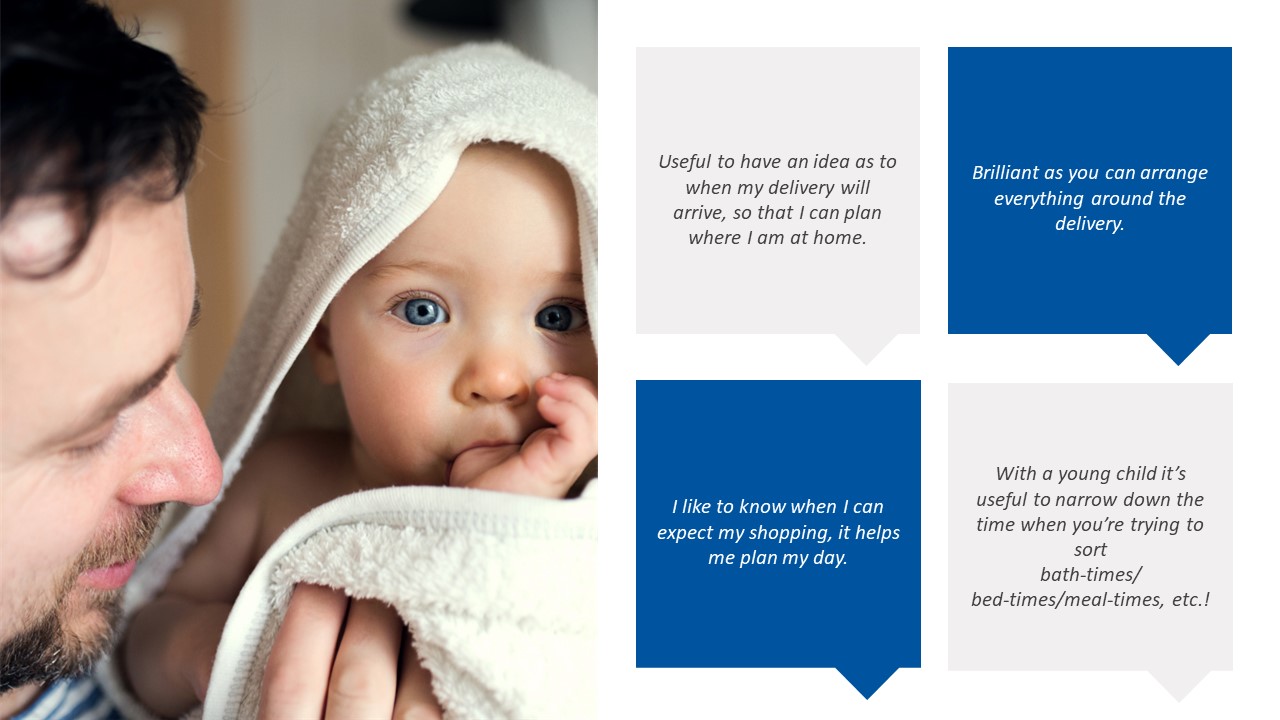
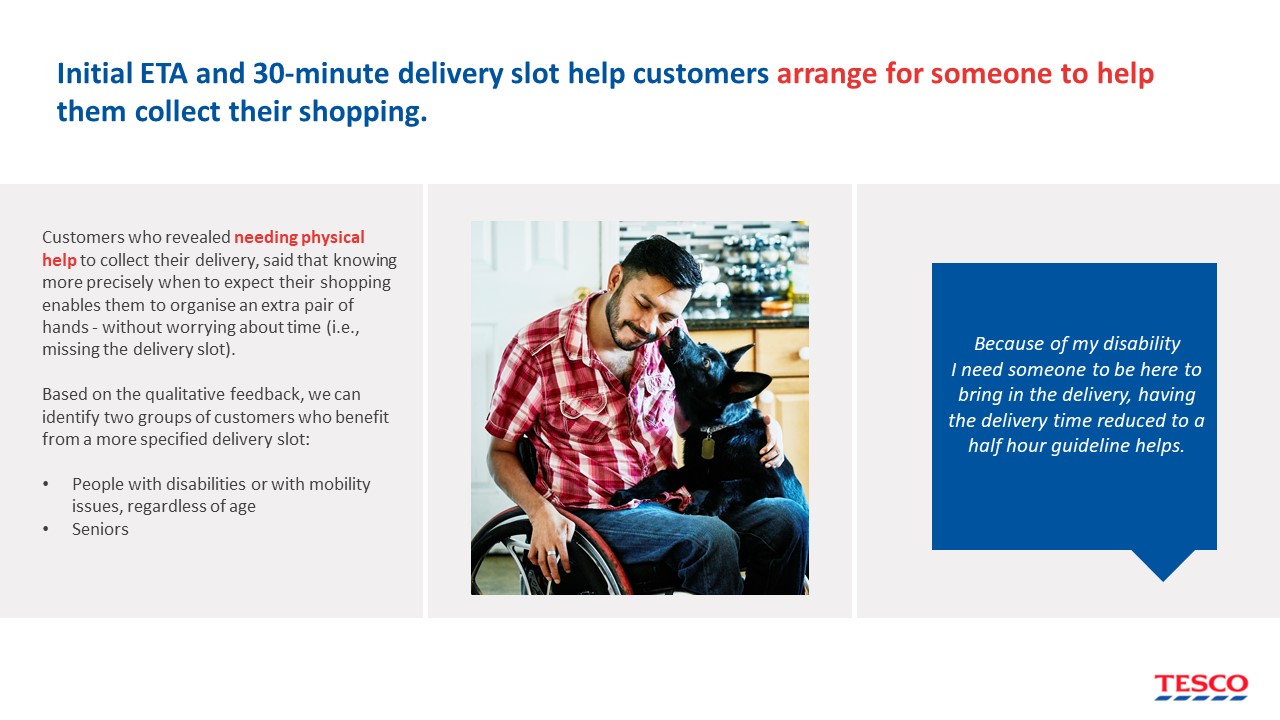
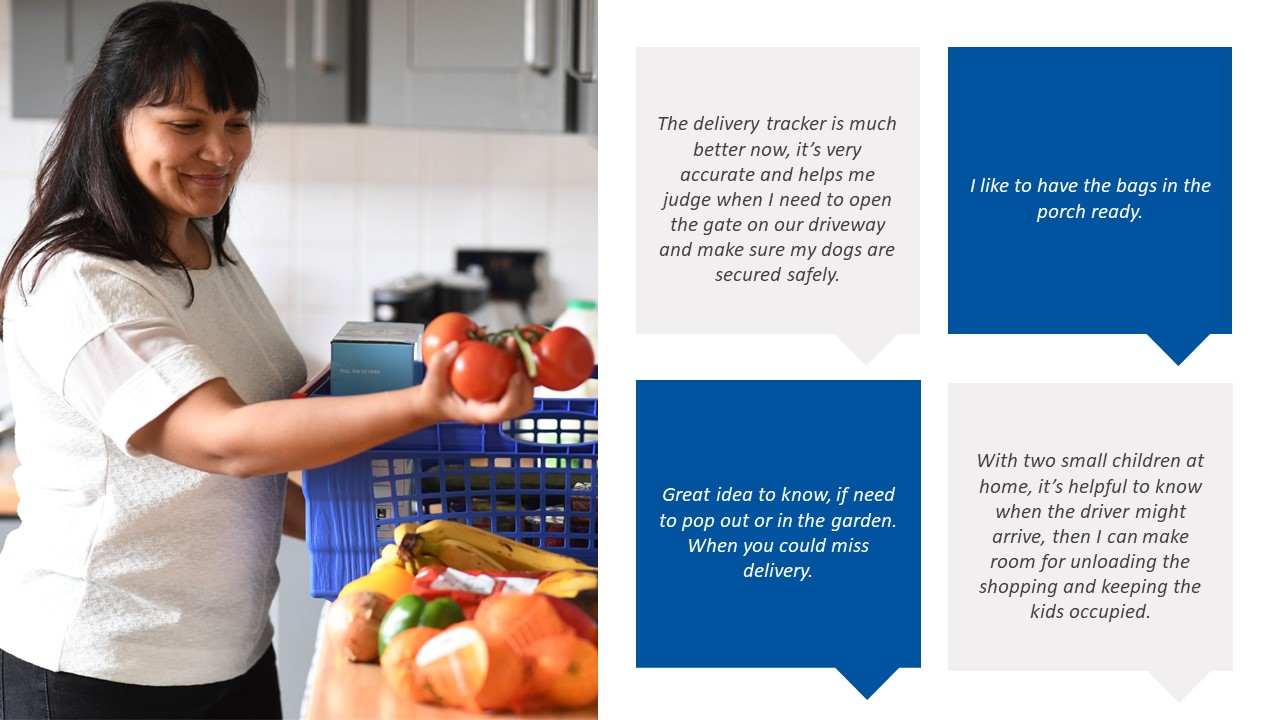
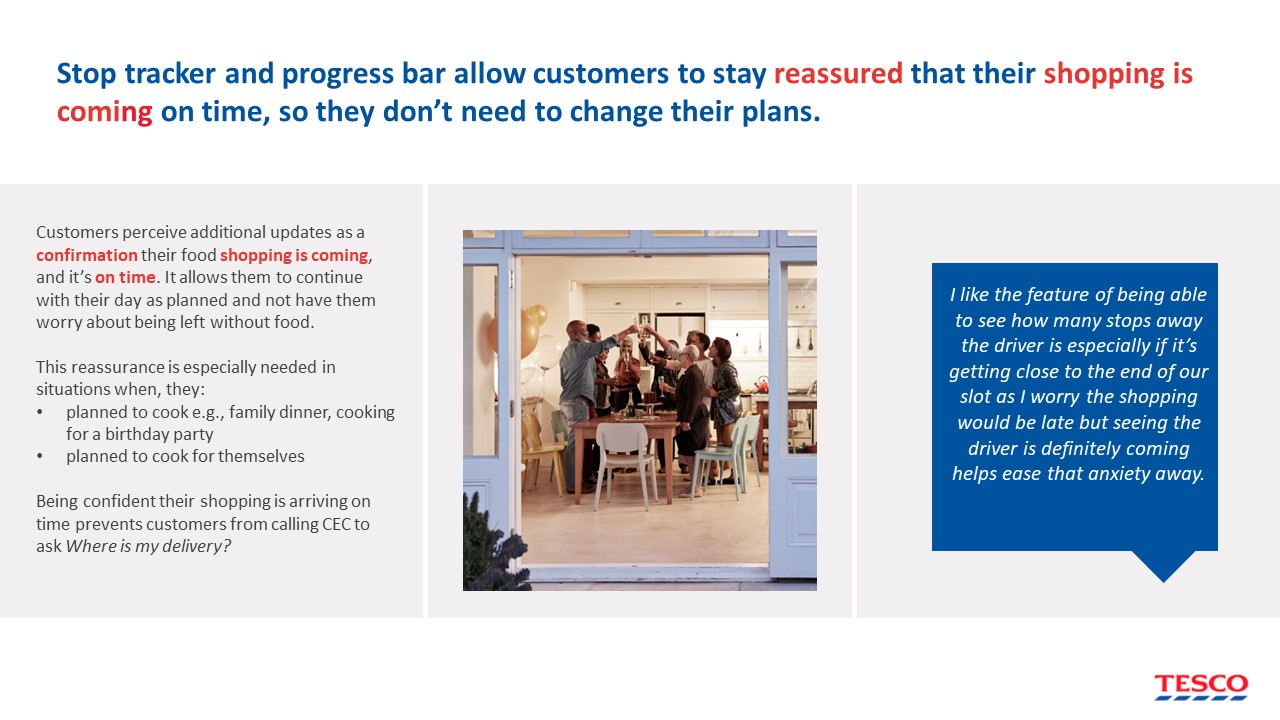
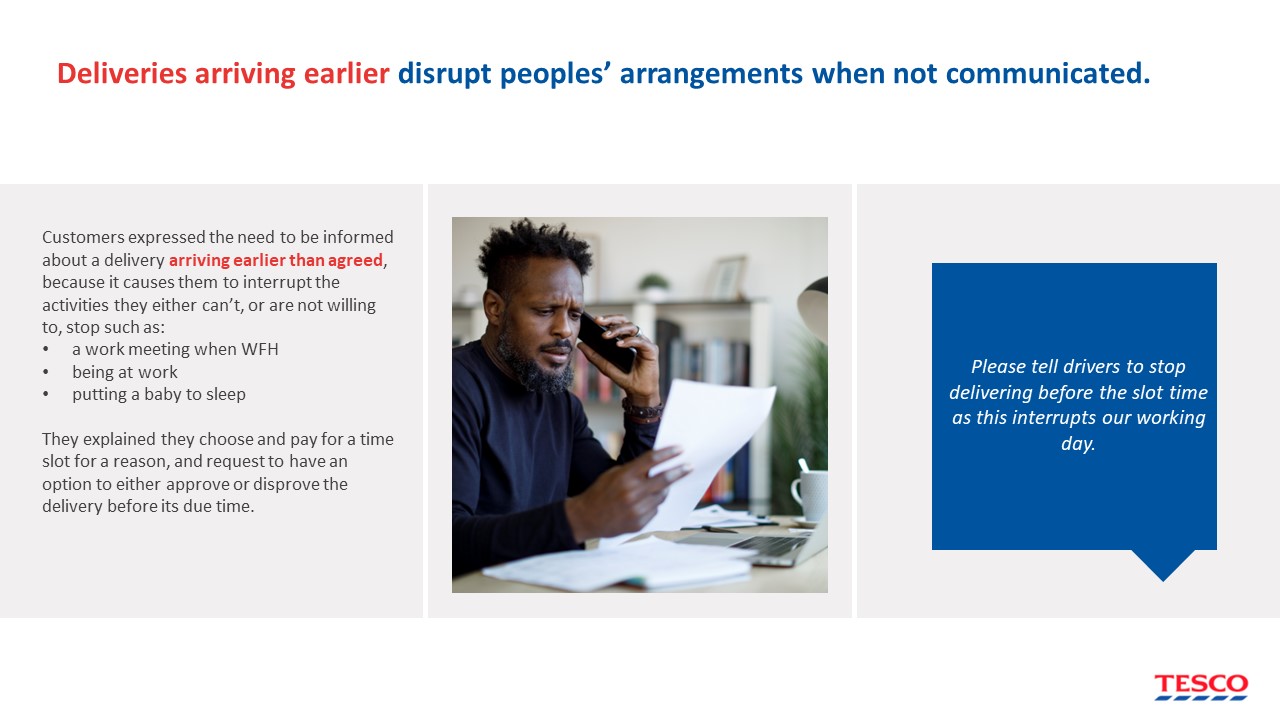
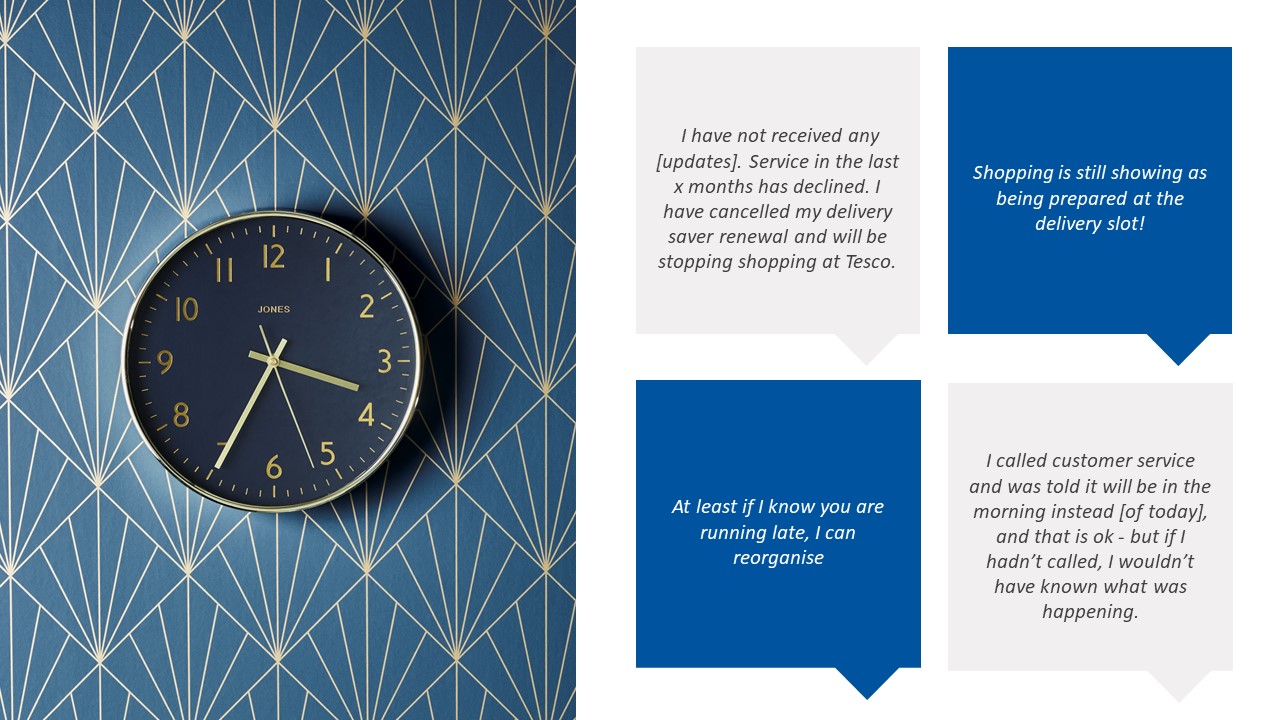
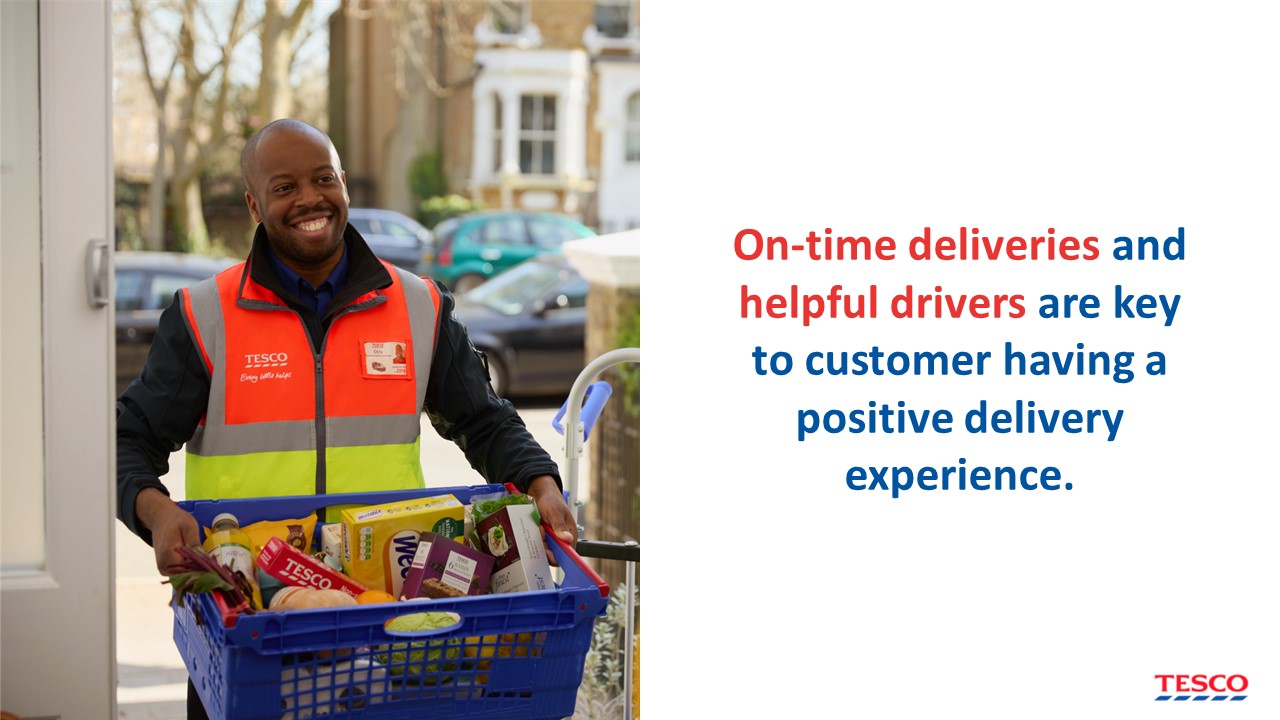
Mapped the existing refunds and returns journey end-to-end using a WISMO ("Where Is My Order") research framework — identifying points of delight, pain points, and further insights from customer surveys and feedback. The consistent finding: uncertainty about status was the primary trigger for CS contact, not policy or product issues. That became the design brief.
Define
Pain point prioritisation & flow architecture
Worked with product and CS stakeholders to prioritise the highest-impact problems — status visibility, initiation friction, and edge cases like payment failures or delivery delays — then defined the information architecture and flow logic for the self-service journeys.
Design
Responsive flows within Tesco's design system
Designed progress trackers, real-time status indicators, and self-service initiation flows across mobile, tablet, and desktop — all within Tesco's design system for consistency with the wider ecommerce platform. Wireframes moved quickly into high-fidelity, iterated prototypes ready for testing.
Deliver
Usability testing, launch & measurement
Ran unmoderated usability studies via UserTesting to validate and refine before handoff. Post-launch, worked with analysts to measure outcomes — tracking CS contact reduction, resolution time, satisfaction scores, and repeat purchase behaviour against design KPIs.
What I Designed
A complete self-service refunds and returns platform — from initiation flows and real-time status tracking through to returns management and performance dashboards.
Self-service refund initiation
Designed the end-to-end flow for customers to raise a refund request directly within their account — reducing reliance on the call centre and giving customers control at any time, on any device.
Real-time status tracking
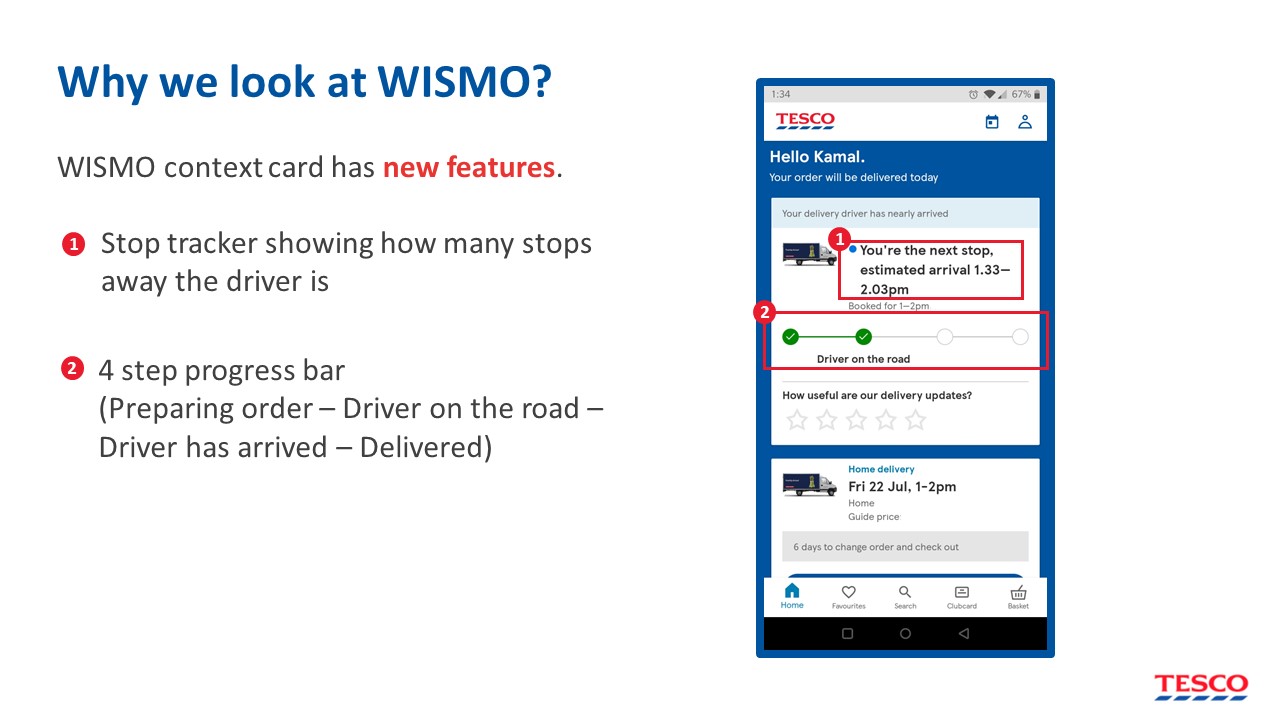
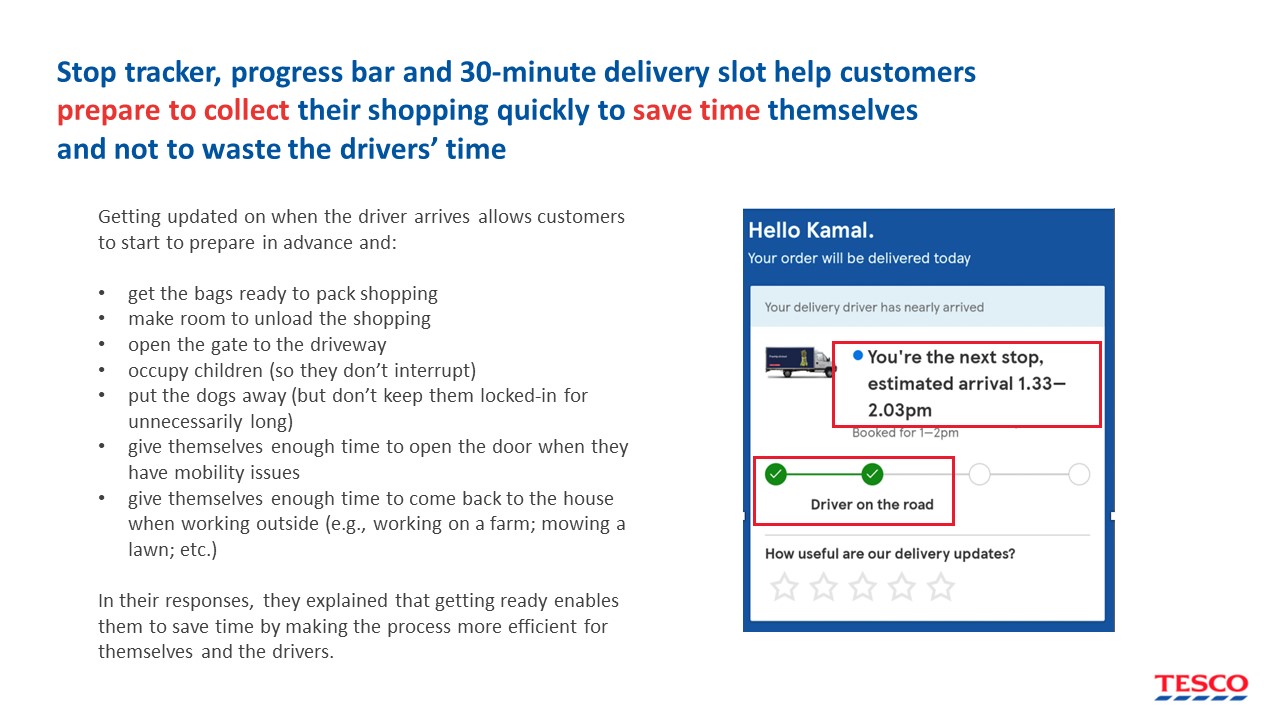
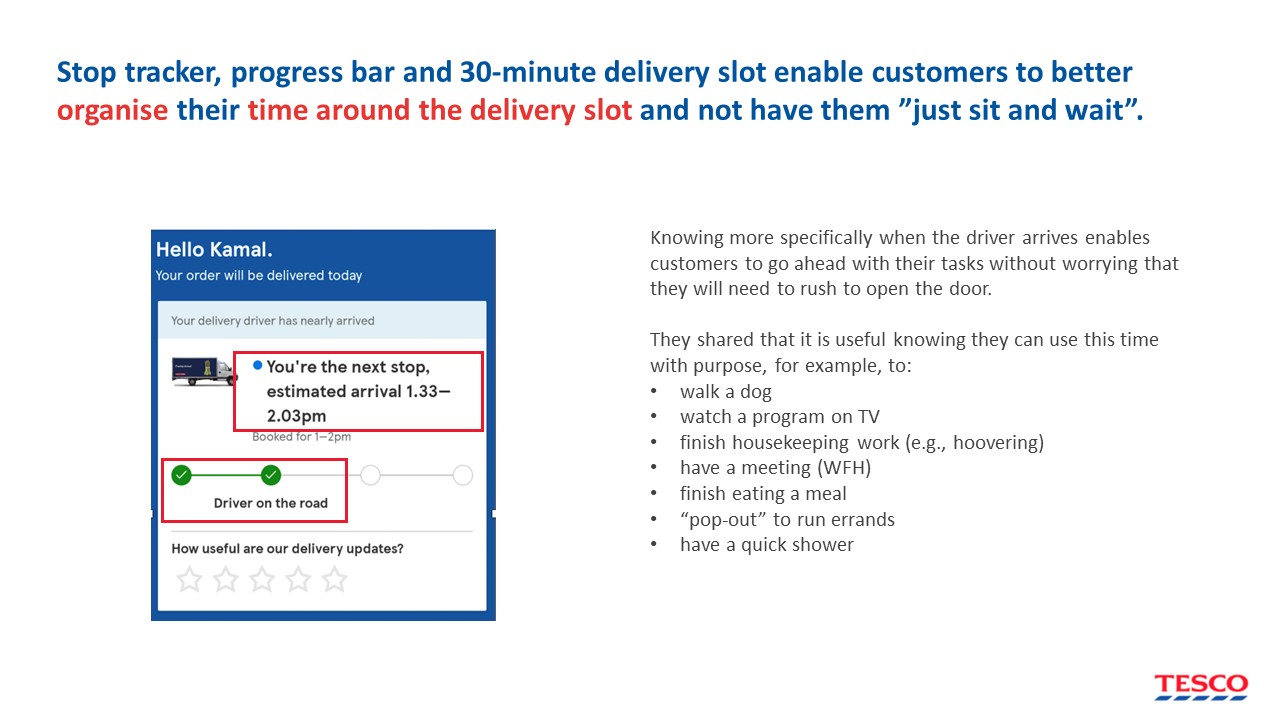
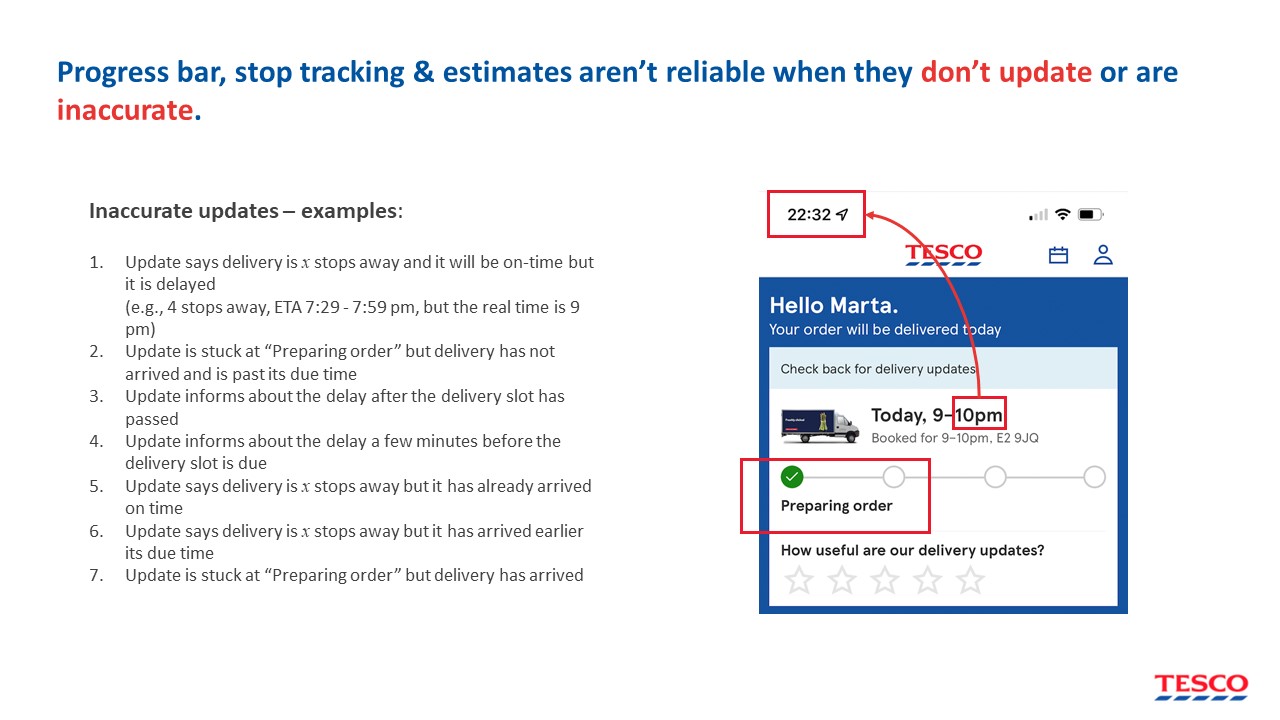
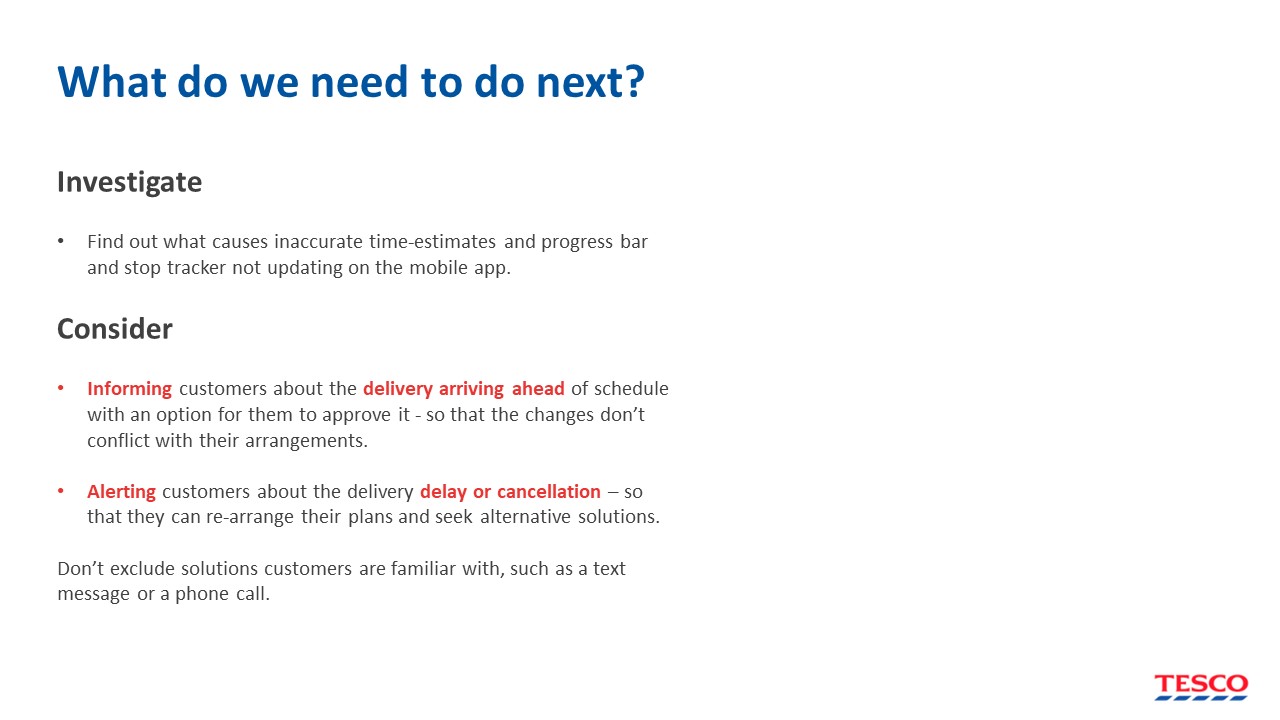
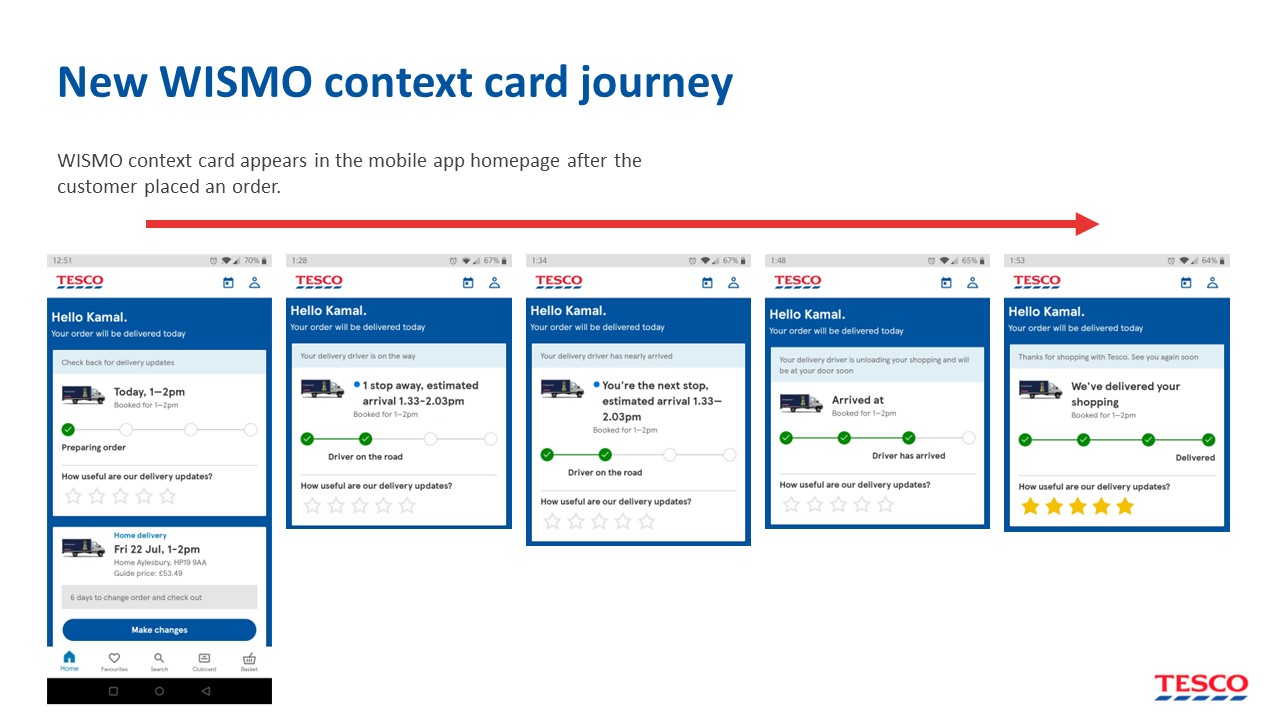
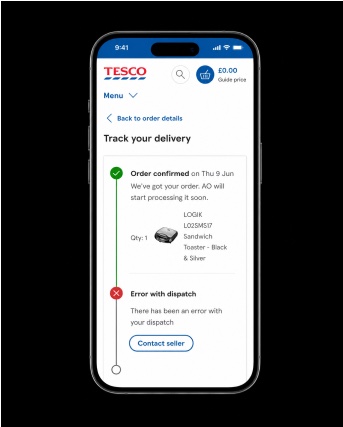
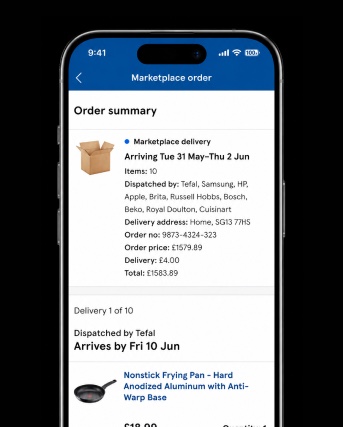
Designed progress bars and stop trackers — the specific mechanics that emerged from the WISMO research — so customers could see exactly where their refund or return was at any moment, removing the uncertainty that had been sending them to the phone.
Returns management journey
Designed the full returns flow — covering item selection, reason capture, and confirmation — with edge-case handling for payment failures and partial deliveries validated through usability testing before launch.
Analytics & performance dashboard
Worked with analysts to build the measurement framework post-launch — tracking CS contact volume, resolution time, satisfaction scores, and repeat purchase rate against design KPIs to prove impact over time.
Outcomes
85%↑
Customer adoption
85% of online returns now initiated directly through the self-service flow, reducing reliance on call centres.
32%↓
Support cost savings
Cut refund-related customer service calls by 32%, lowering operational costs.
25%↓
Process efficiency
Reduced average refund resolution time by 25% through clearer status tracking and automation.
4.6/5
Customer satisfaction
Post-launch surveys showed a 4.6/5 satisfaction score for ease of use and transparency.
18%↑
Repeat purchase impact
Customers who used the new returns journey were 18% more likely to place another order within 30 days.
28%↓
Error reduction
Decreased refund processing errors by 28% by streamlining inputs and confirmation steps.
Projects shown include live work, pitch deliverables, and design produced as part of embedded or collaborative engagements. Some work was completed as part of a wider team. Deliverables reflect the scope and direction at the time of engagement — the live experience may have since changed, launched in a different form, or not proceeded to production. All brand assets and trademarks shown remain the property of their respective owners and are displayed here for portfolio reference only.