Case Study
Redesigning the SME Group CRM experience — moving relationship managers from passive reporting to action-driven workflows inside OneView.
Lloyds Banking Group is one of the UK's largest financial services groups, serving over 26 million customers across brands including Lloyds Bank, Halifax, and Bank of Scotland. Its commercial banking division supports SMEs and large corporates through a UK-wide network of relationship managers who depend on internal CRM tooling to manage portfolios, track coverage, and identify opportunities.
The SME Group Experience serves thousands of relationship managers across the UK, each managing complex client portfolios. OneView — built on Microsoft Dynamics — is their primary tool for tracking client health, pipeline activity, and coverage. Any design change has organisation-wide reach, which made getting the details right essential.
OneView had accumulated years of incremental additions — resulting in fragmented experiences, duplicated data, and dashboards that prioritised reporting over action. Relationship managers couldn't quickly identify which clients needed attention or what to do next. The brief was to redesign key areas of the platform to shift it from a passive record system to an active, action-oriented tool.
Title
Lead Product Designer
SME Group Experience
Remit
End-to-end UX across four concurrent design programmes, from problem framing and wireframing through to stakeholder-ready deliverables.
Team context
Embedded within an agile delivery team alongside product managers, engineers, and senior business stakeholders from across the CIB and SME divisions.
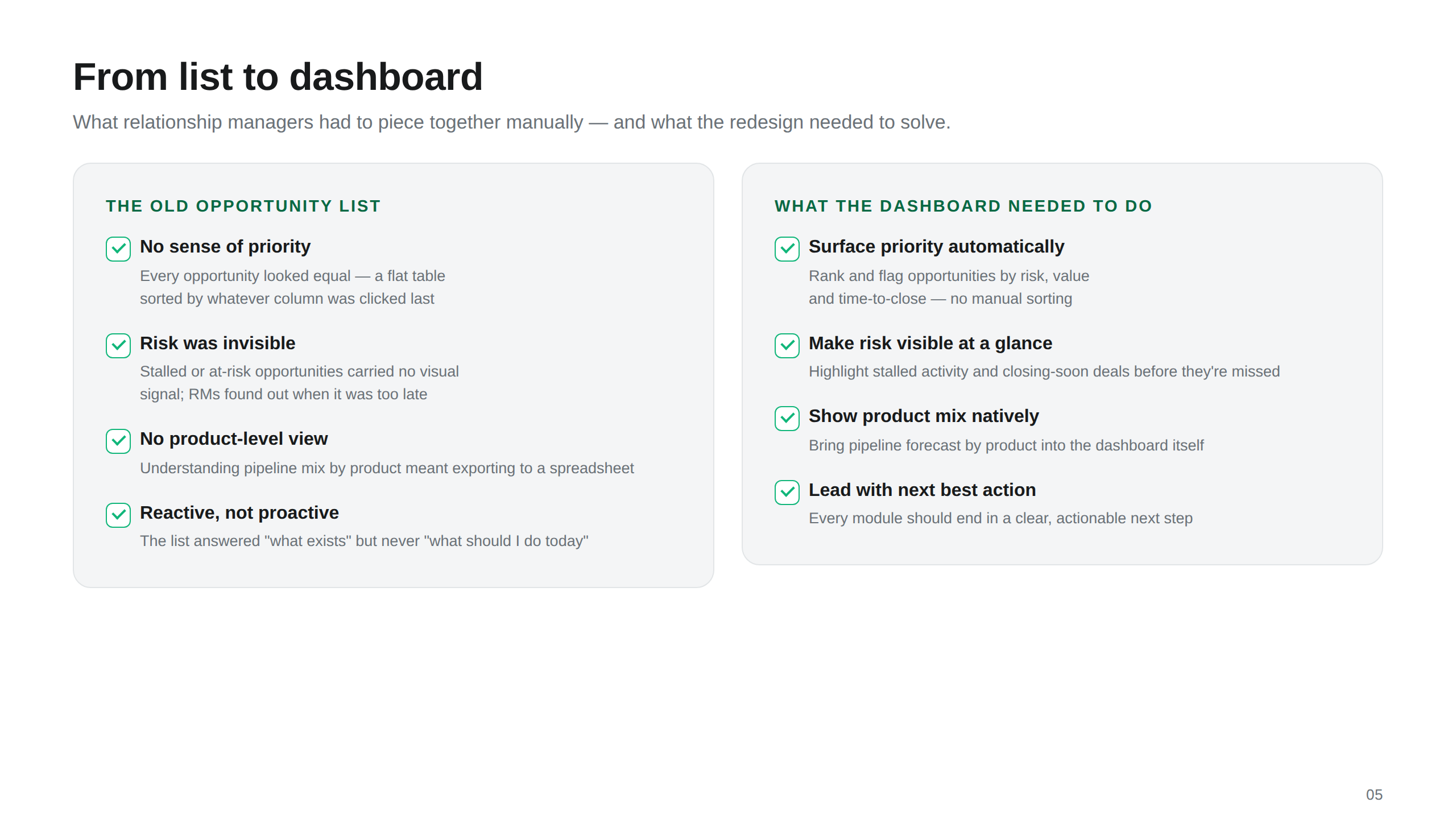
OneView had grown into a fragmented, reporting-heavy tool — dashboards overloaded with duplicate data and no clear signal of what needed attention. Relationship managers were spending time navigating the platform rather than managing relationships.
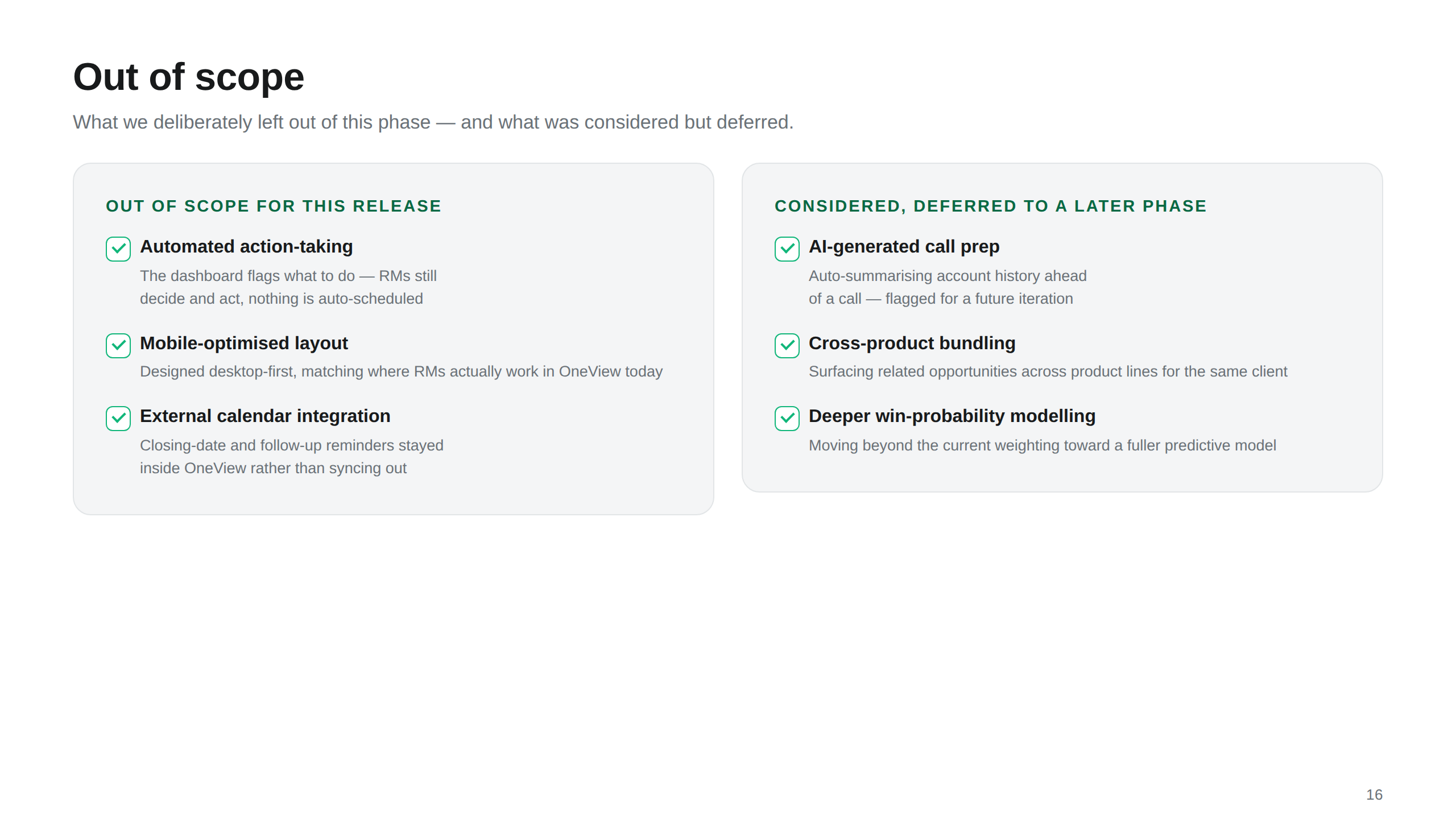
The hardest constraint was data availability. Many insight-led experiences depended on product data OneView couldn't yet surface — requiring design for both the current state and a future state once those limits were lifted.
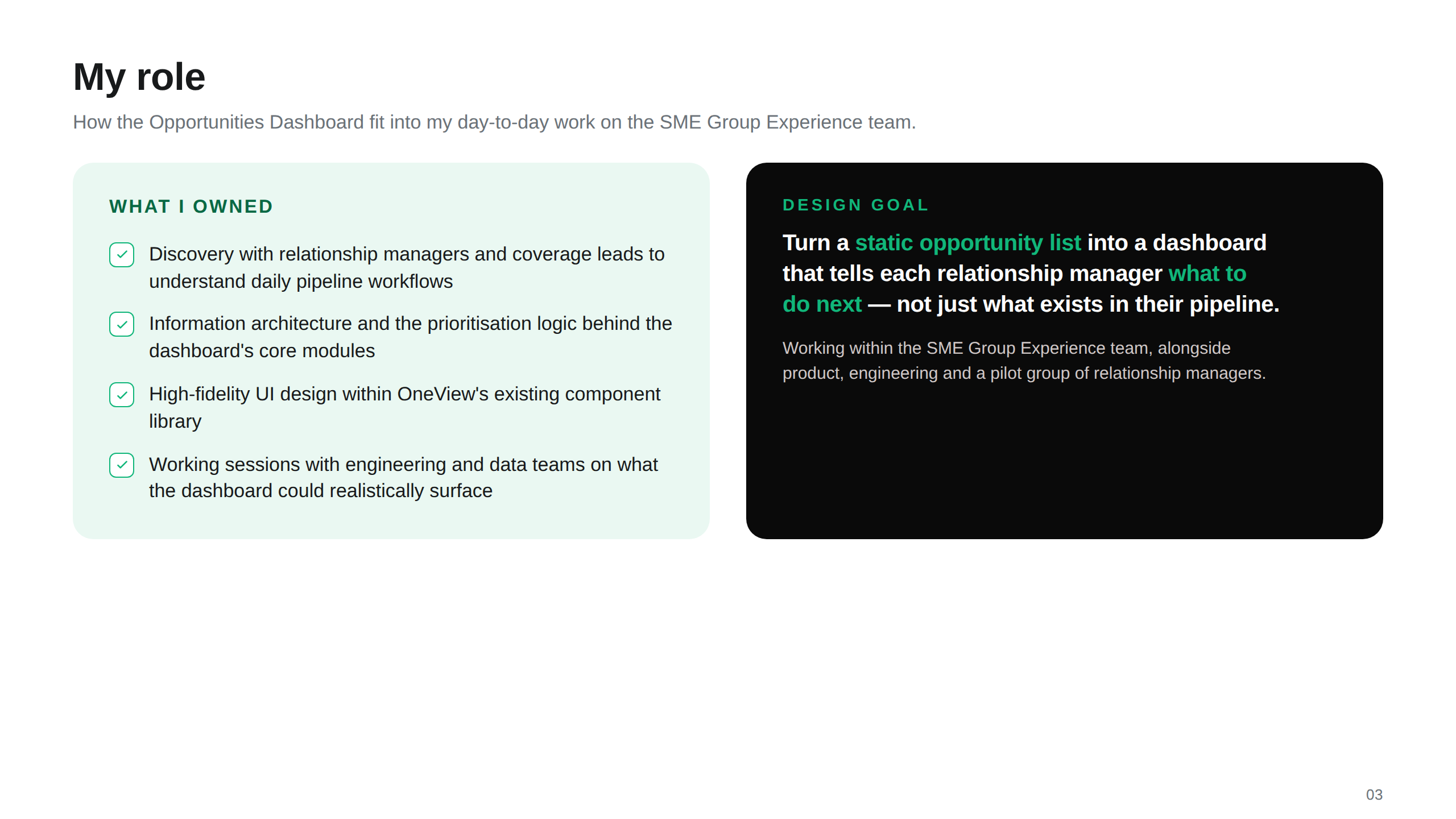
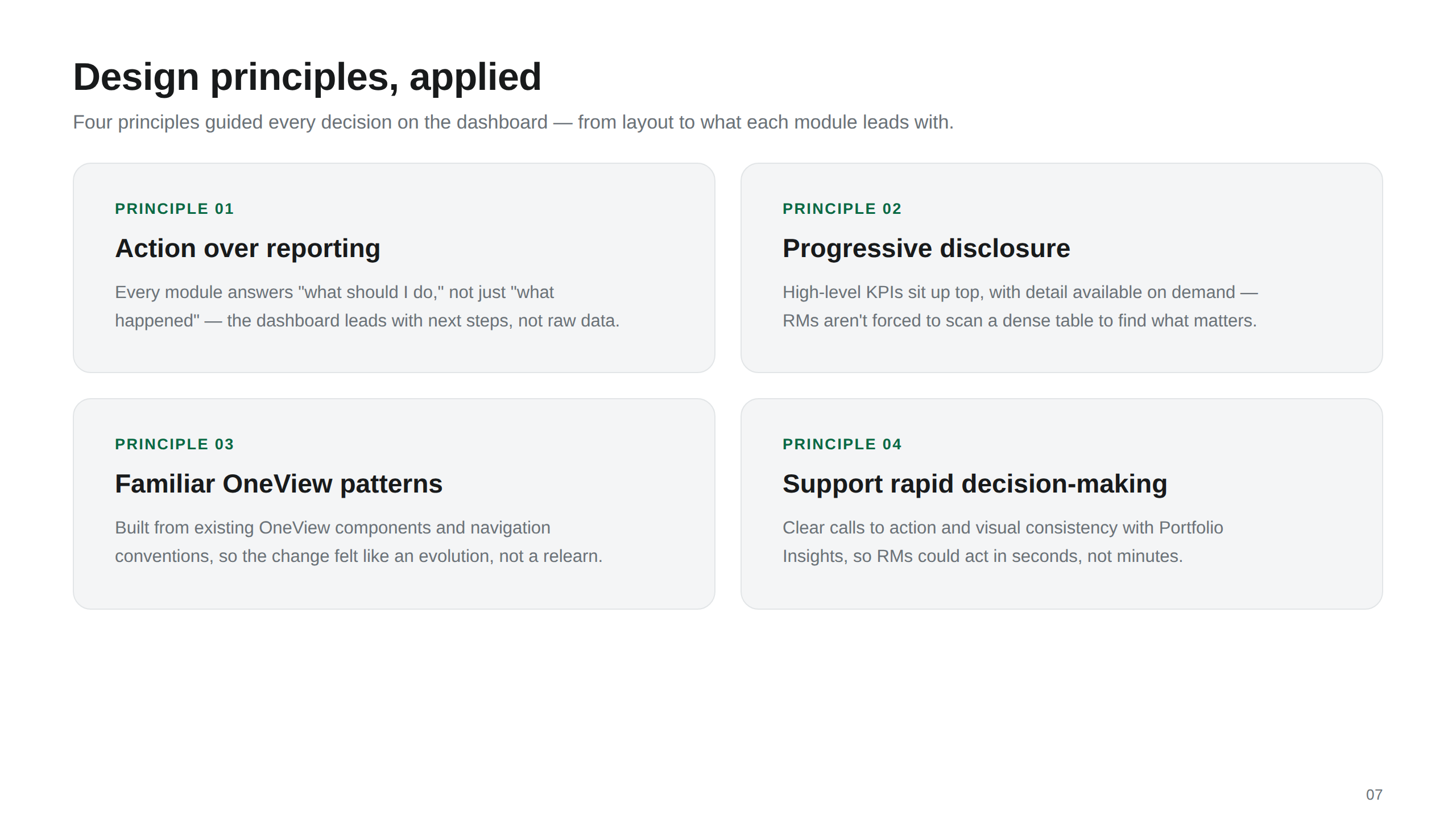
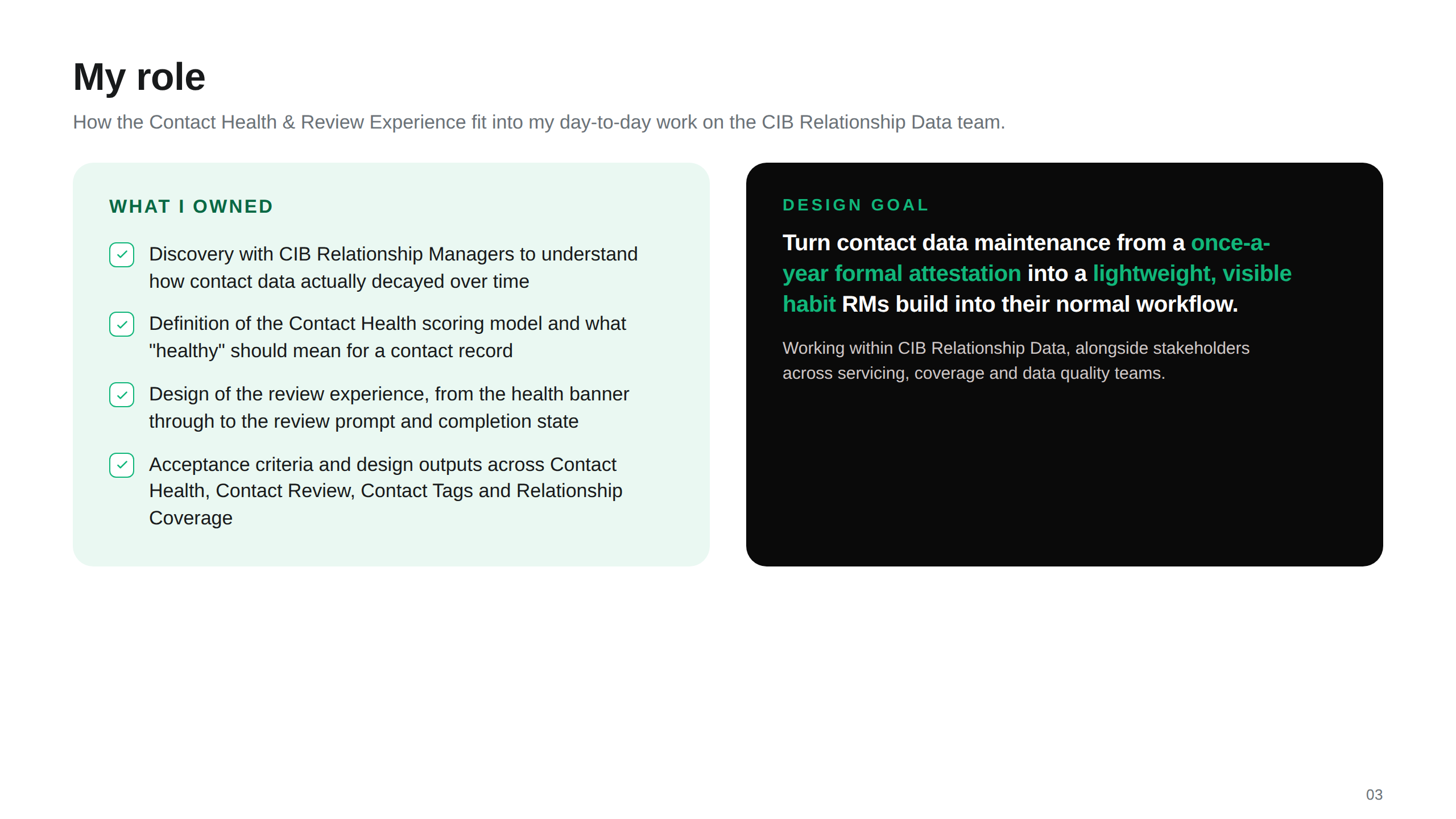
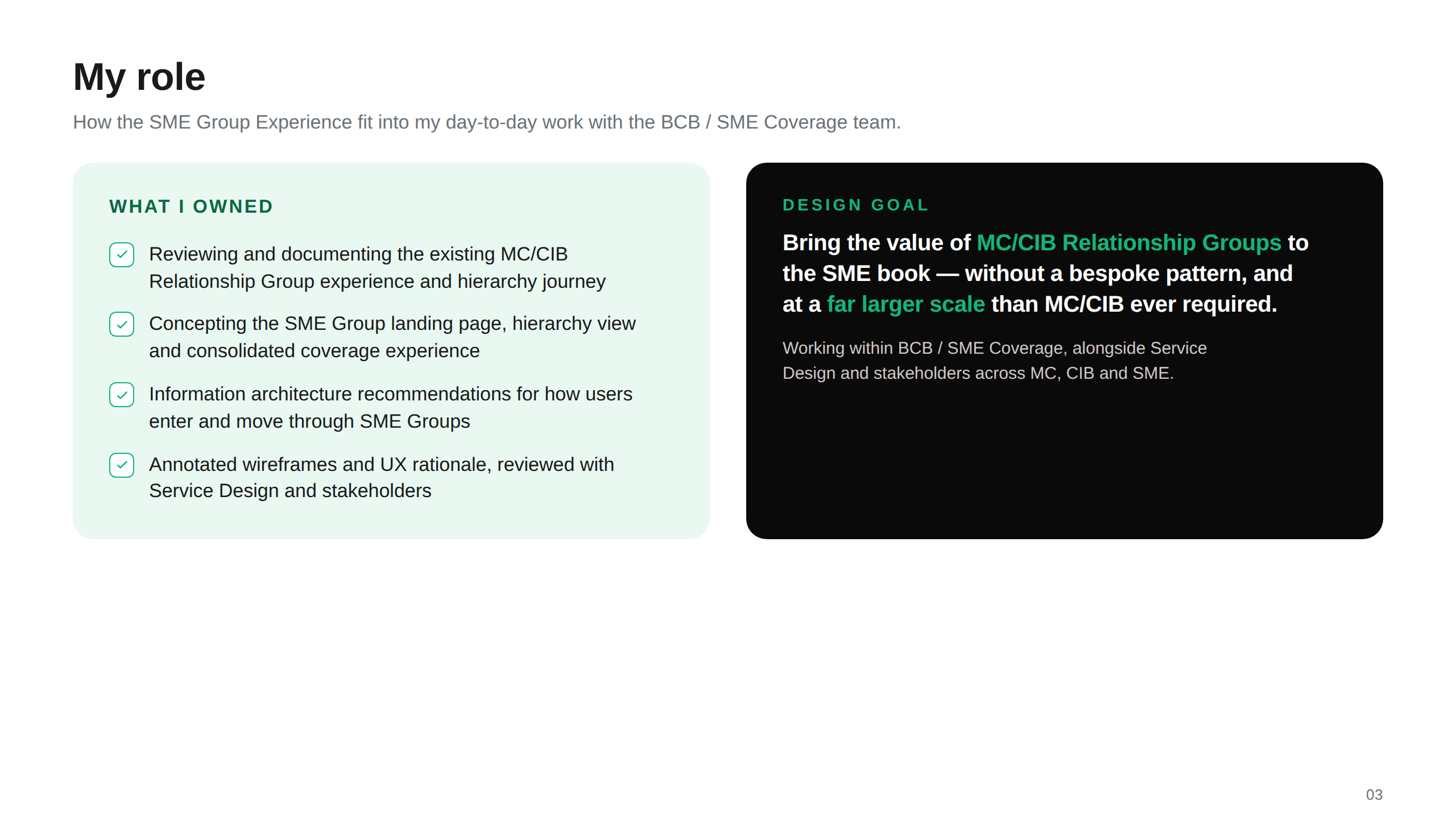
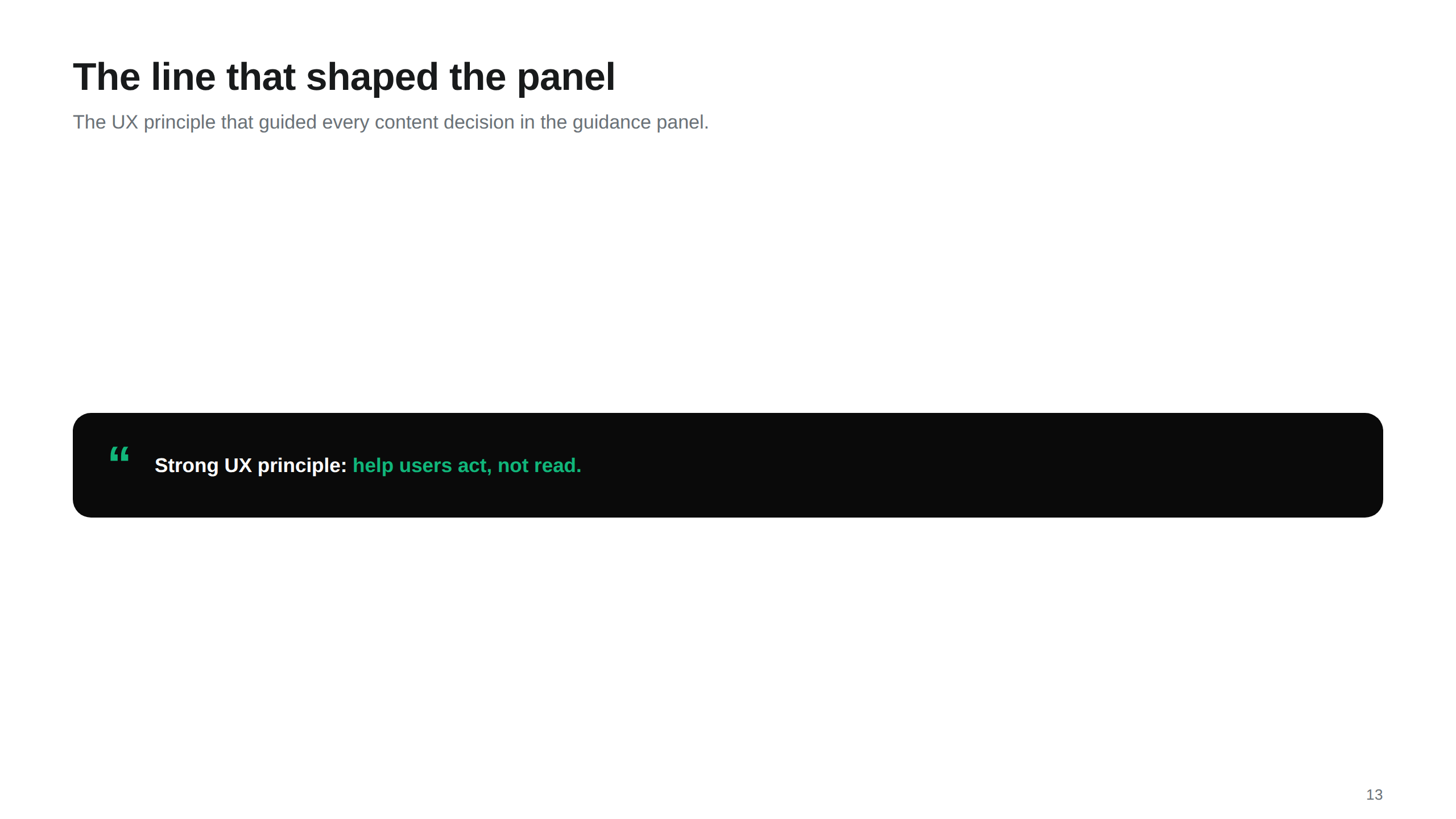
As Lead Product Designer on the SME Group Experience, I translated stakeholder feedback into UX concepts across multiple journeys — iterating quickly, aligning with Dynamics design principles, and reducing complexity at every opportunity. The guiding principle was action over reporting.
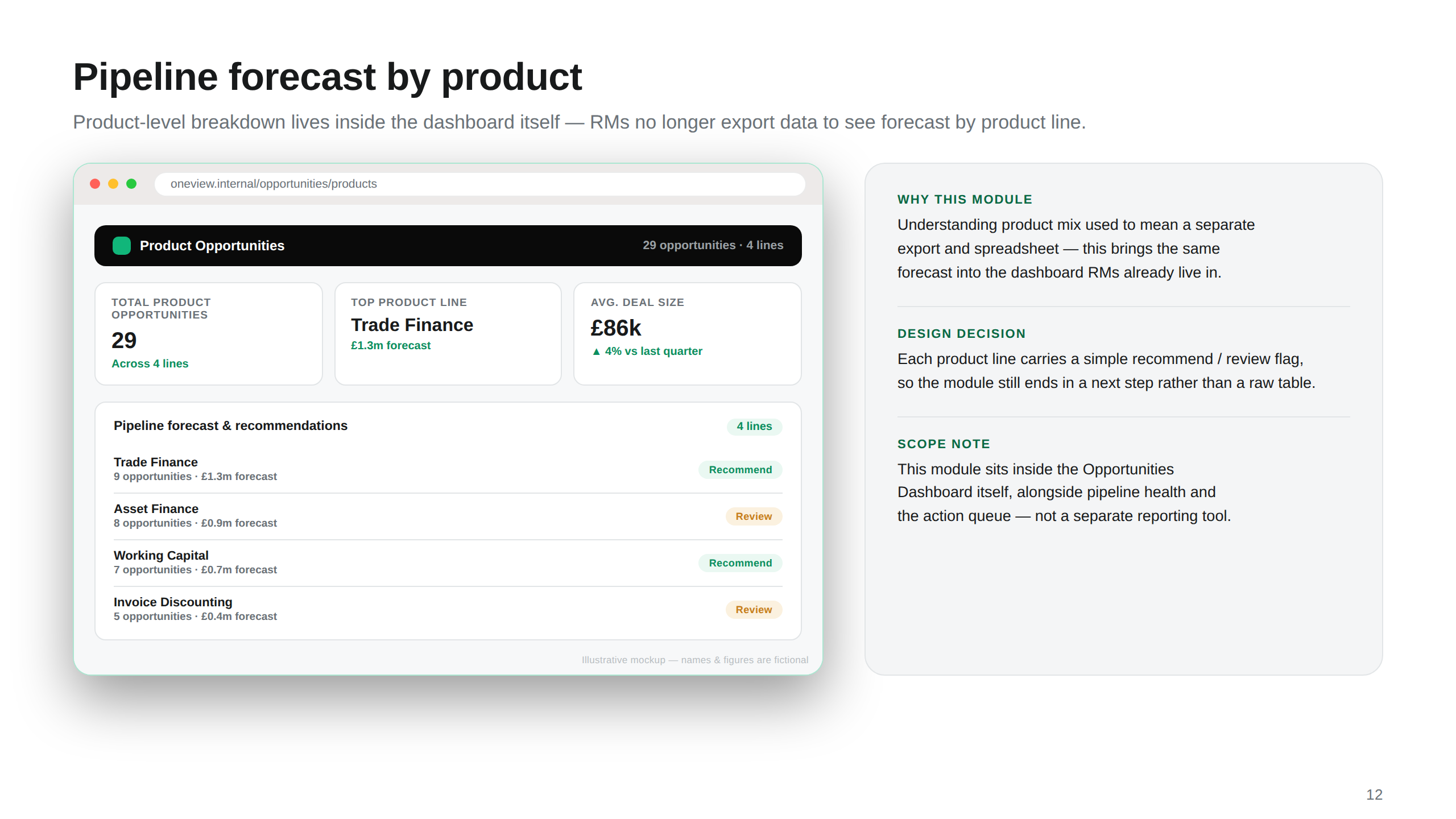
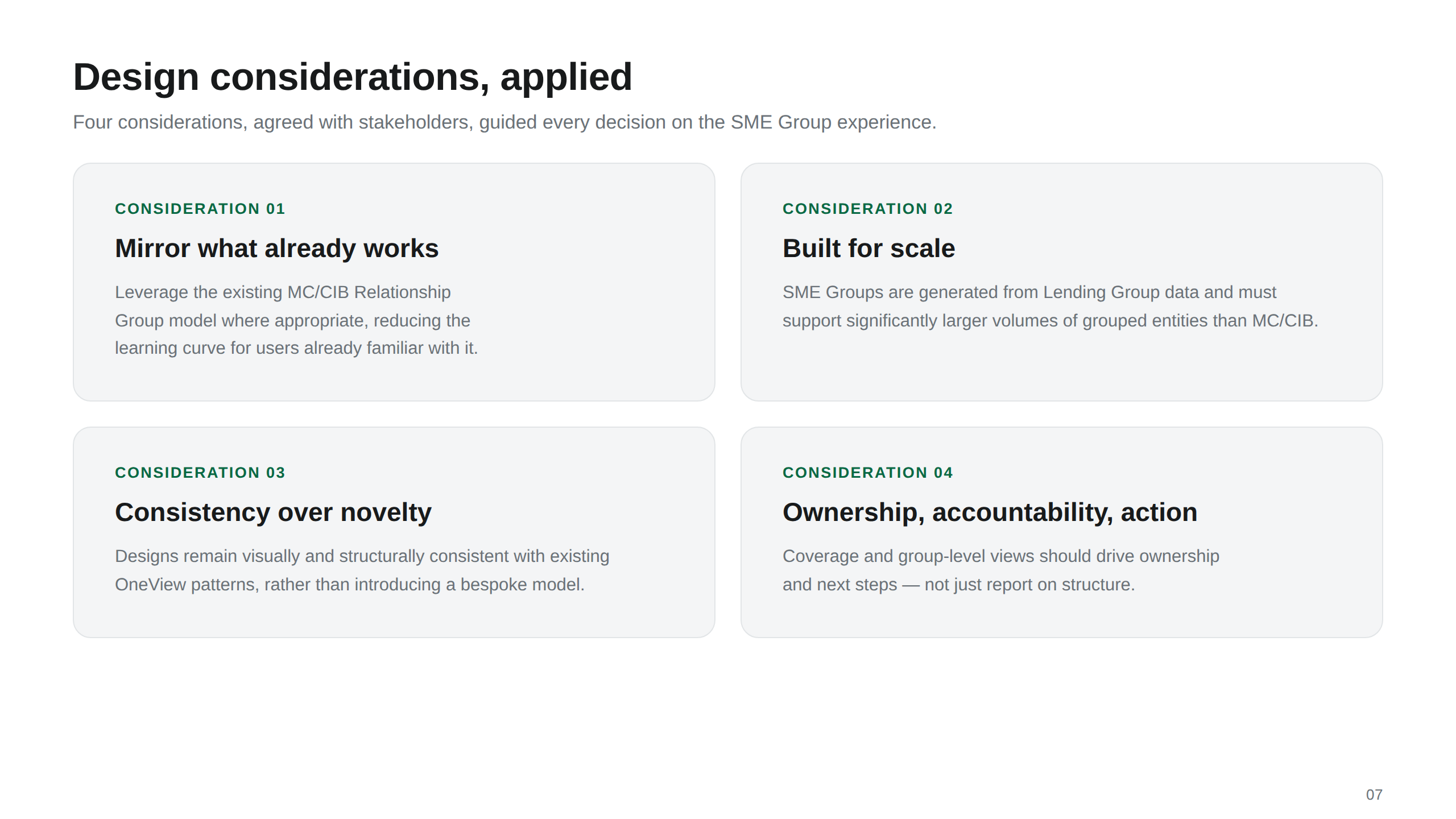
I worked across six areas: Group Dashboard, Contact Health, Business Card, Hierarchy, Consolidated Coverage, and Opportunities Dashboard — plus a future-state Product Insights concept.
Four programmes. Four sets of problems. One platform.
Each deck below represents a distinct design workstream delivered in parallel. Each is self-contained — covering the problem, design approach, what was built, and stakeholder response.
01
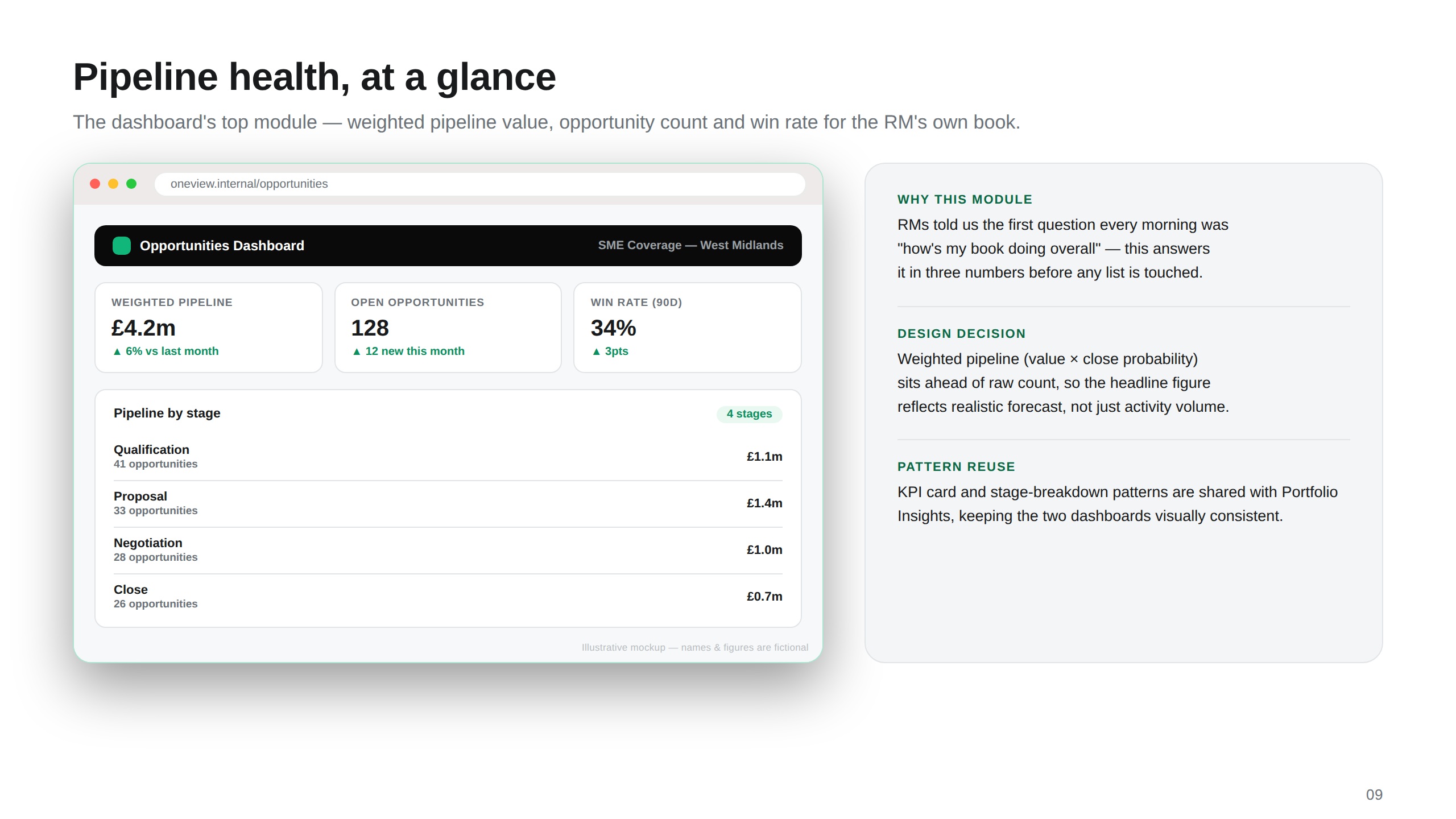
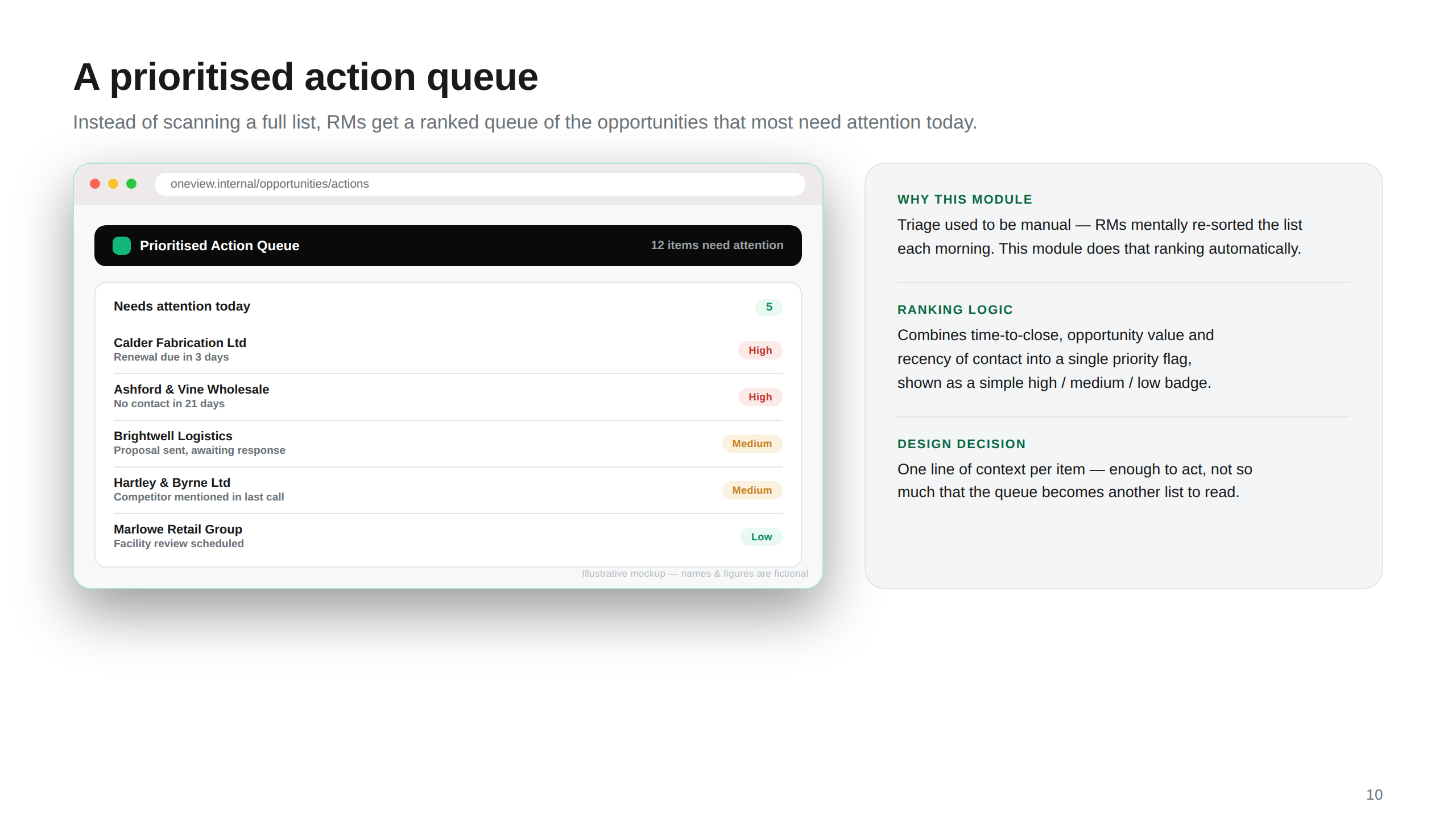
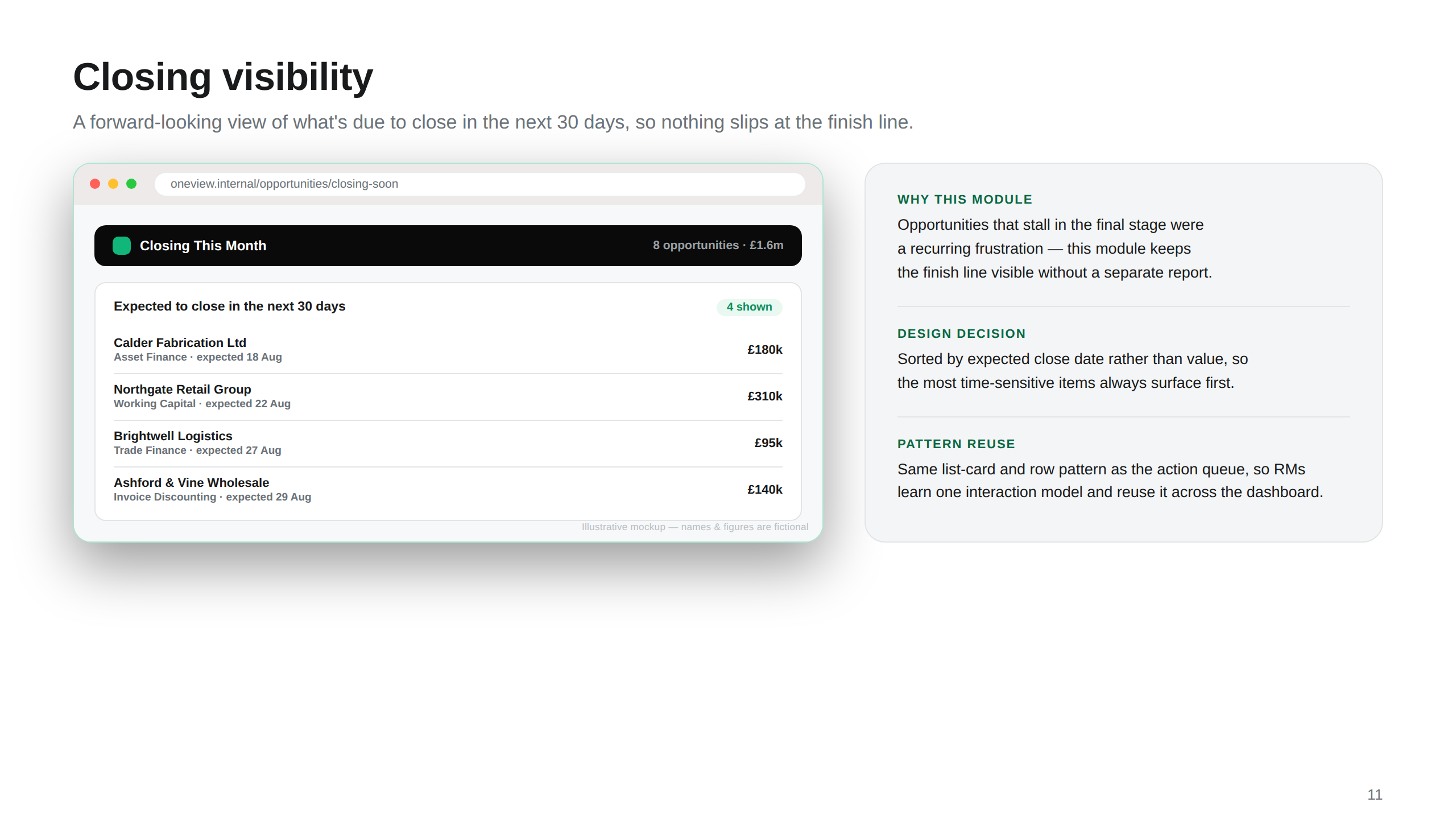
Opportunities Dashboard
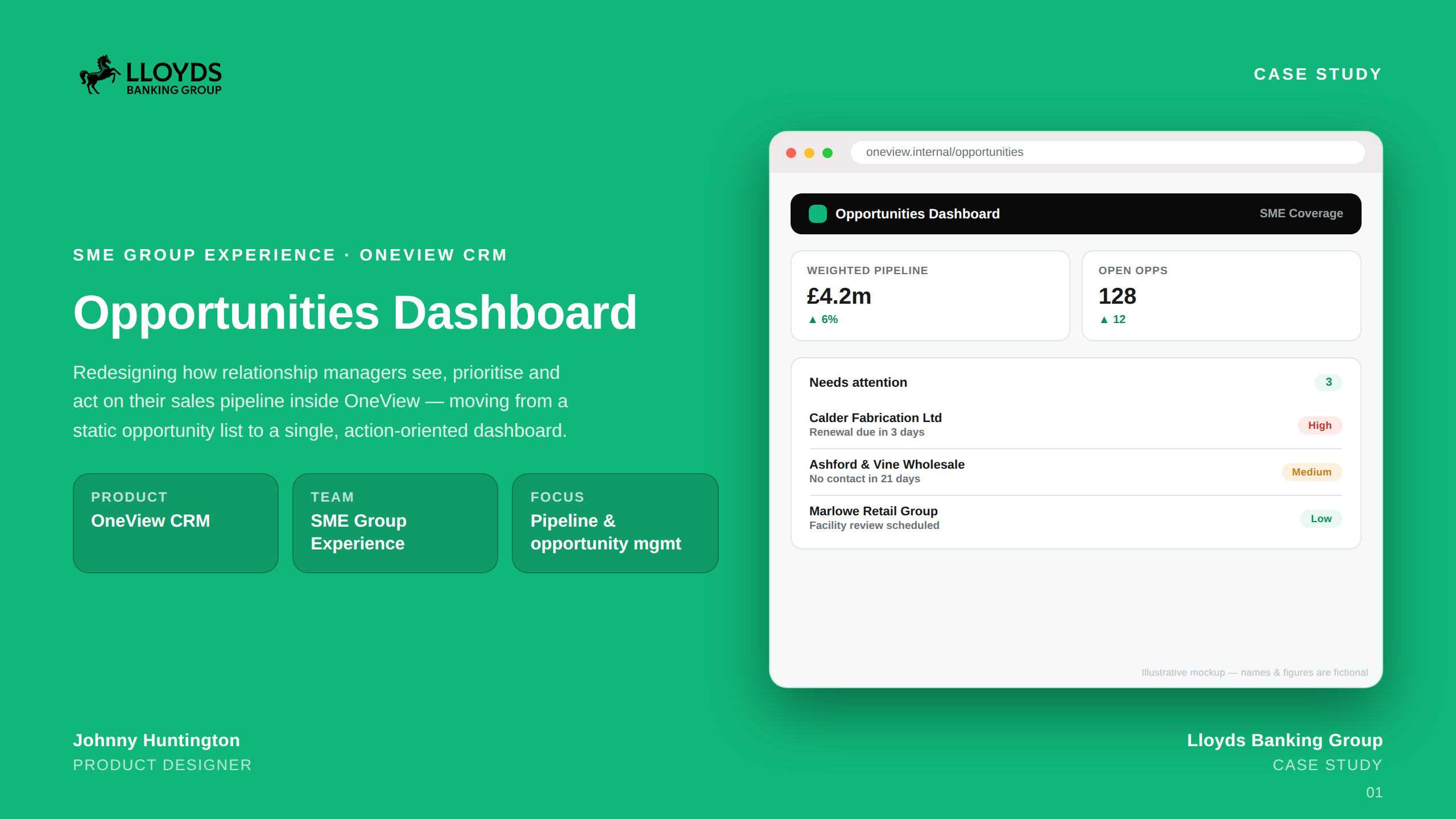
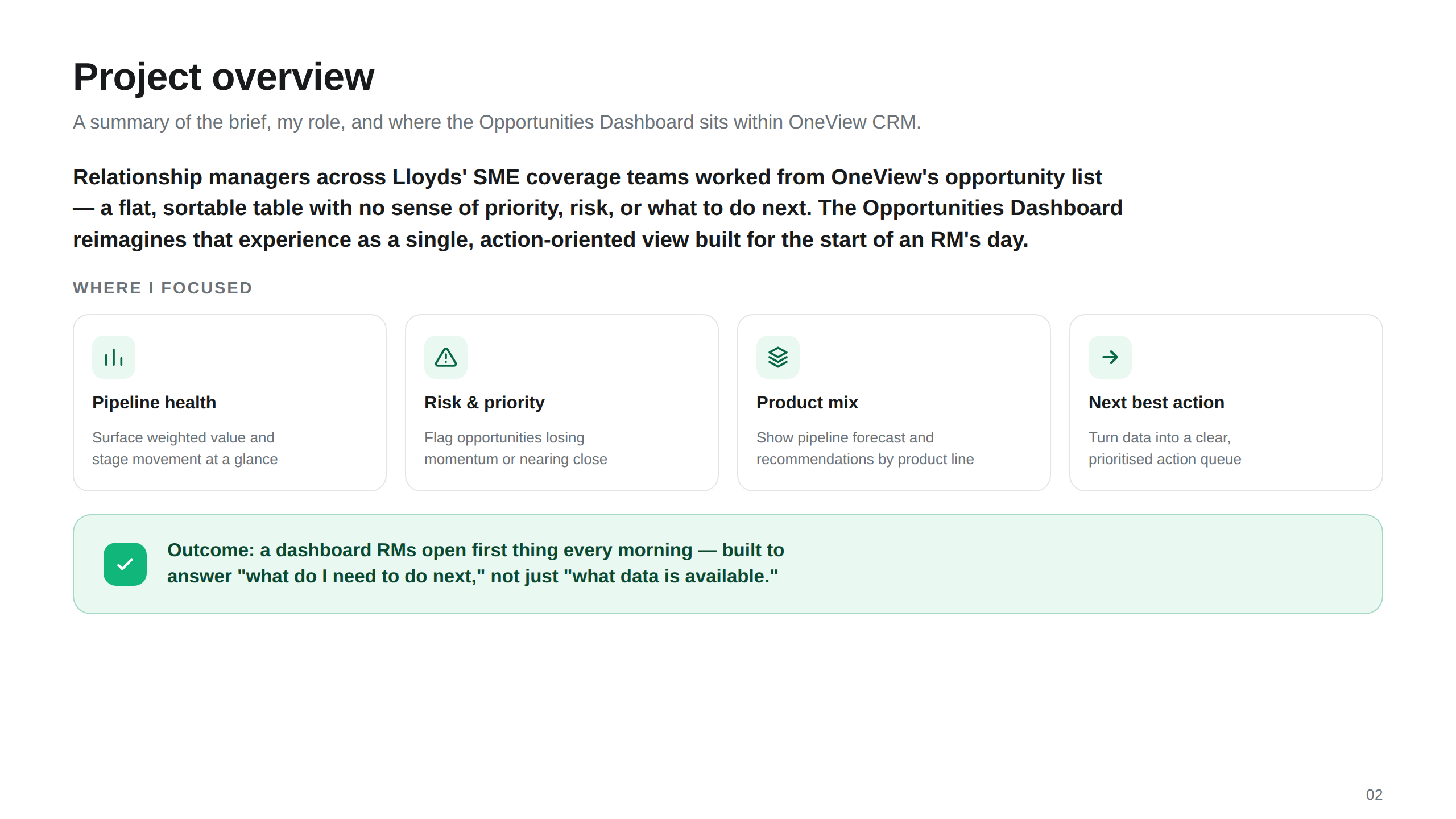
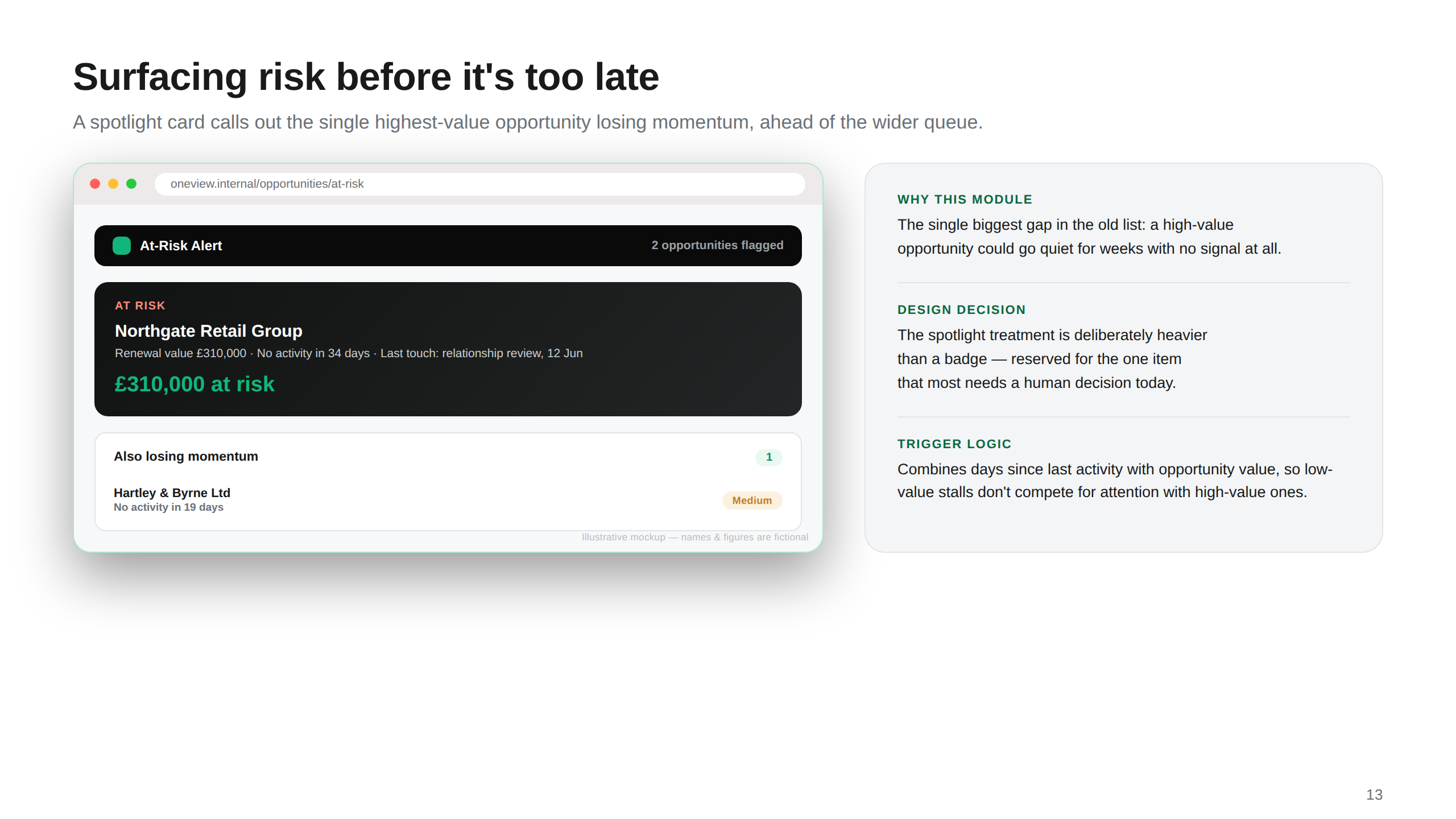
Redesigned the pipeline view from a static list into an action-oriented dashboard — surfacing weighted pipeline health, an action queue, and at-risk spotlights.
02
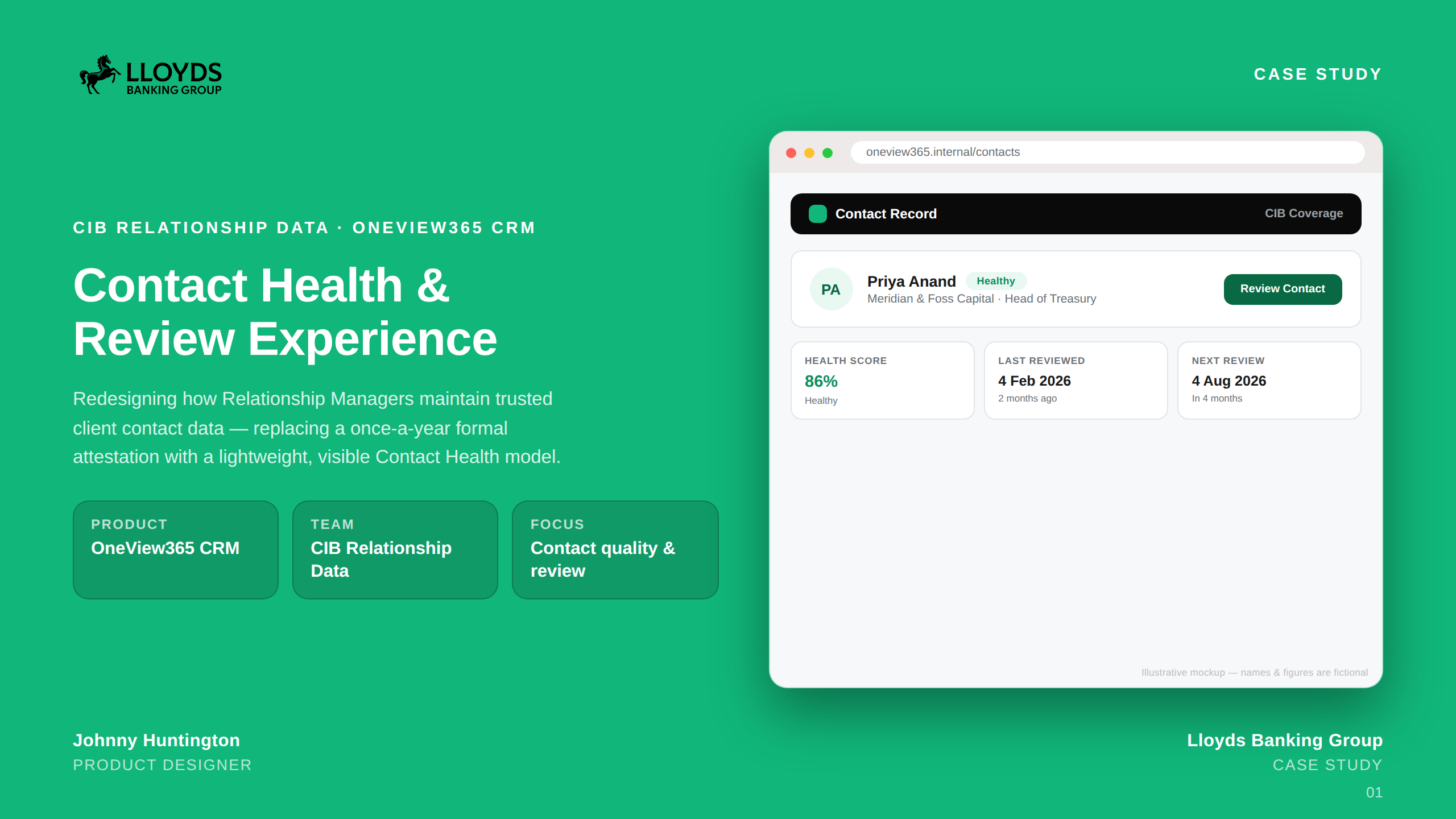
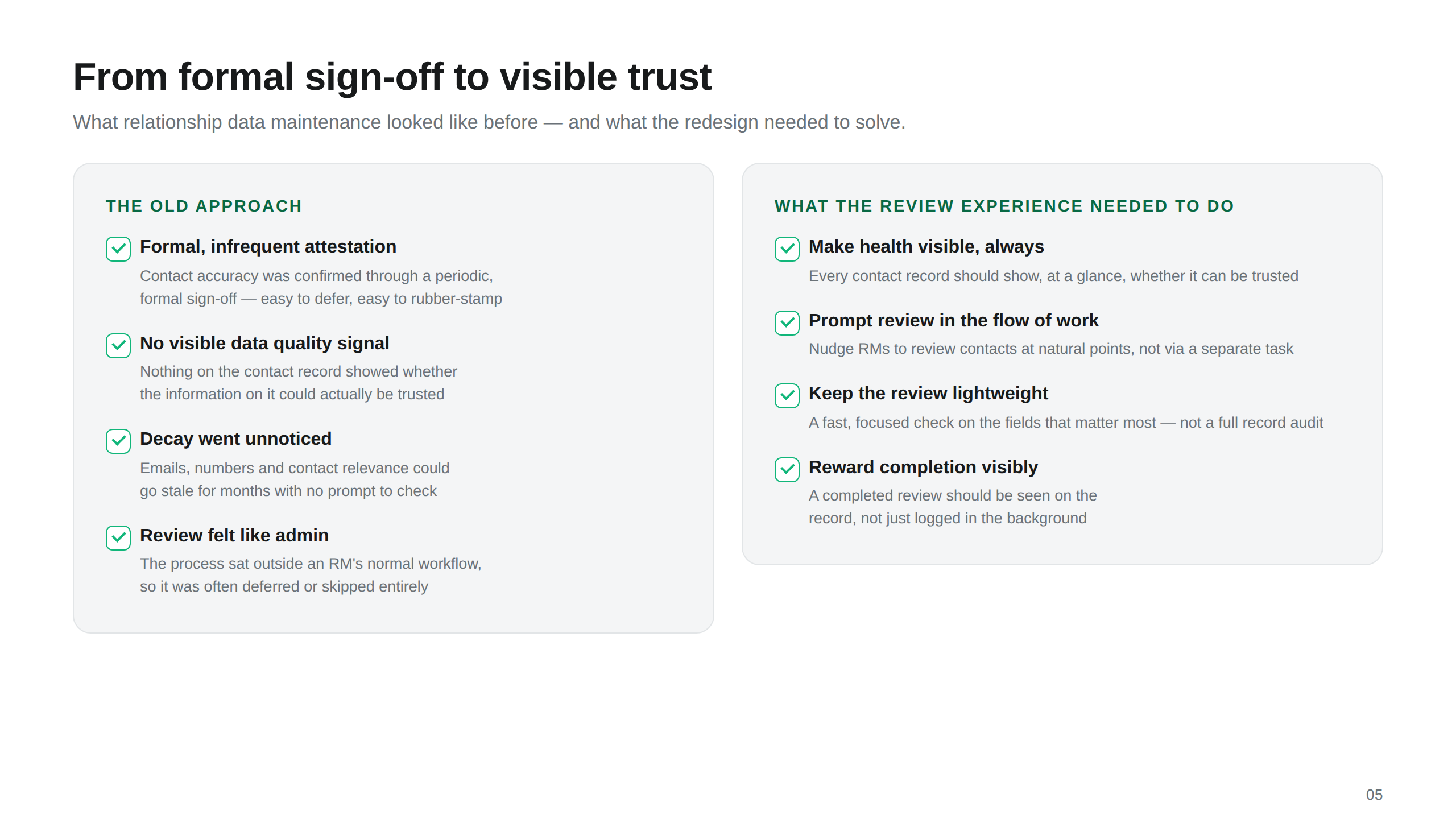
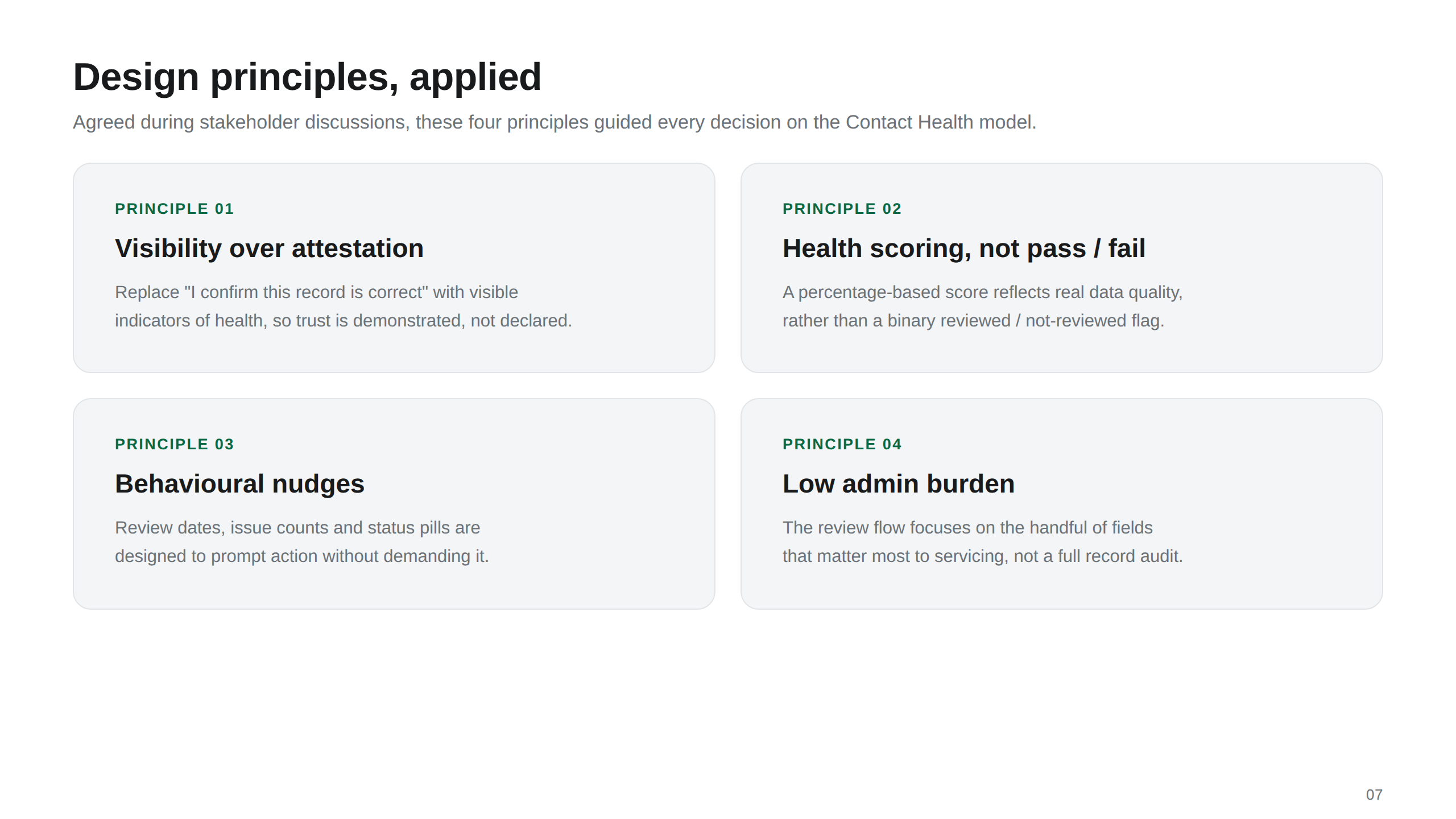
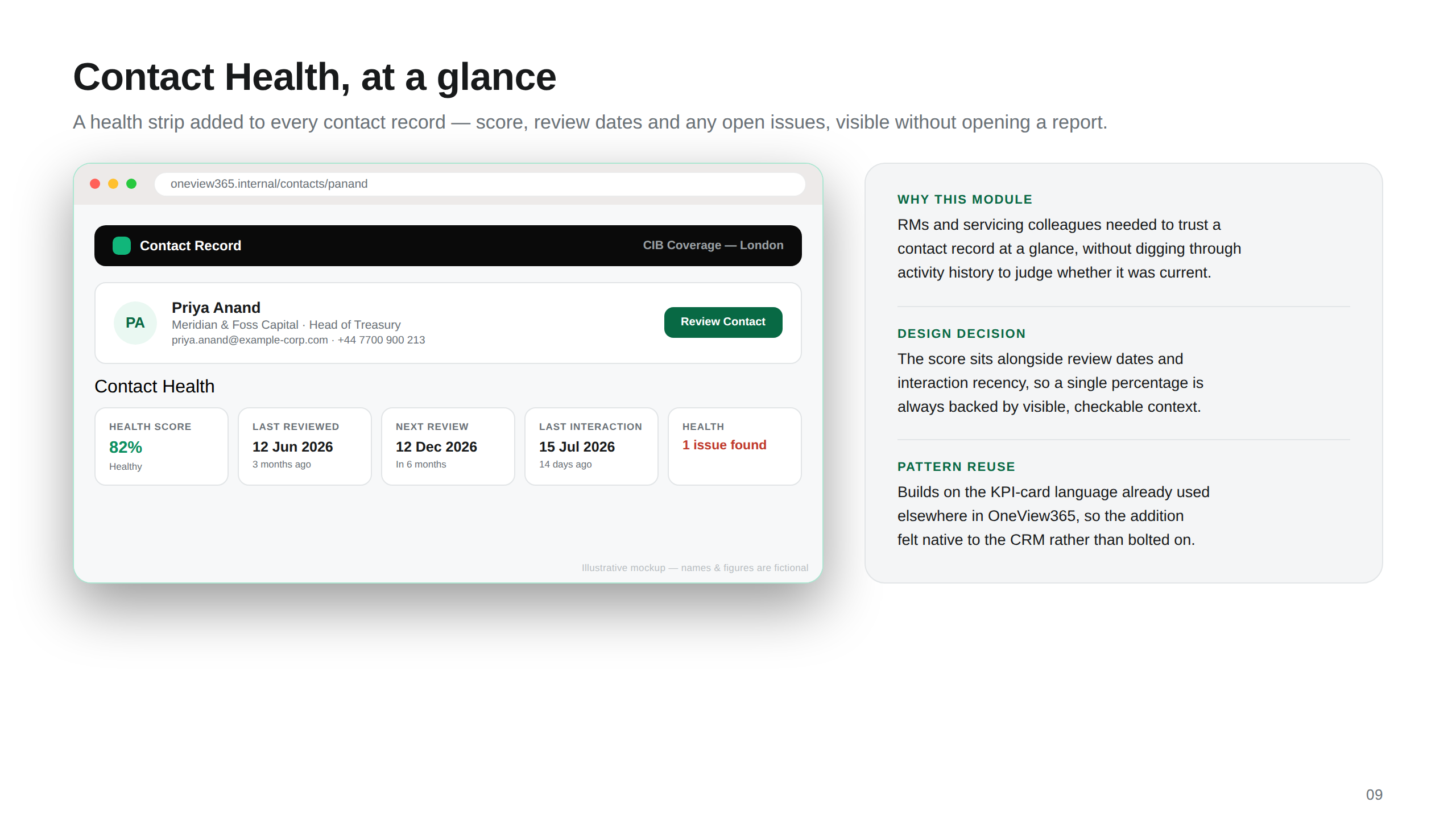
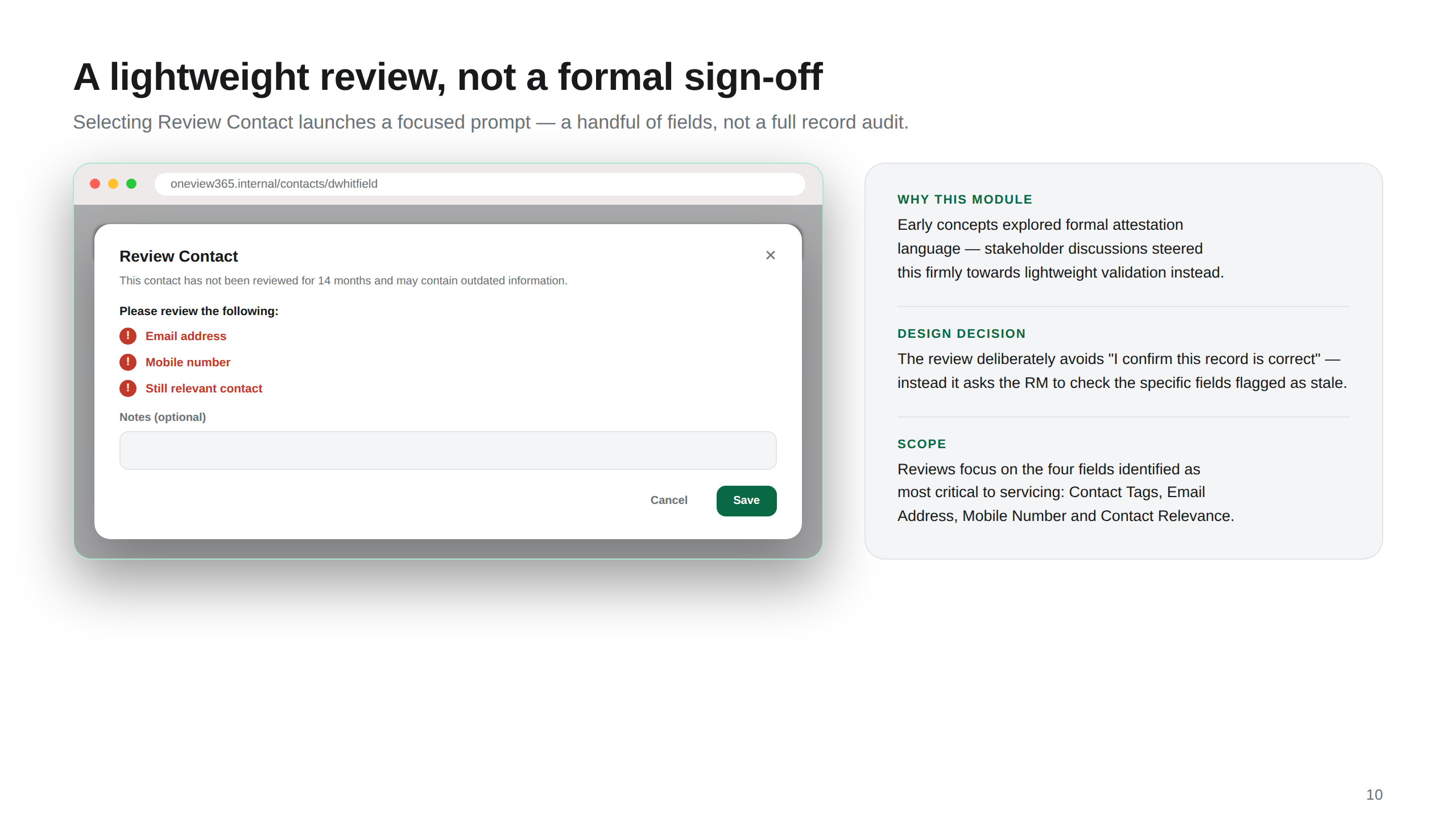
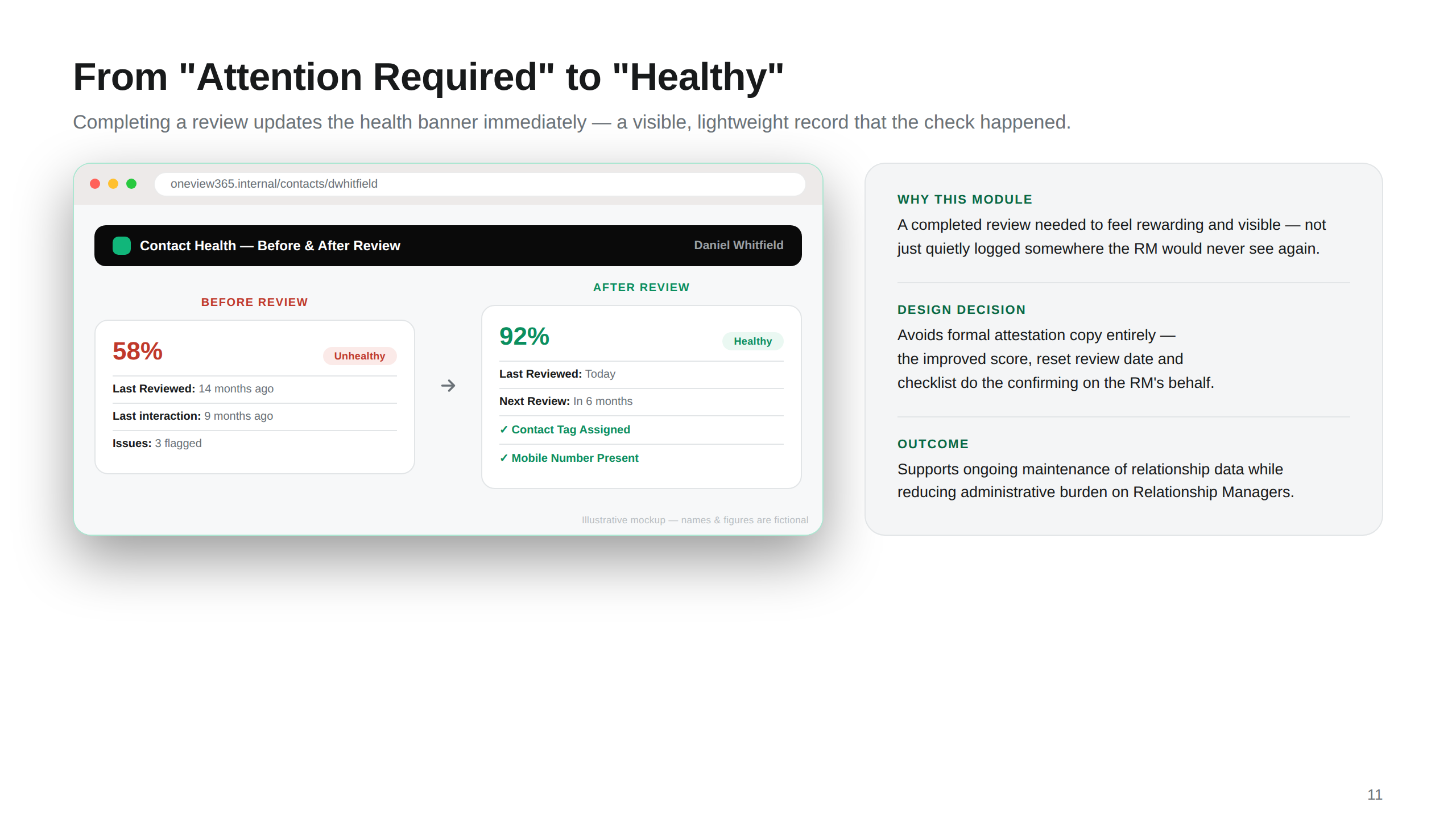
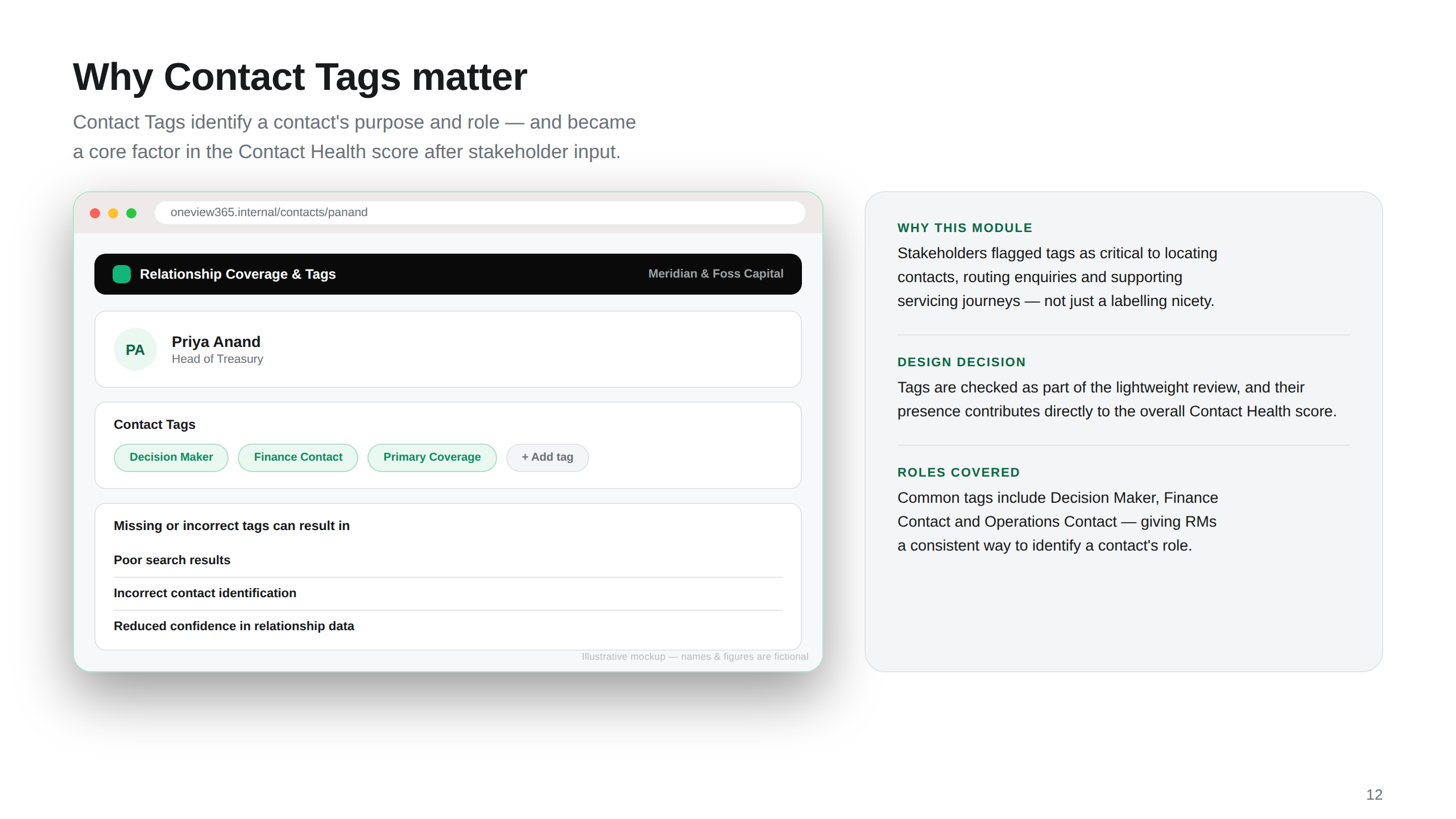
Contact Health & Review
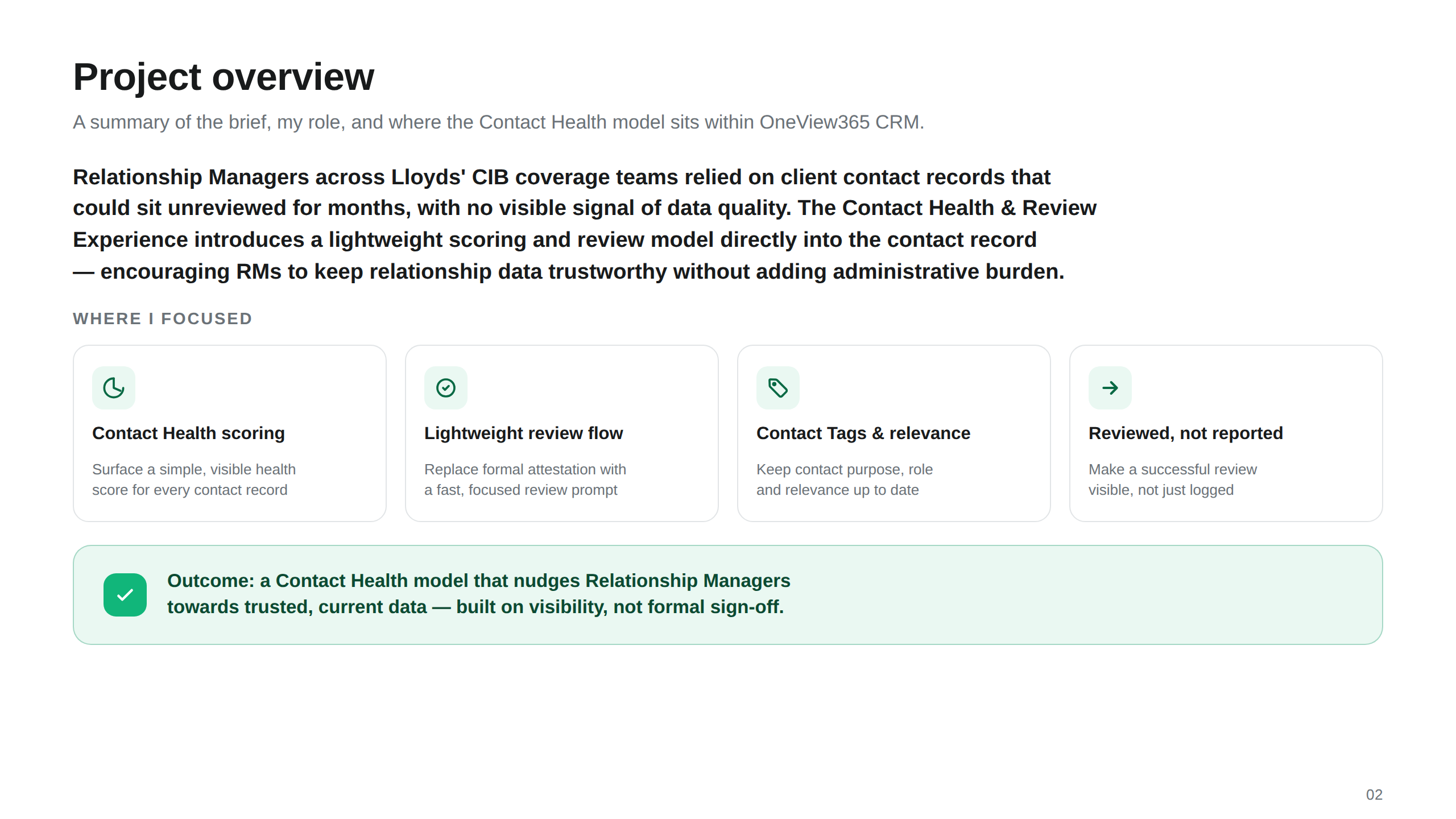
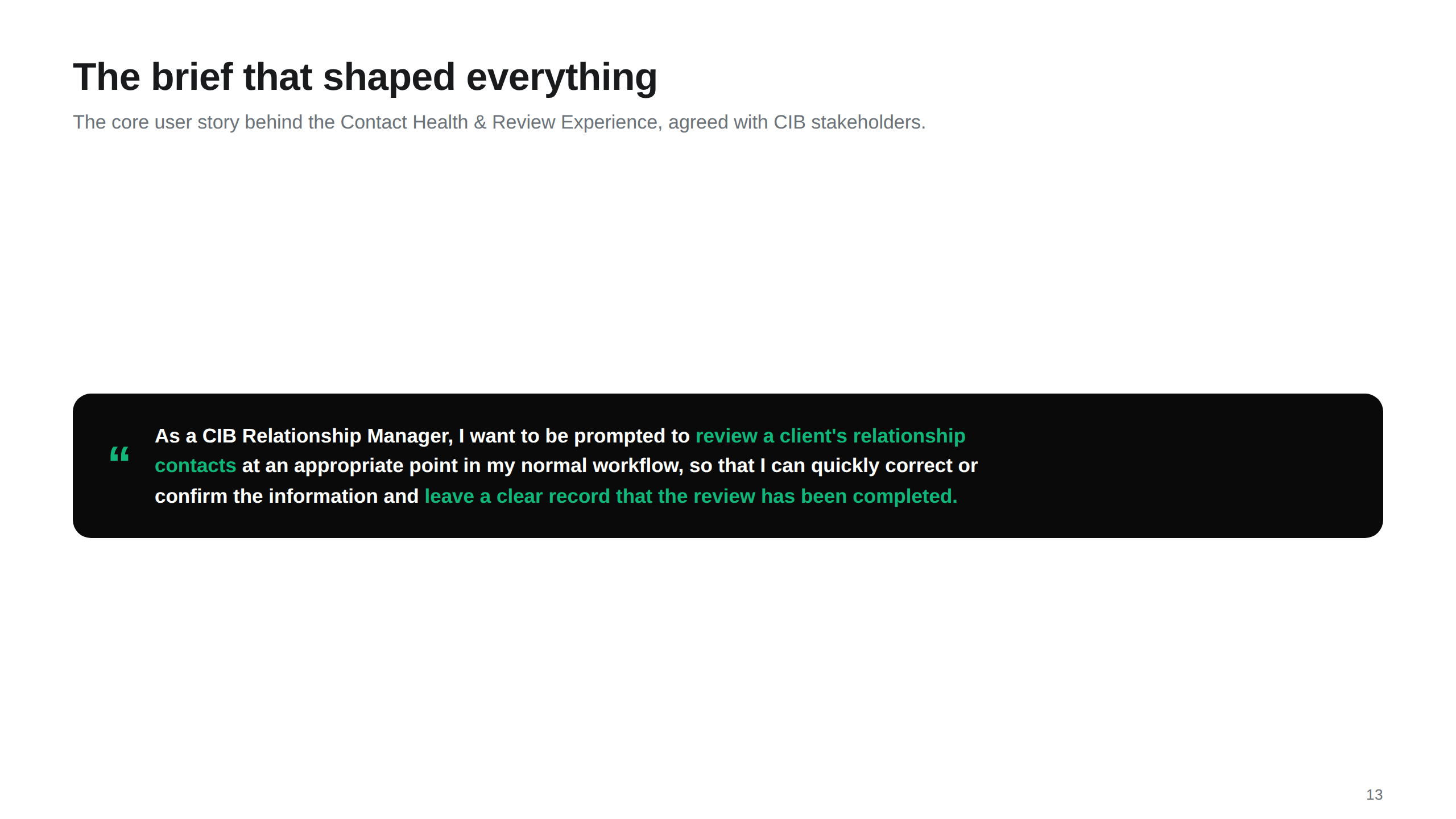
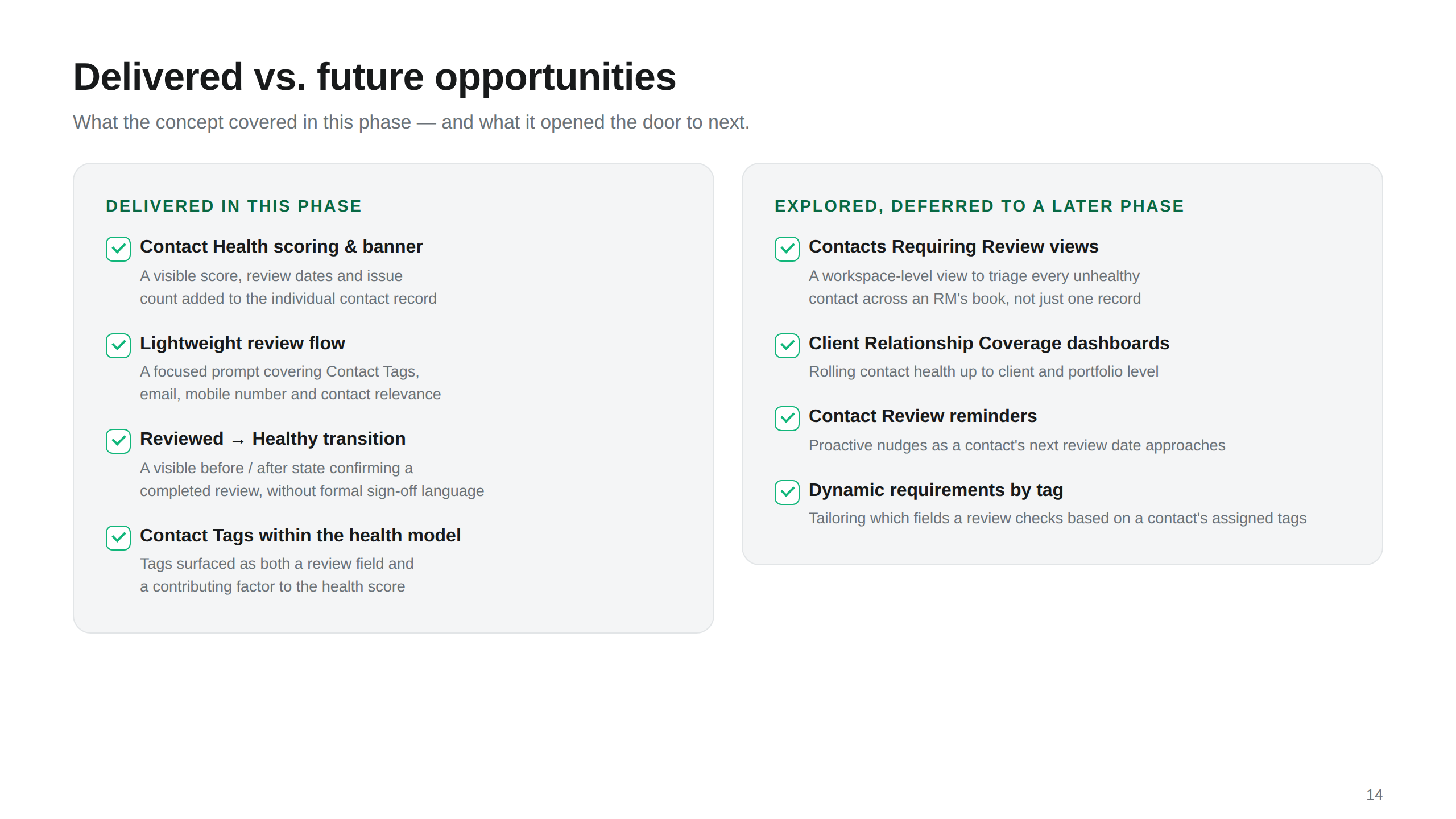
Replaced a once-a-year formal attestation process with a continuous, lightweight contact health model — giving RMs an at-a-glance view of contact quality and upcoming reviews.
03
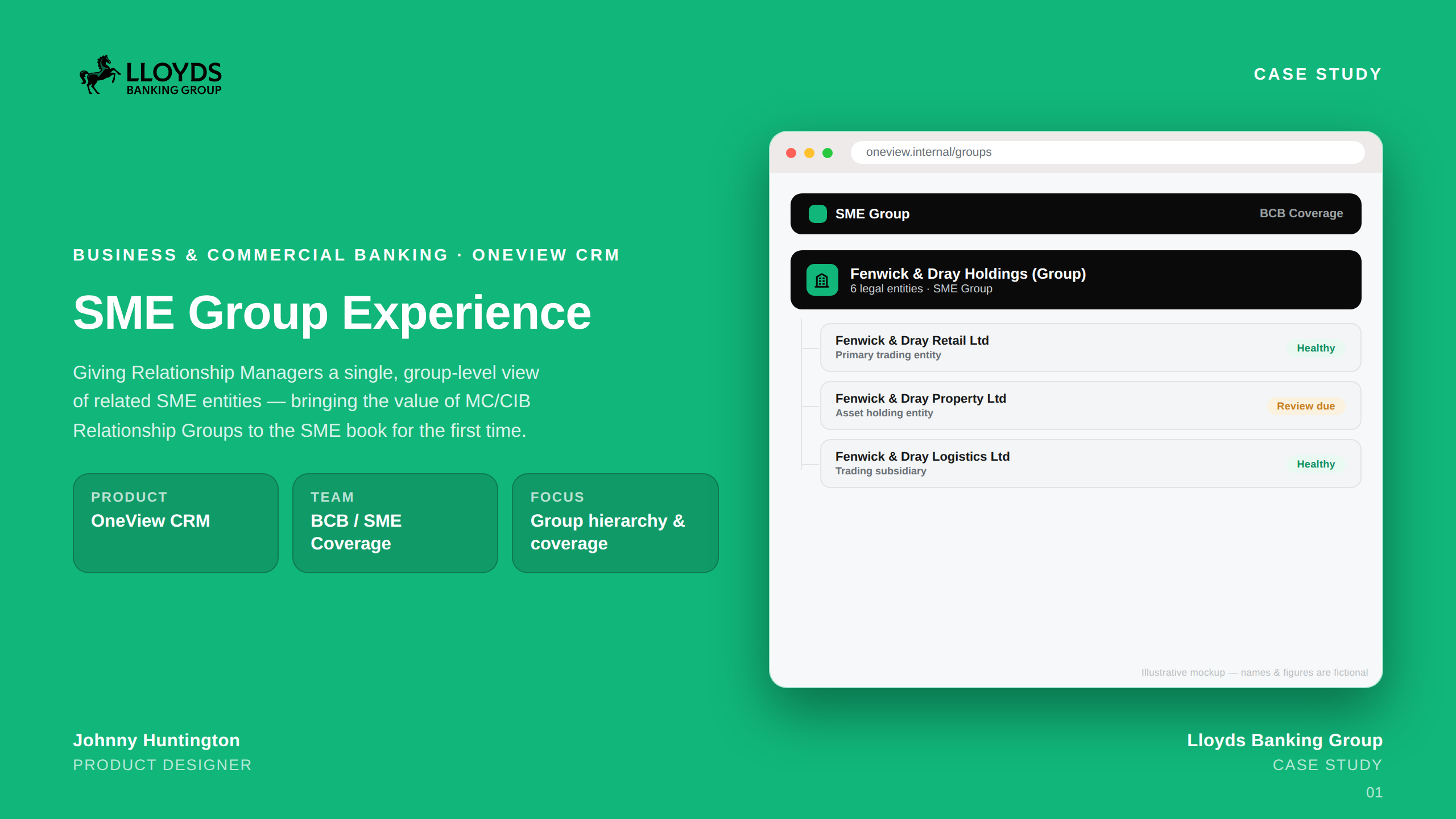
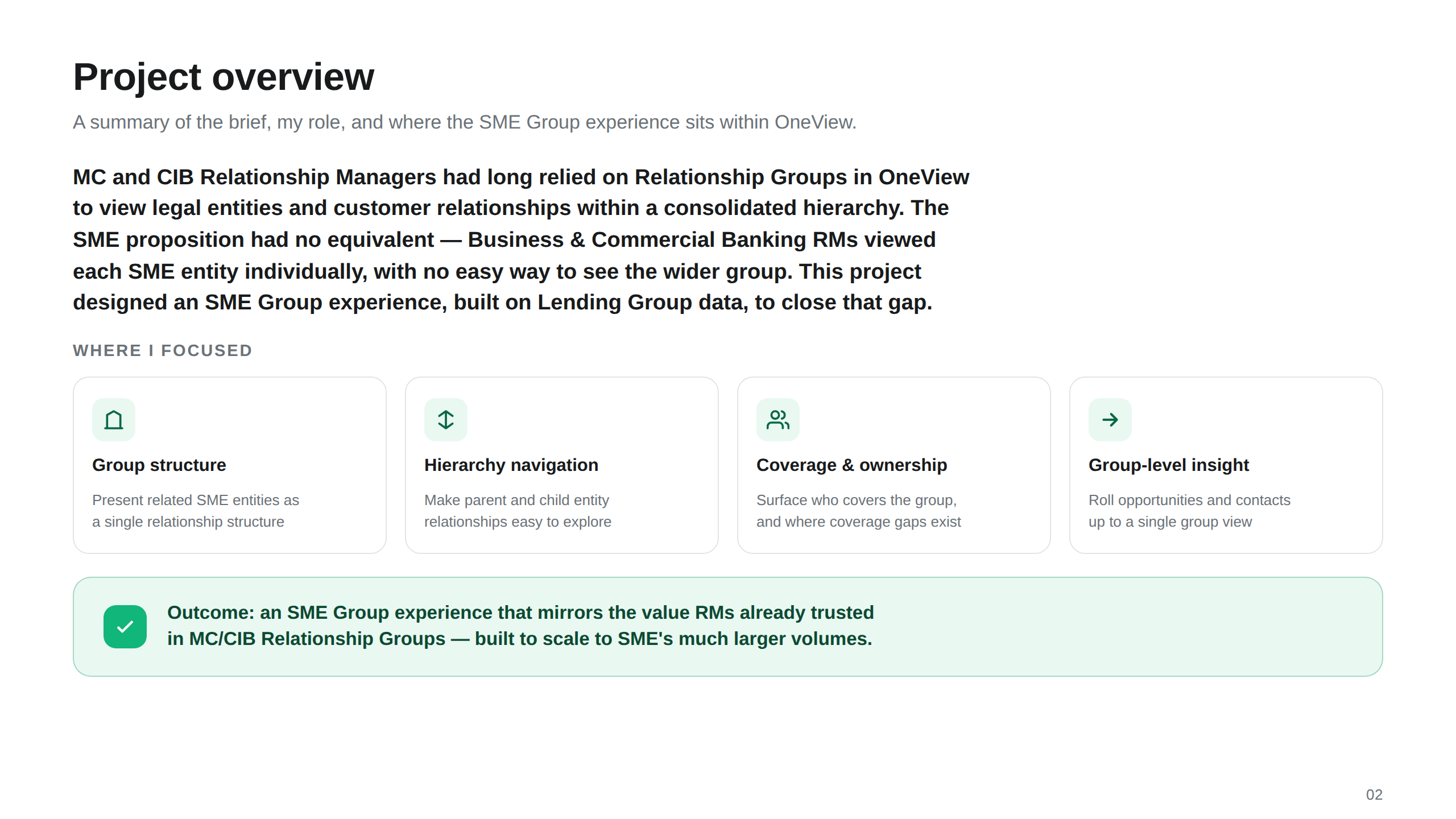
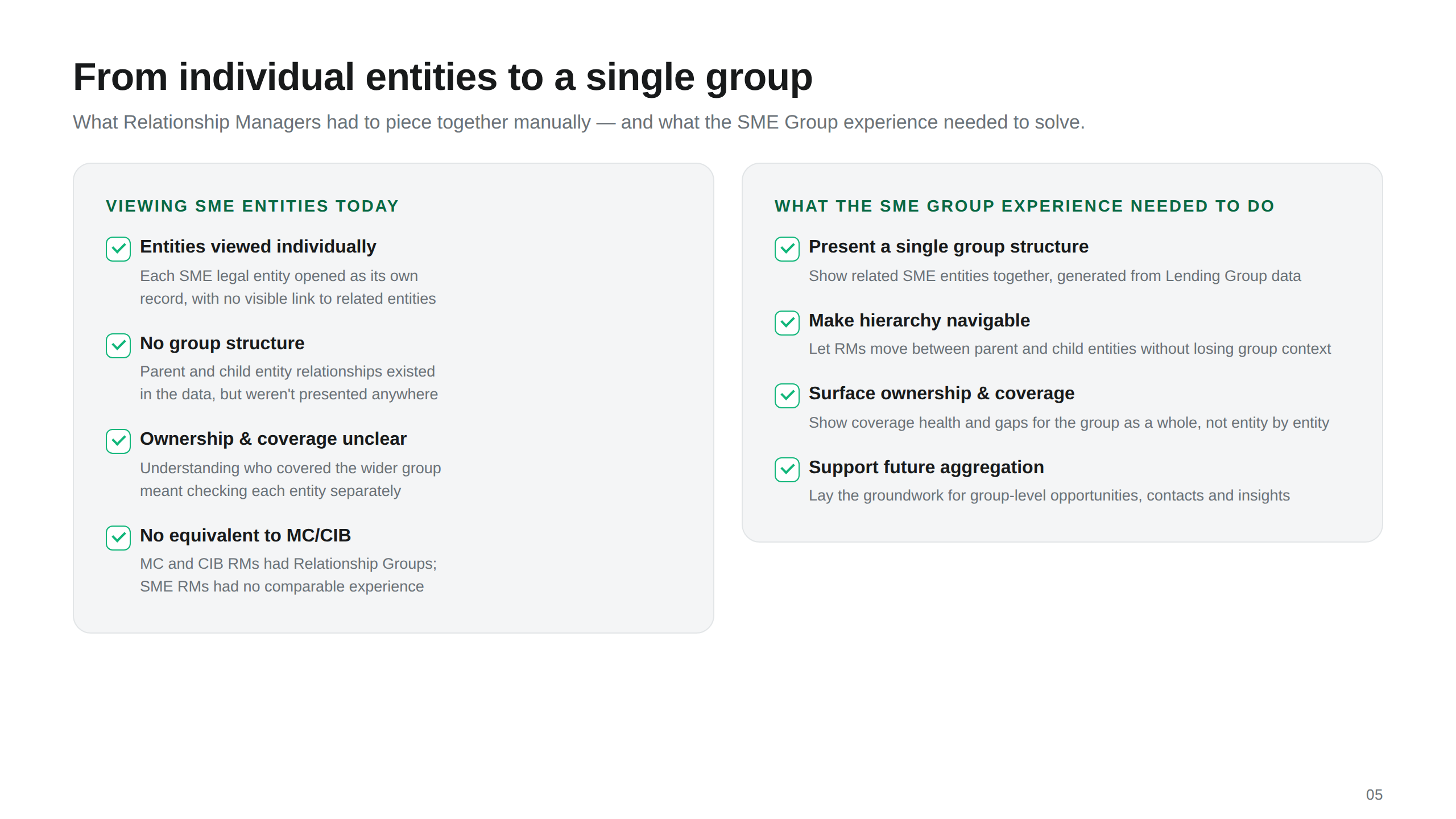
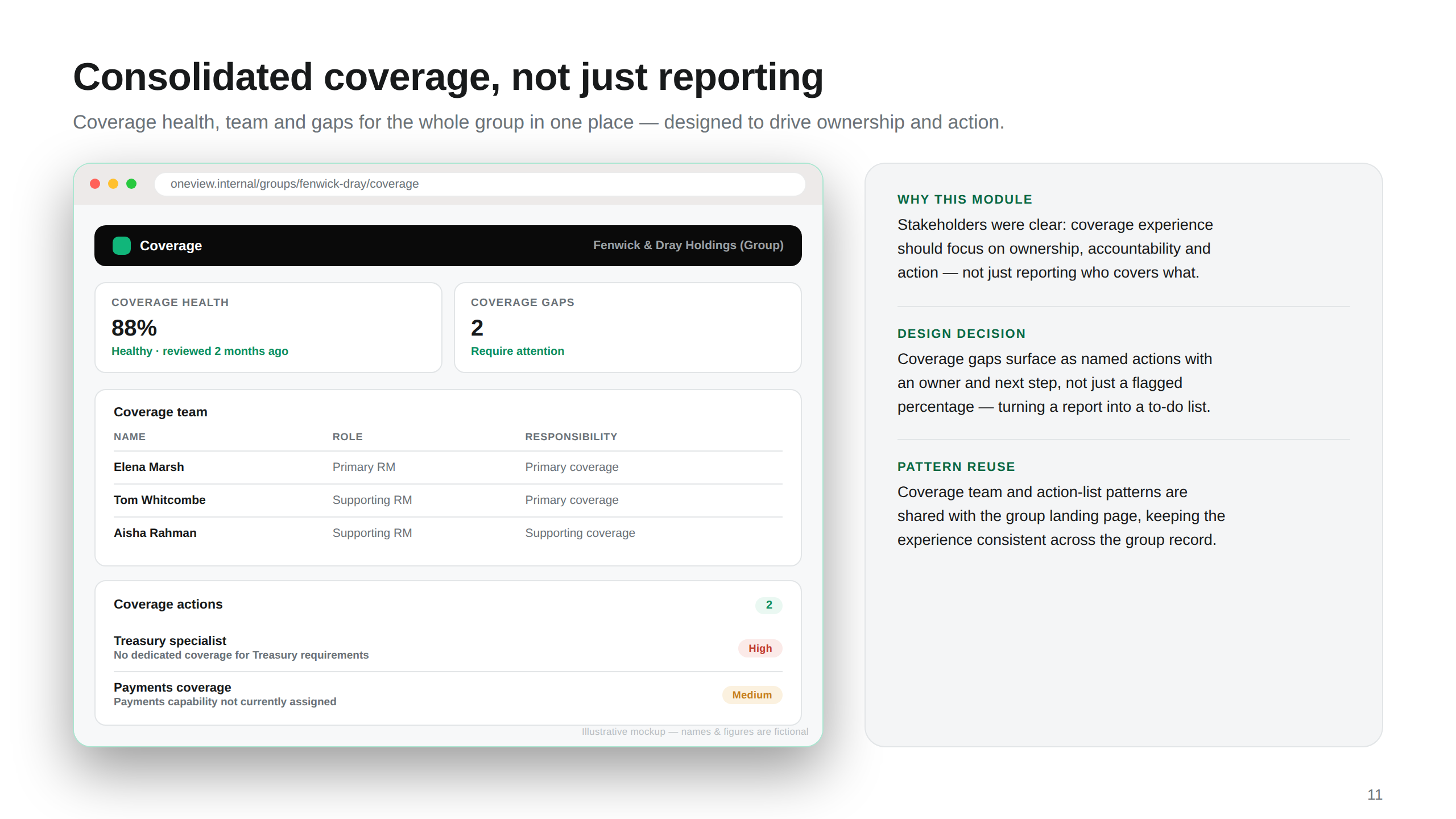
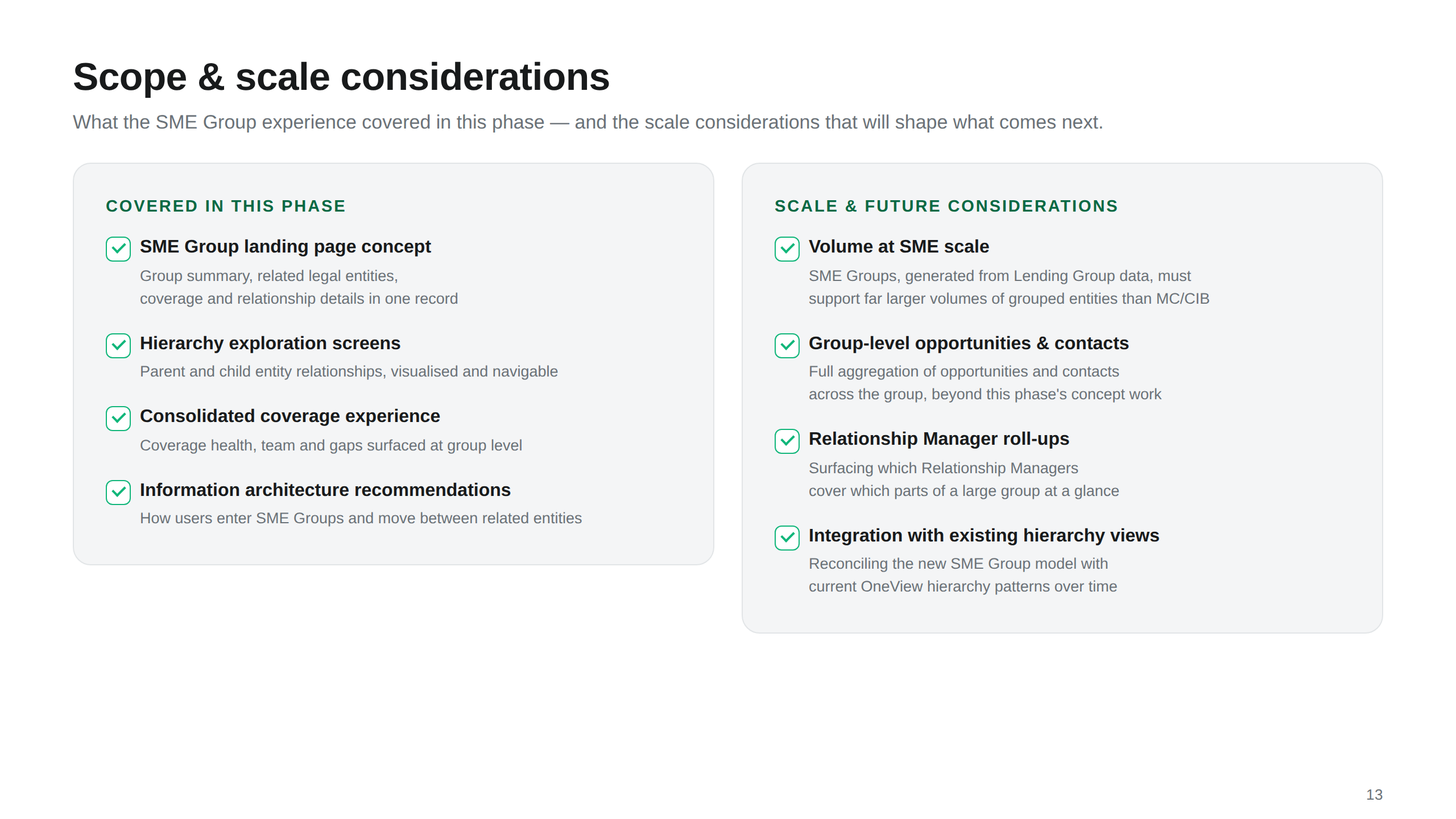
Group, Hierarchy & Coverage
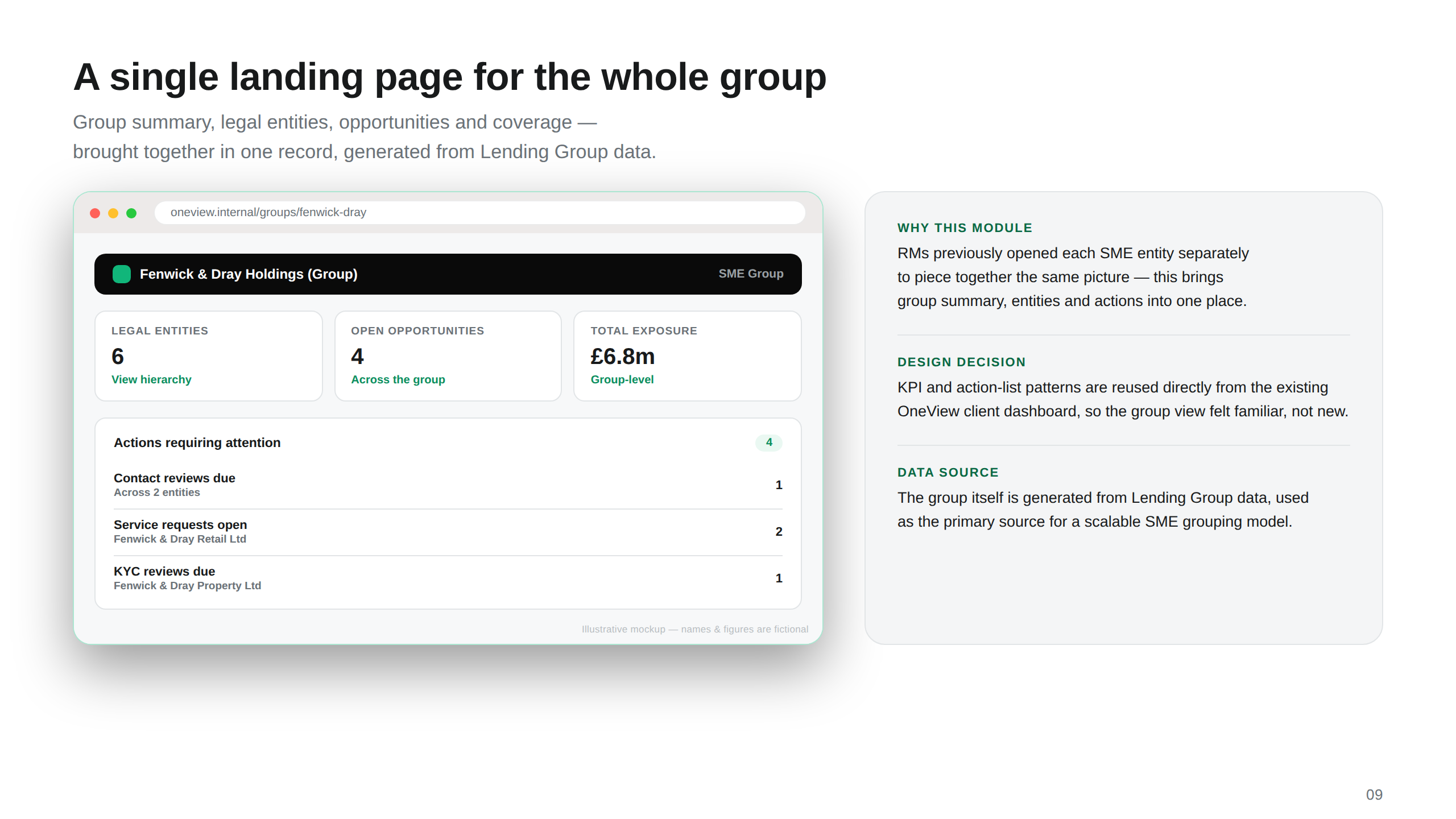
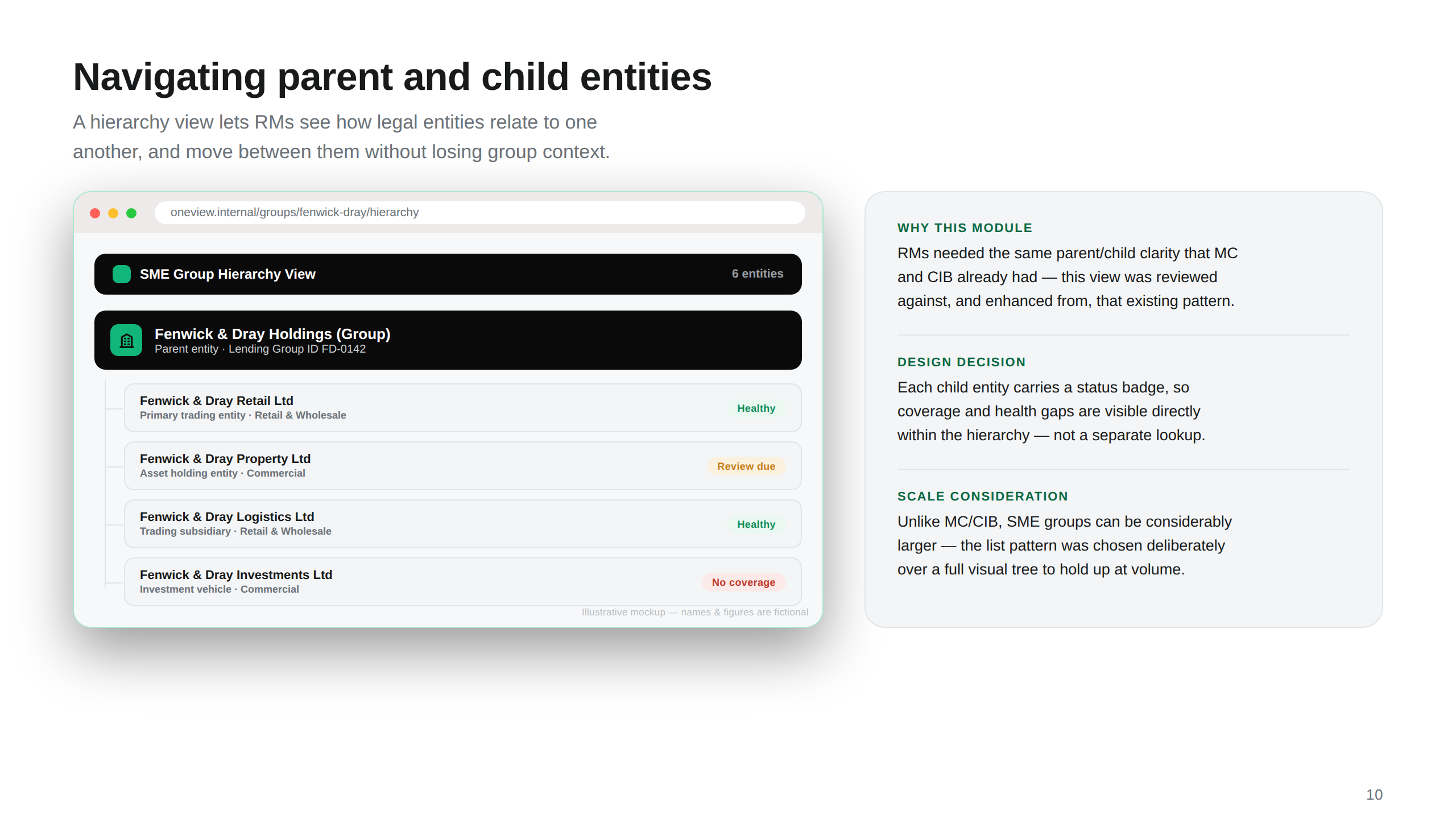
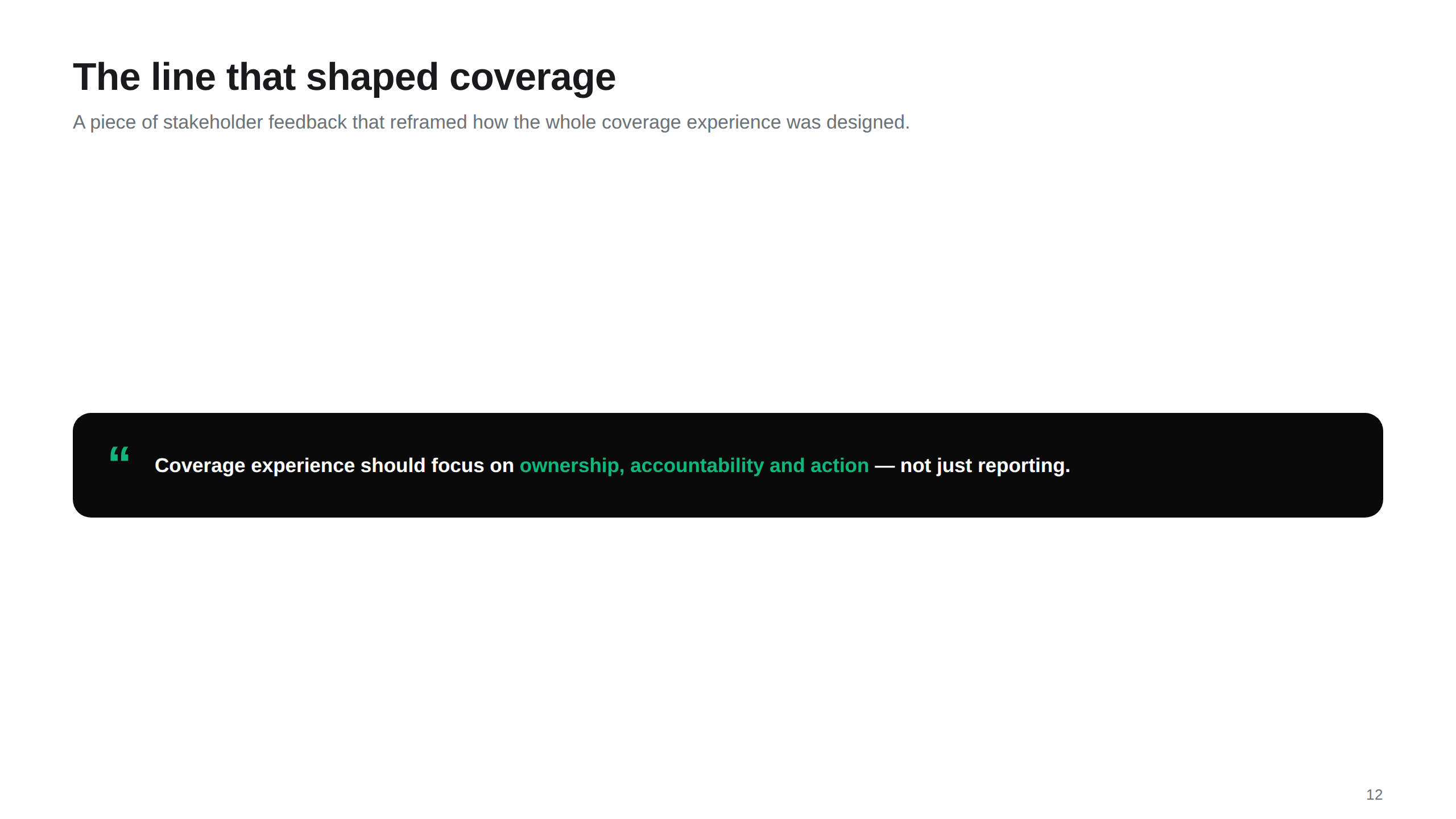
Unified the fragmented group landing, hierarchy, and coverage views into a coherent experience — making it easier for RMs to understand their book of business at a glance.
04
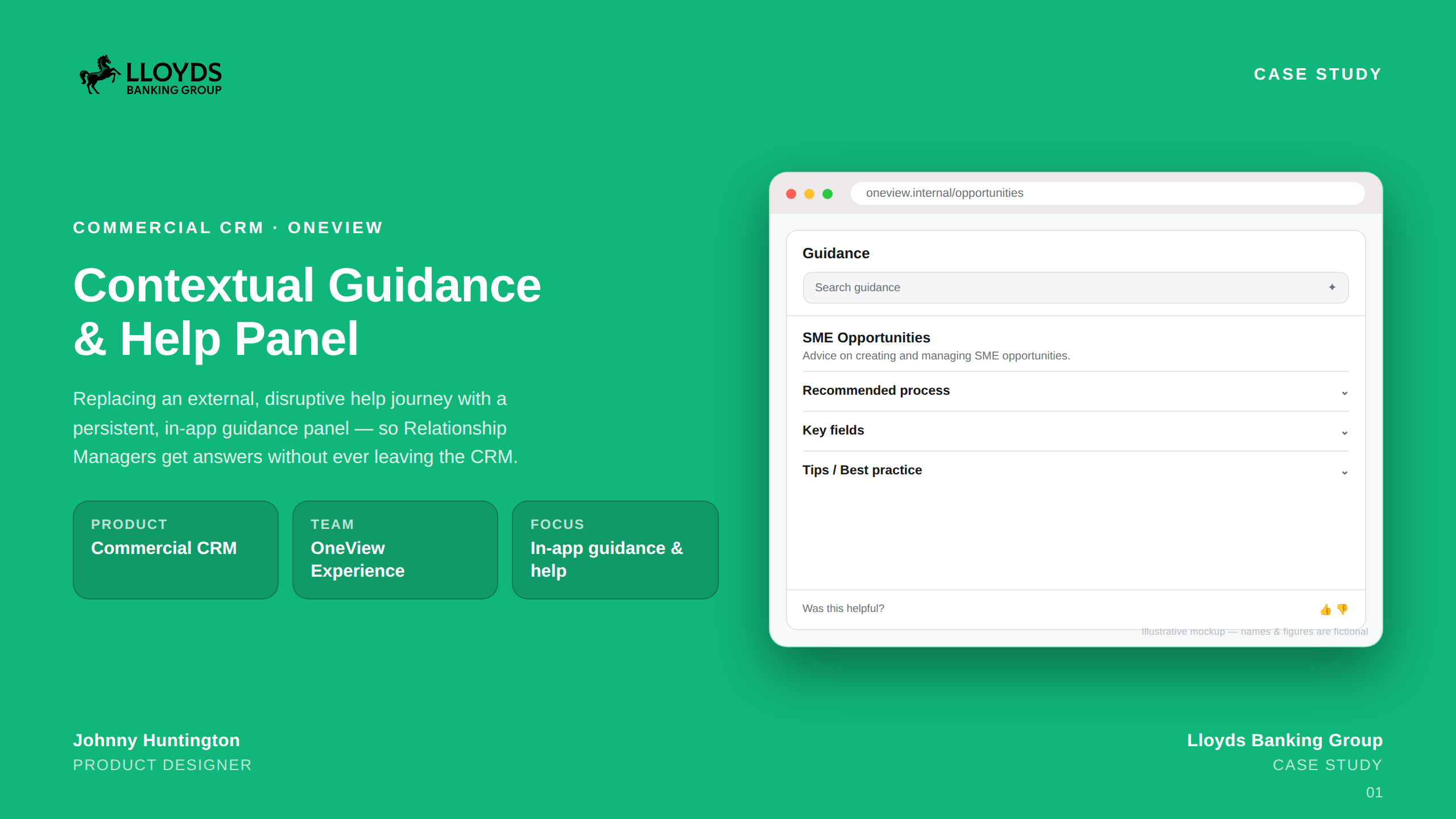
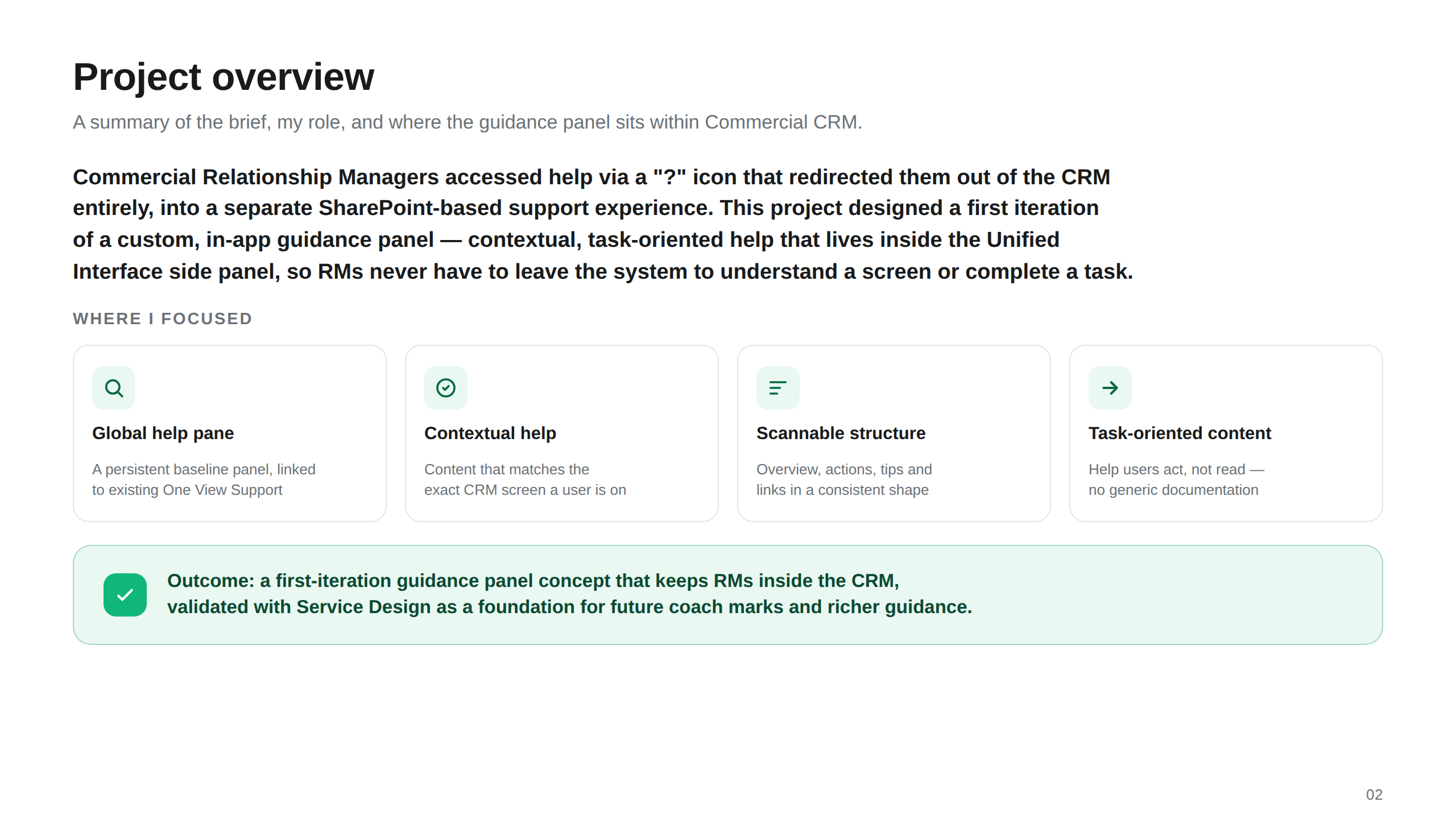
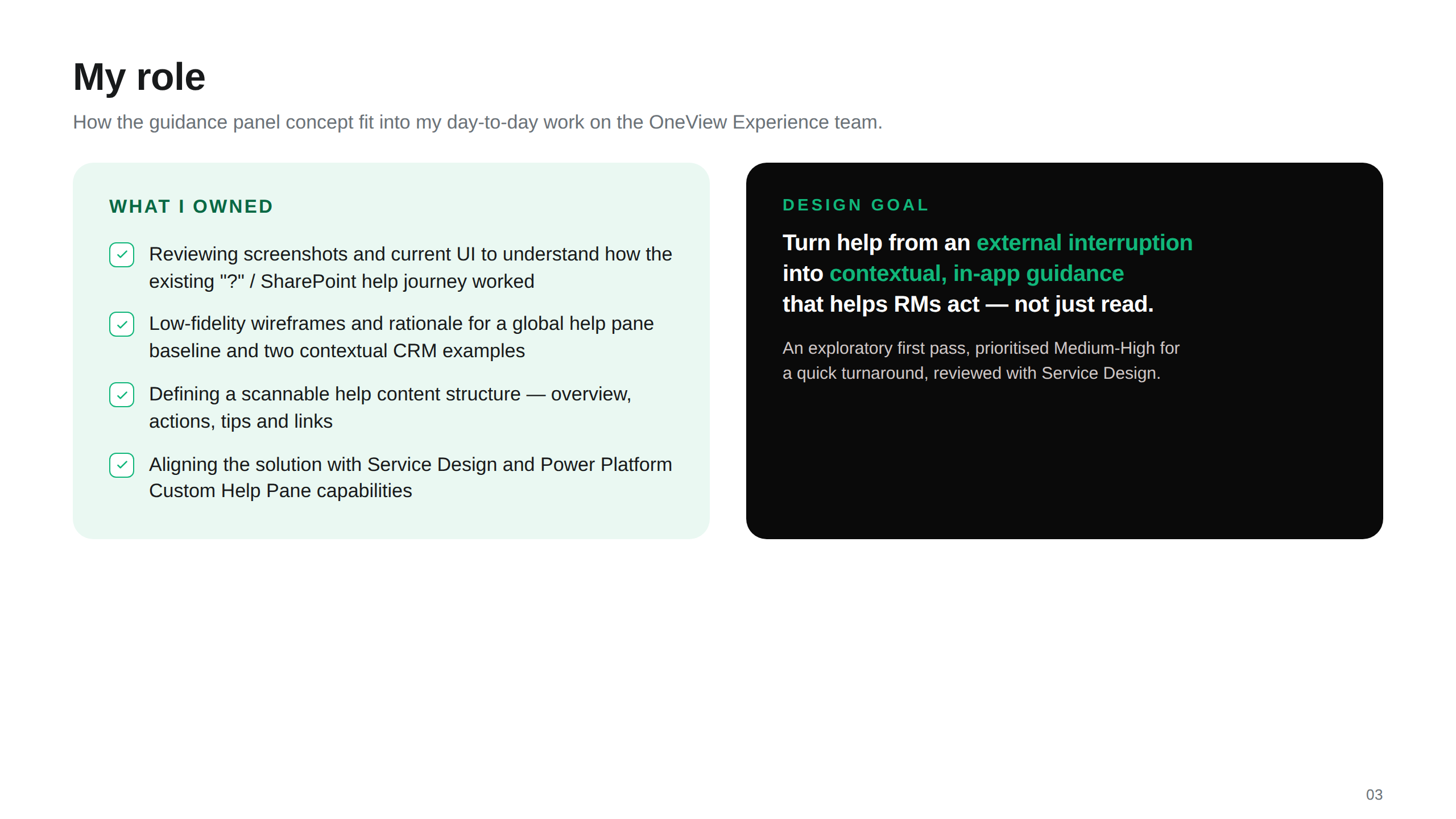
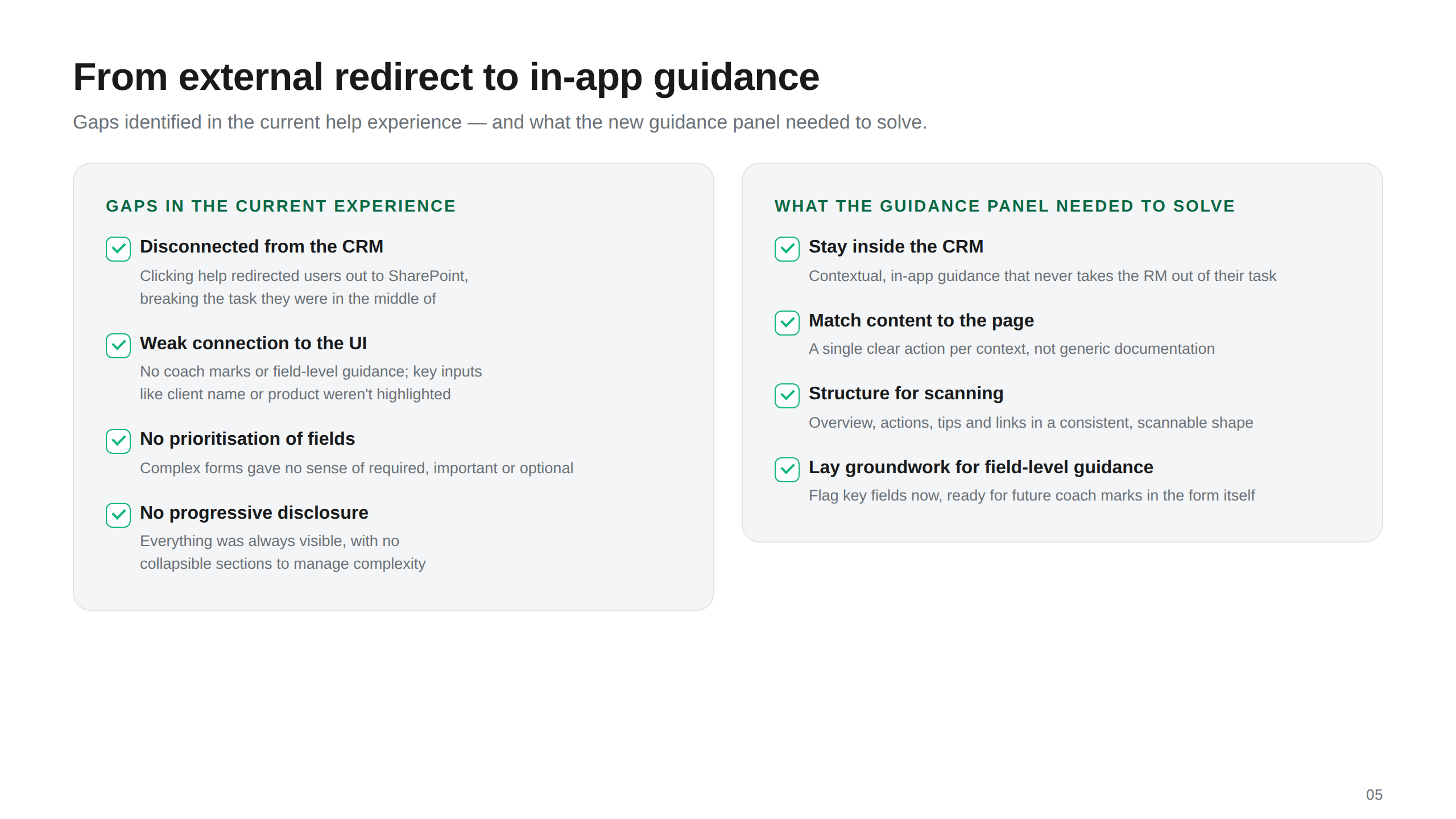
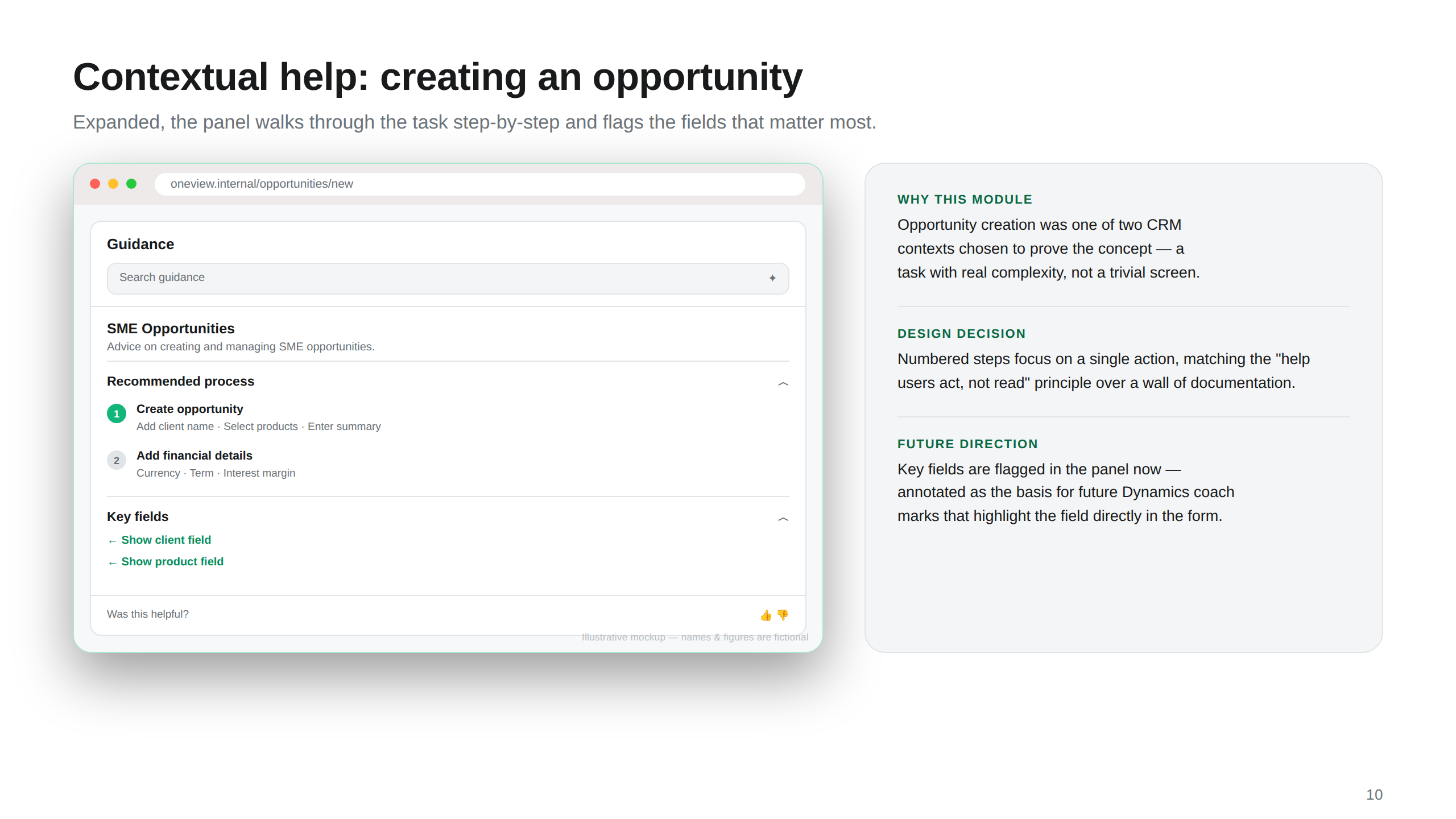
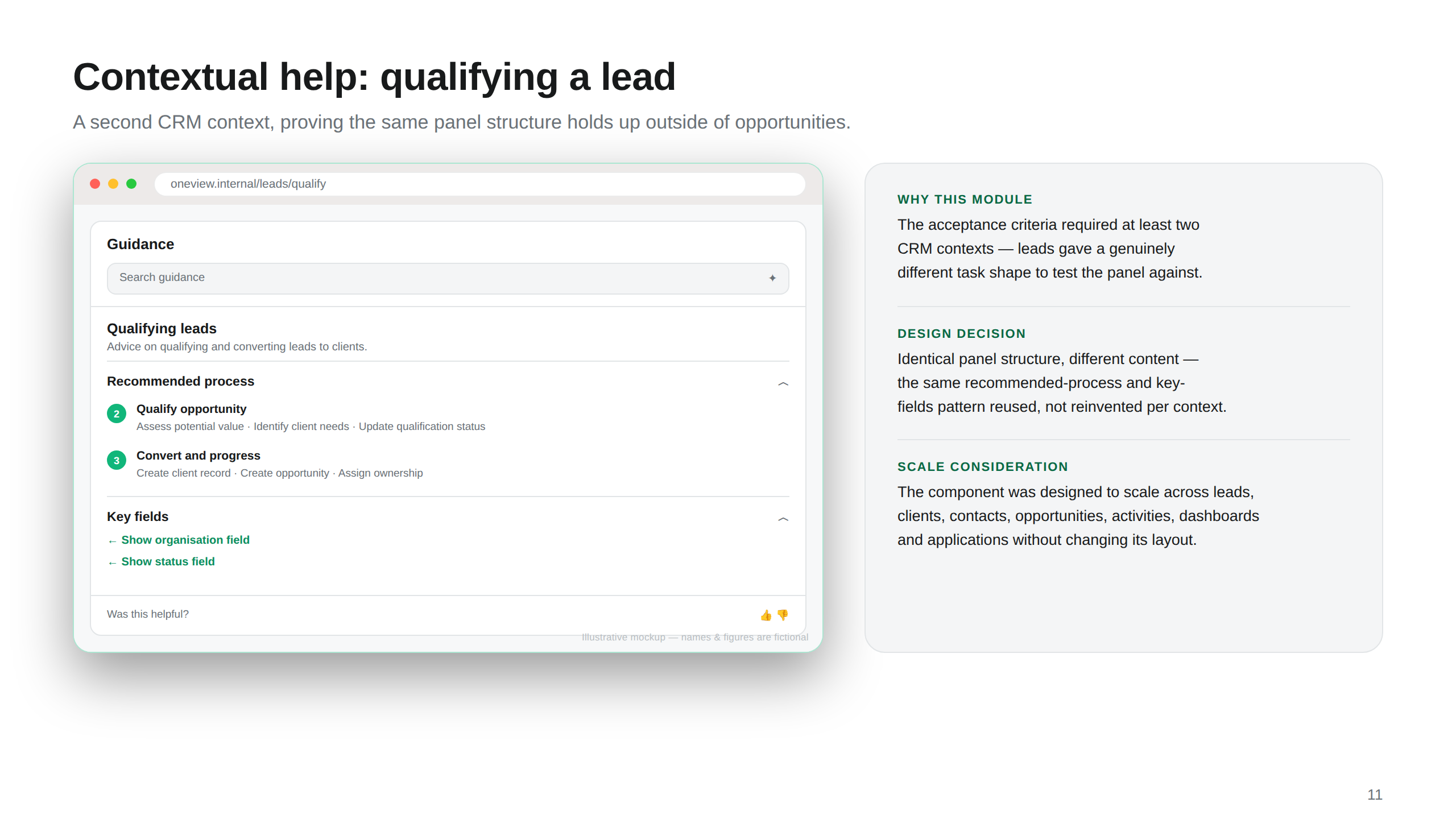
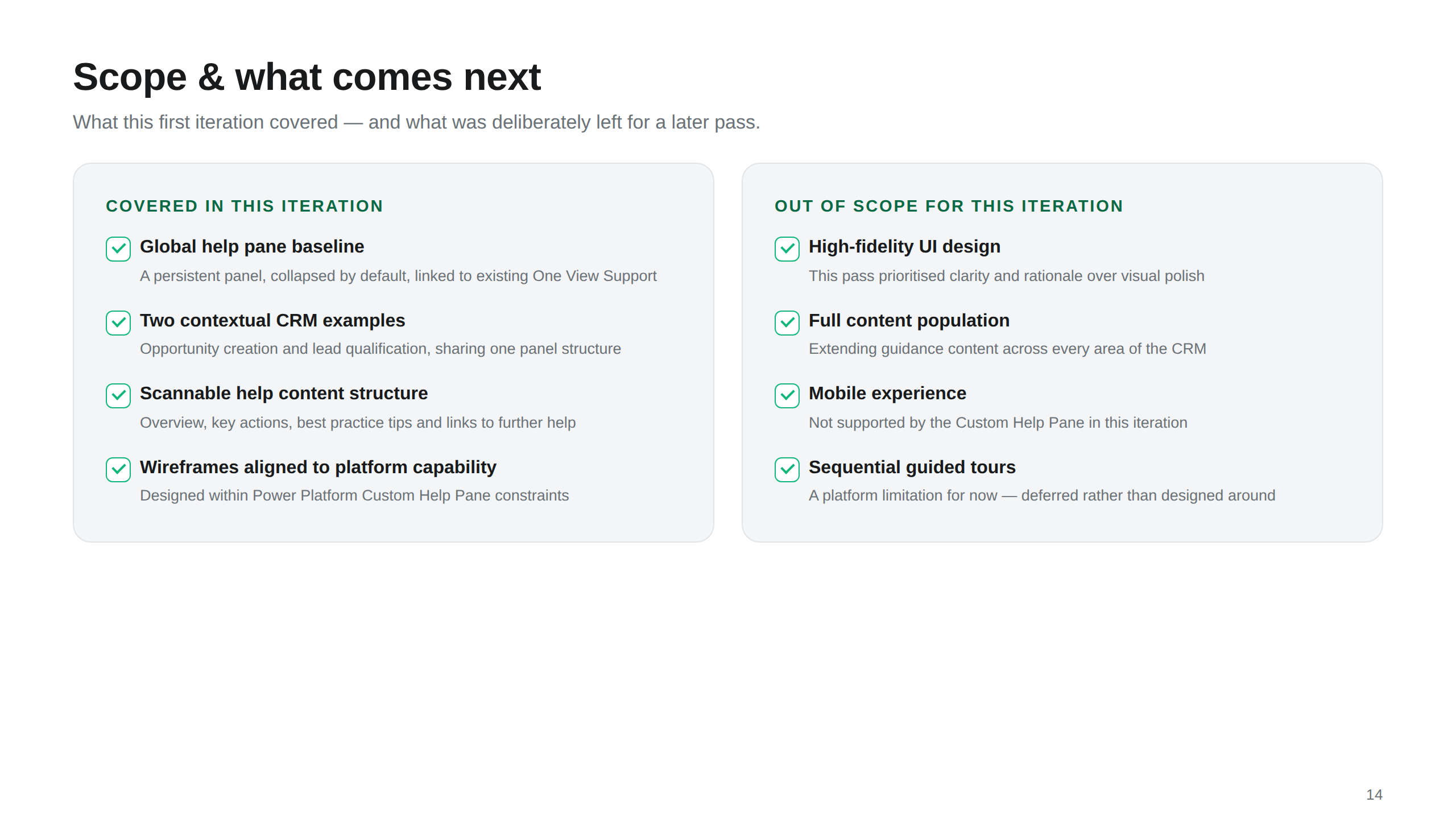
Guidance & Help Panel
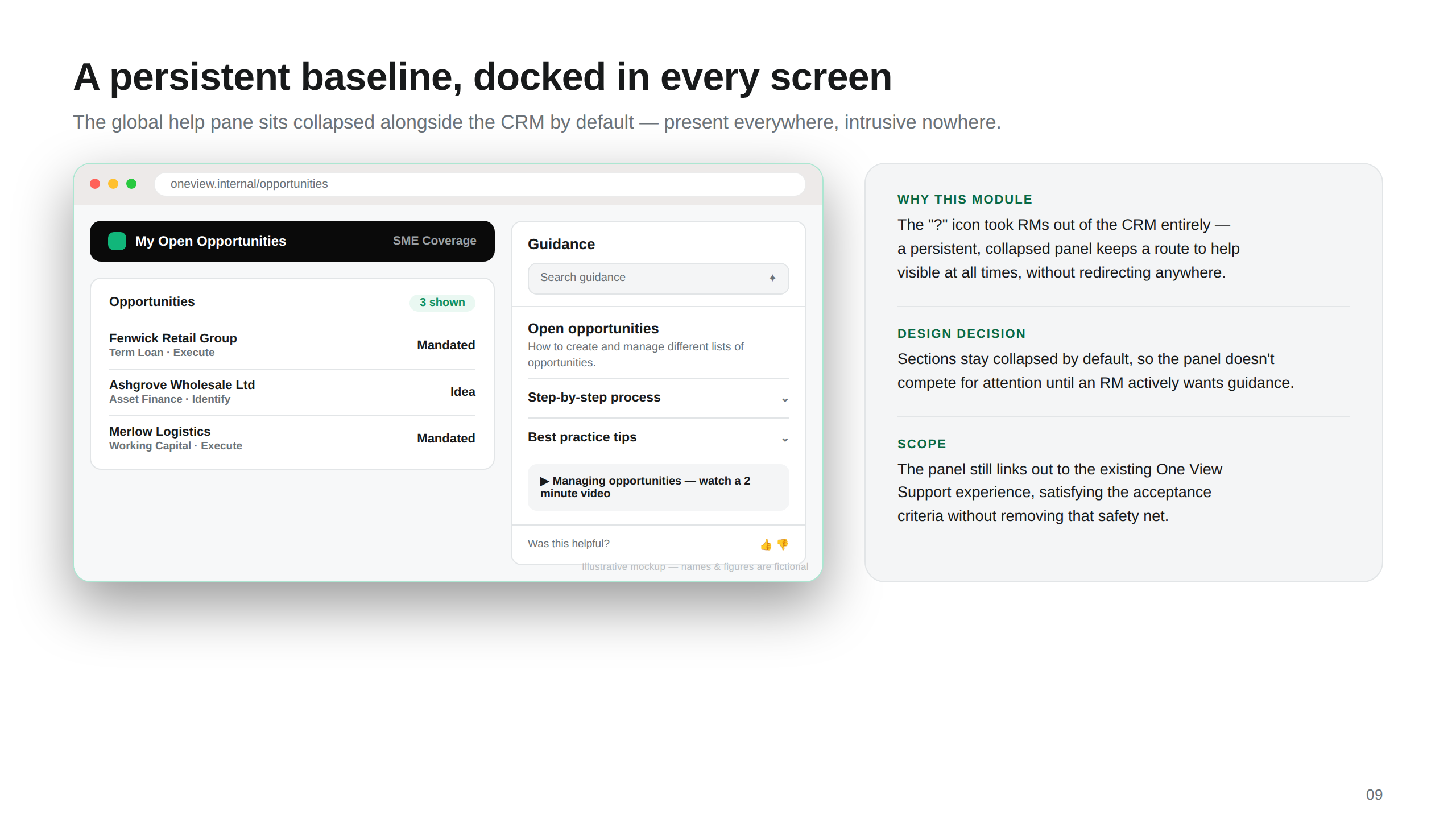
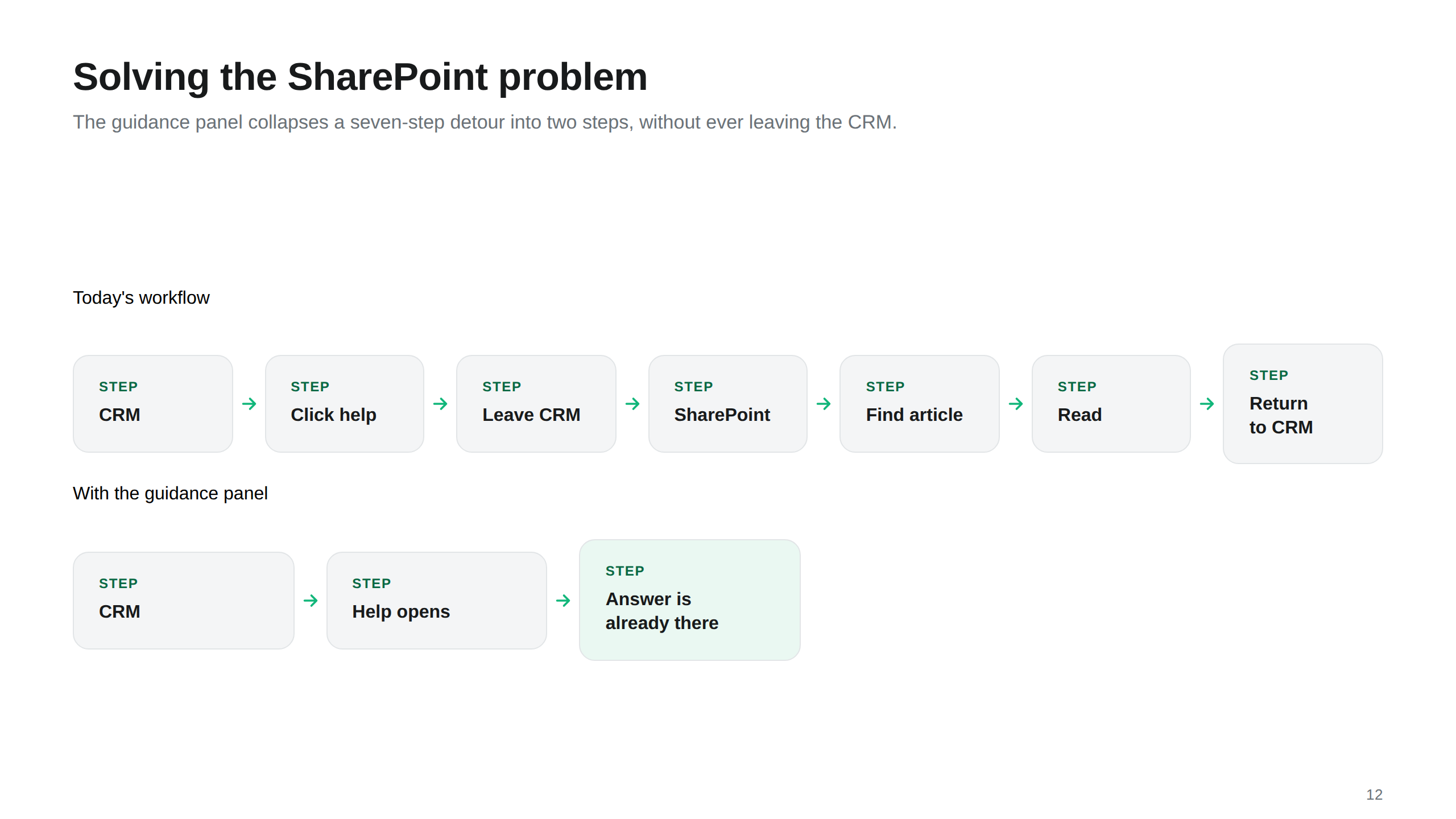
Designed a contextual help system embedded directly in OneView — replacing SharePoint workarounds with in-context guidance surfaced at the point of need.
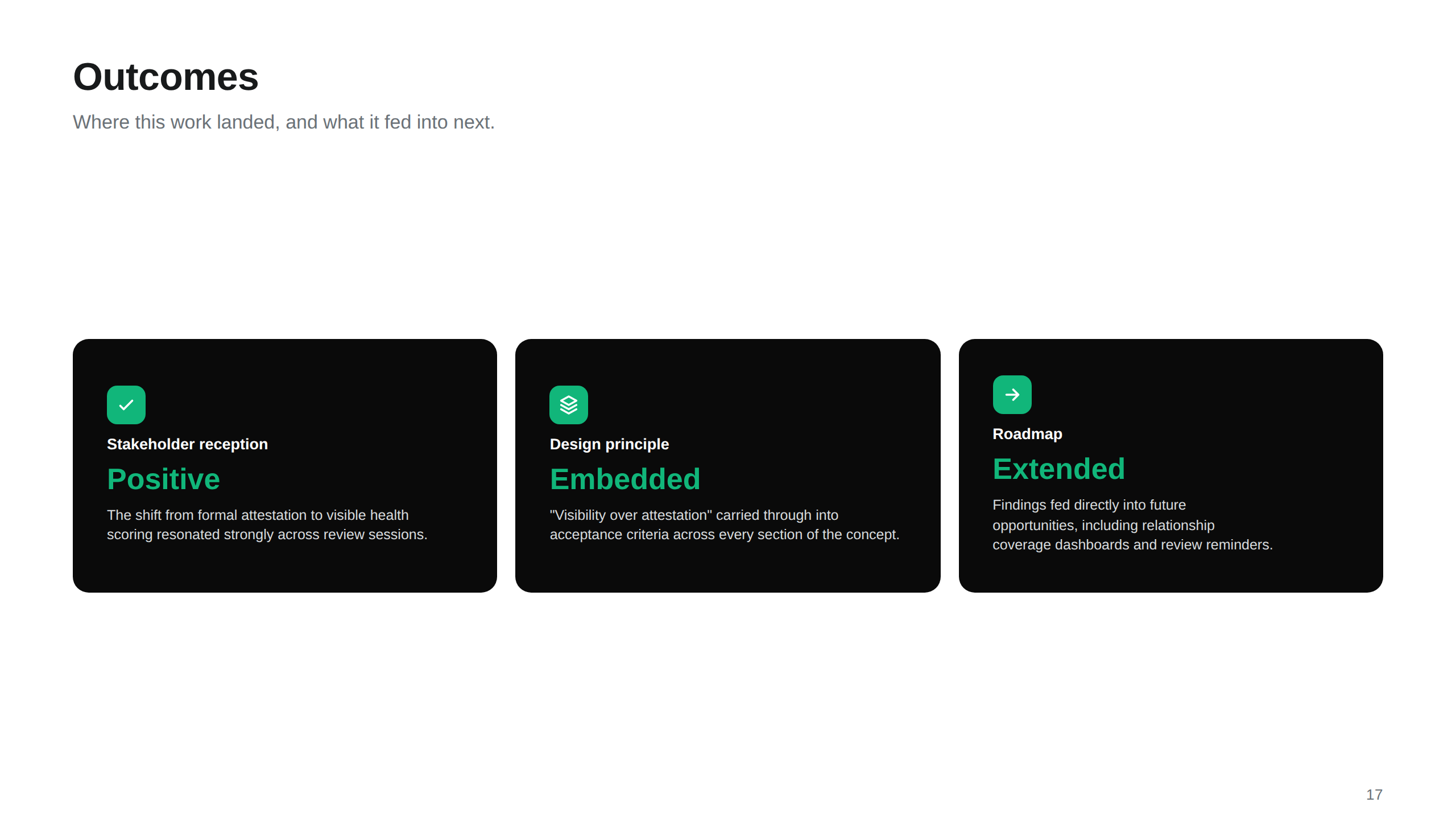
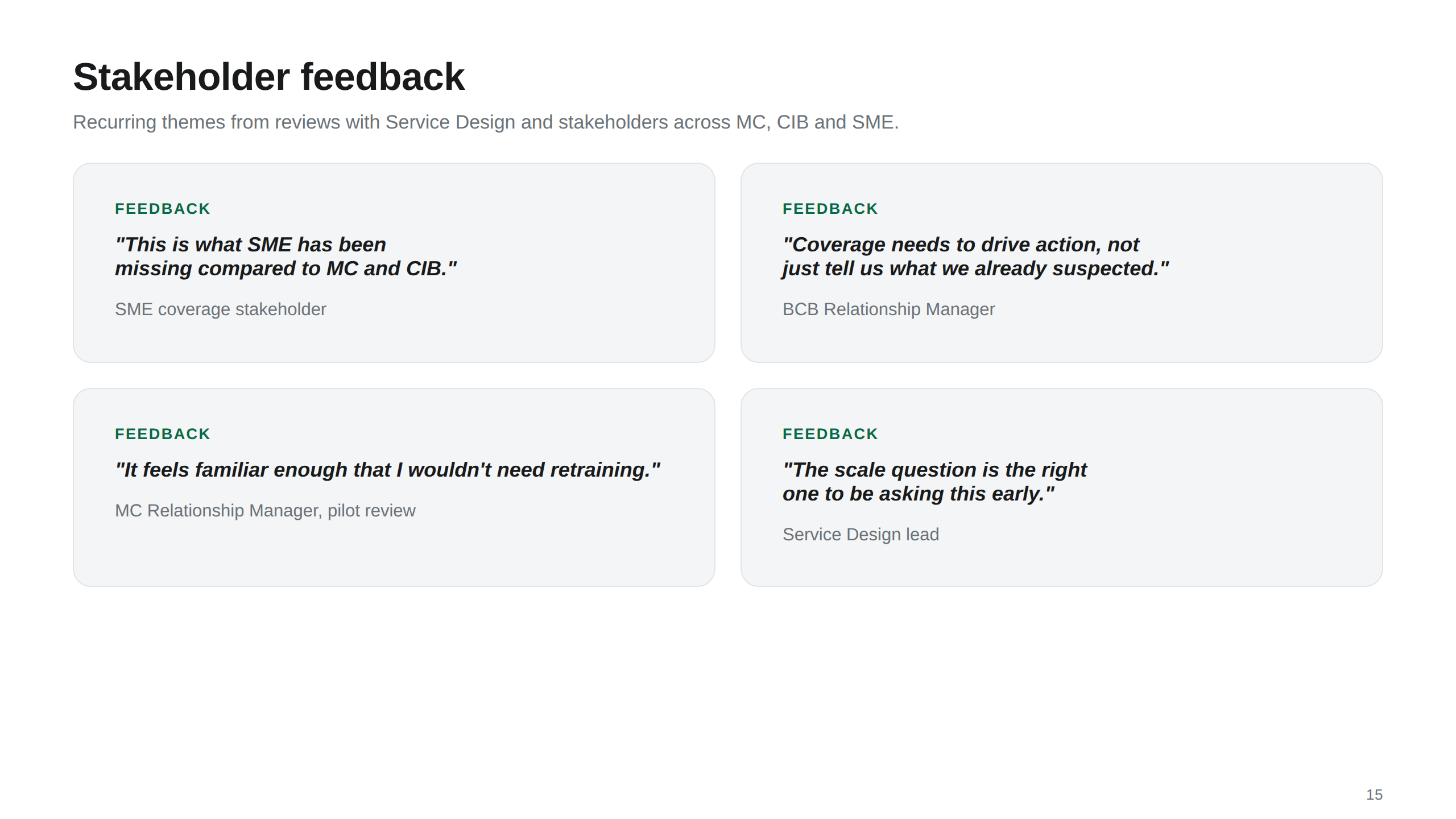
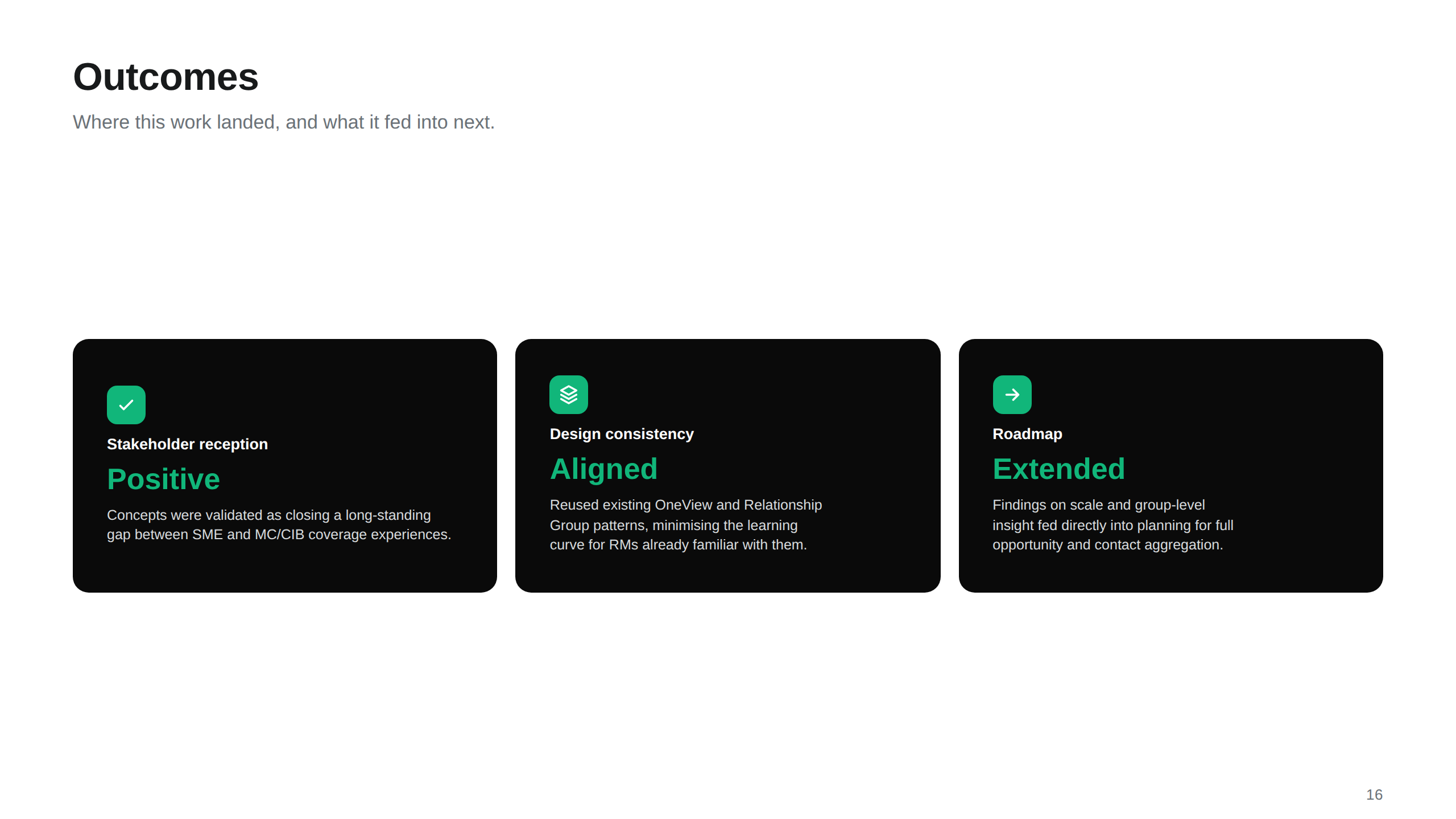
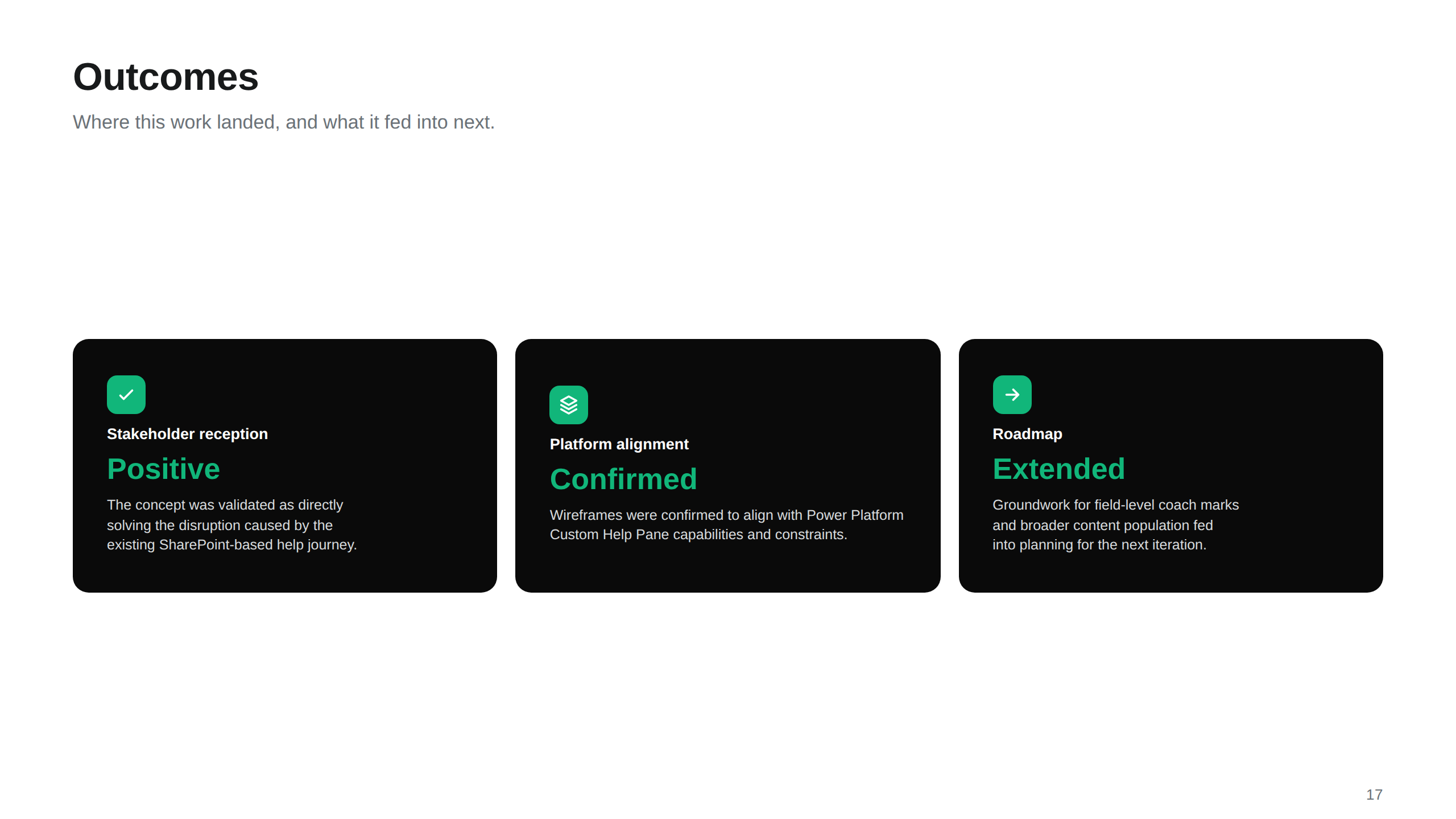
Designs signed off across all four workstreams, with positive stakeholder reception at every stage.
Action over reporting
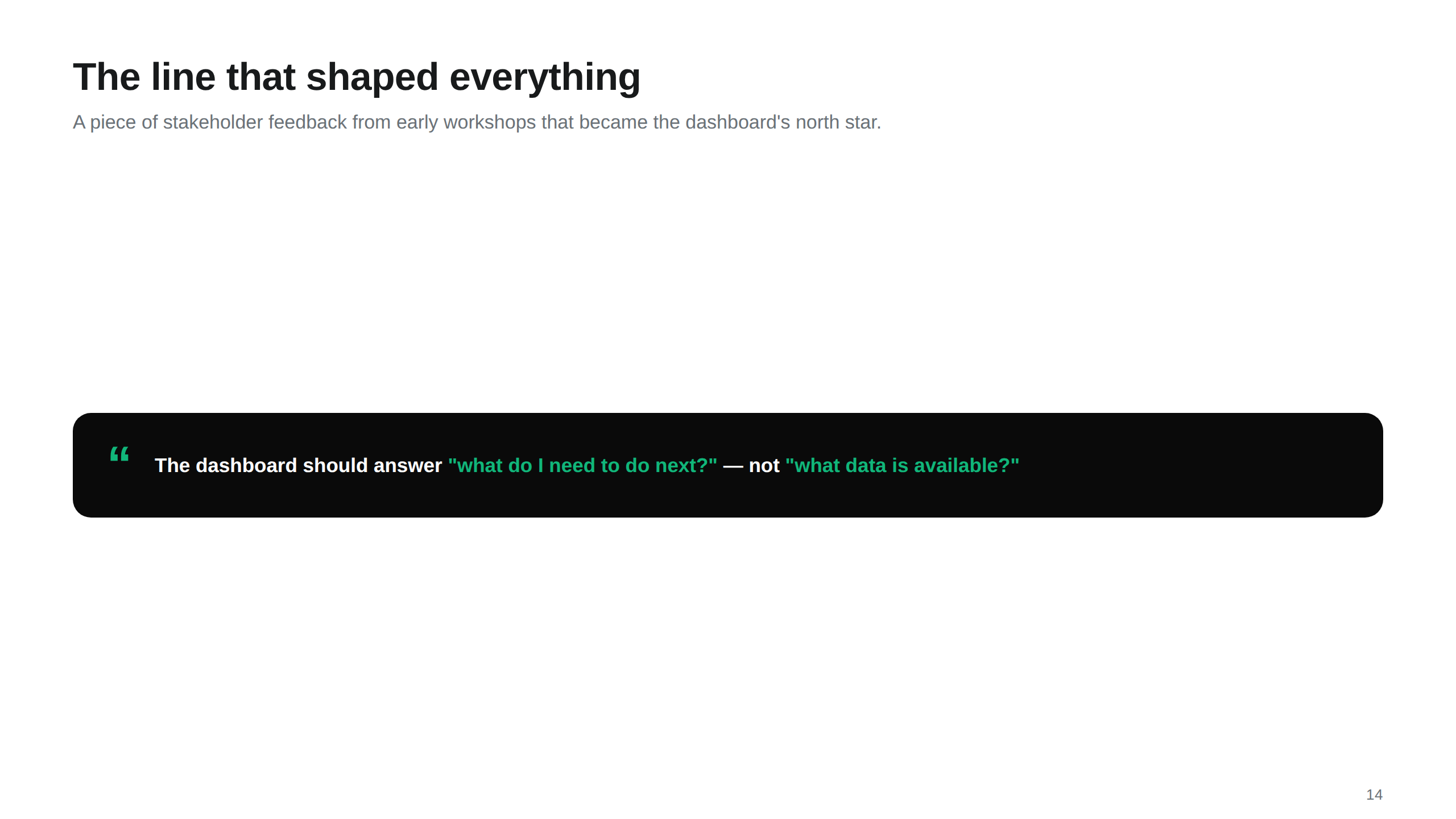
Each workstream shifted RMs from passive consumption of data to clear, prioritised next actions — the core principle that underpinned every design decision.
Designed within real constraints
All work was delivered within Dynamics design principles and current data availability limits — with documented future-state concepts ready to progress as infrastructure matures.
Concurrent delivery at pace
Four parallel programmes running simultaneously, each producing low-fidelity concepts, annotated wireframes, interaction states, and UX rationale for handoff.
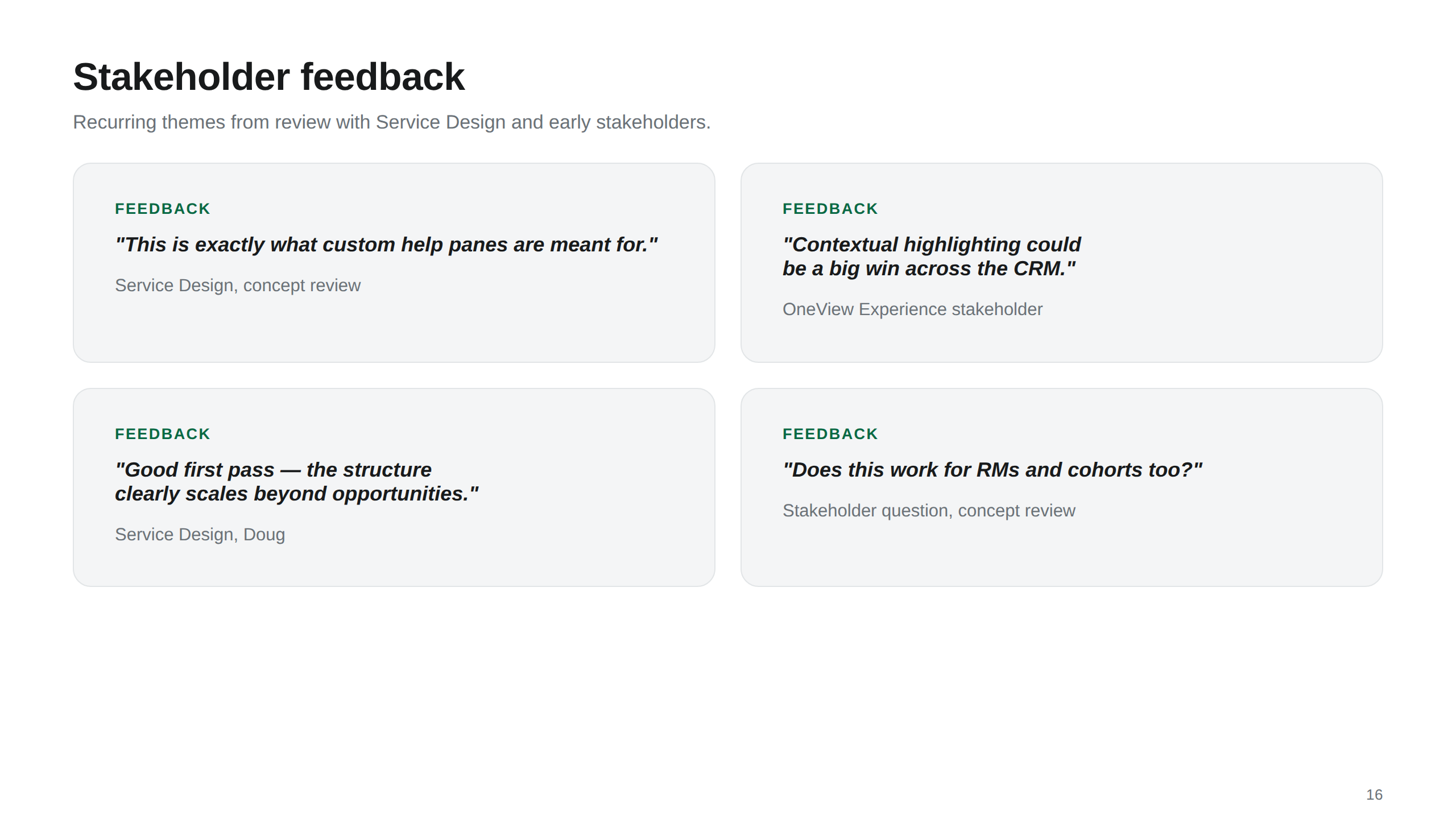
Positive stakeholder response
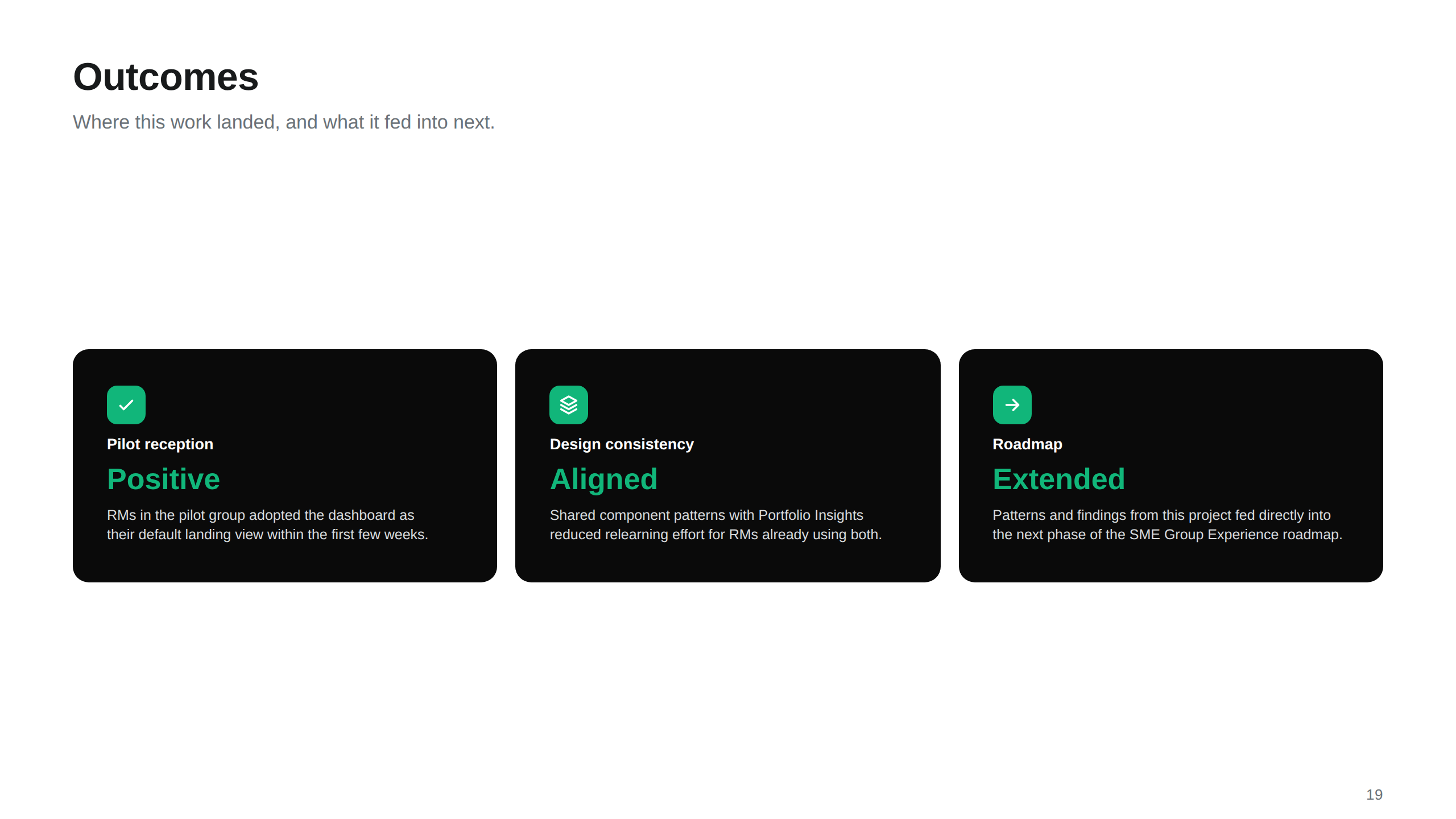
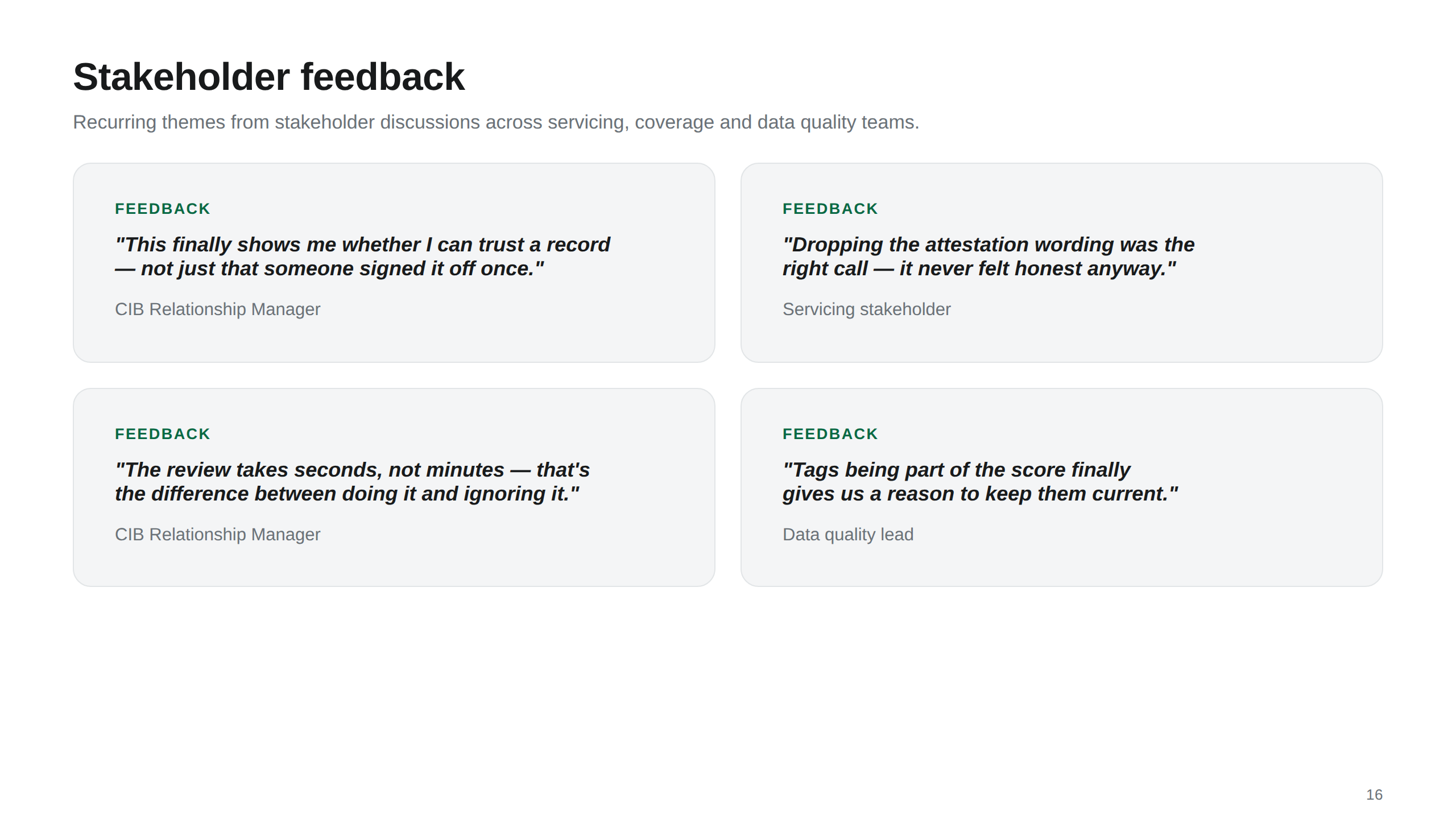
Stakeholder feedback was consistently strong across all four workstreams — with designs well-received by product, engineering, and senior CIB leads and progressed for build.
Projects shown include live work, pitch deliverables, and design produced as part of embedded or collaborative engagements. Some work was completed as part of a wider team. Deliverables reflect the scope and direction at the time of engagement — the live experience may have since changed, launched in a different form, or not proceeded to production. All brand assets and trademarks shown remain the property of their respective owners and are displayed here for portfolio reference only.
Available for new engagements
Senior product design available for engagements across enterprise ecommerce, fintech, and regulated systems.
Get in touch →